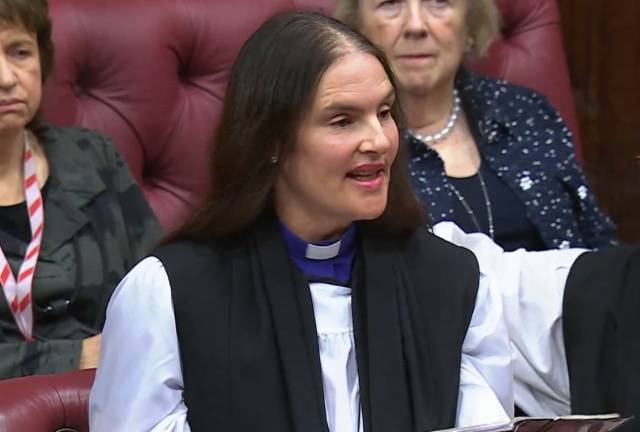
The Bishop of Coventry spoke in a debate on an aging society, emphasising the importance of valuing the elderly, on 4th September 2026:
The Lord Bishop of Coventry: My Lords, I am grateful for the opportunity to speak on this important issue, and I thank the Economic Affairs Committee for its thorough and timely report. As we consider the prospect of a society where the people of older age vastly outnumber younger people, it is vital that we avoid framing our discussion primarily around the burden of the old to the young. We must continue to emphasise that the value of a person cannot be reduced to their fiscal contribution to the state, although I very much understand the pressures. As the report rightly notes, increased life expectancy is a welcome gift and one of the considerable achievements of modern society. I note that, when I began ordained ministry in 1997, I regularly conducted funerals for people in their 60s and 70s; decades on, they were much more frequently for people in their 80s and 90s.
I wish to emphasise the way in which other cultures can teach us the value of older age from their perspective. For example, on a trip to Kenya in recent years, I was privileged to share in the birthday celebrations of an 80 year-old matriarch of a village, and I was bestowed the honour of a ceremonial feeding of the first taste of her enormous cake. I will never forget her jubilation, which was felt across the entire community present. Her life, in its longevity, intrinsic value and social contribution, was remarkable, and nobody there took that for granted. Sadly, here in the UK, we often speak of and treat older people as an inconvenience to be mitigated, rather than cherishing the wisdom and life experience they bring. As a young priest, I was trained to visit my congregation in their own homes—a practice continued throughout my parochial ministry to this day. What started as a visit for a cuppa ended with accounts of careers and achievements, such as the invention of the contact lens, expeditions to the summit of Everest, and a most memorable and gorgeous afternoon with an original character from “Call the Midwife”.
Clearly, the flourishing of our civil society continues to depend on the time, generosity and commitment of older people, many of whom serve as volunteers, carers, mentors, trustees and community leaders in retirement. Without this, many organisations would struggle to survive and function. It is vital that local communities continue to have the support to provide the network of friendship and stimulation that helps older people remain connected and appropriately valued as they grow older. Examples across the country of excellent dementia cafés and bereavement and other support groups are a lifeline for many. I visited the church-run Memory Lane Café in Henley-in-Arden, where the lunch on Christmas Day is oversubscribed, with 100 people attending, who were very keen to let me know that it is a much-loved annual event.
Finally, as the report explores, an ageing population requires a reframed understanding of retirement. The Church of England depends on an active workforce—as a Bishop, I am hugely grateful for their commitment. As we consider the extension of the working life, it is vital that we maintain the safeguards that protect sustainable patterns of work. That said, the challenges facing public finance, health services and social care are acute and must be addressed. I again thank the Economic Affairs Committee for its work. I urge the Government to ensure that, within this work, the value of older-aged people is not lost. As we prepare for an ageing society, we must not forget that such people are not merely recipients of care; they remain bearers of gifts, contributors to the common good and people of immeasurable worth.
Extracts from the speeches that followed:
Baroness Thornton (Lab): The reform of social care is a much wider issue than just social care, because it deals with young people, disabled people, those with learning and mental health challenges and so on. The interface between health and social care is undoubtedly a facet of this debate.
However, lo and behold, the BBC—bless it—and its radio programme “Radical” gave me an answer, featuring, as it did, Professor Sarah Harper, professor of gerontology at Oxford. She was a witness and contributor to the considerations of this report. Like my noble friend Lord Reid and the right reverend Prelate the Bishop of Coventry, she challenged the widespread belief that ageing populations are primarily a social and economic burden, arguing instead that longer lives represent one of humanity’s greatest achievements and an opportunity to rethink how society is organised. As the report does, she explains why many of the pressures associated with ageing societies stem from institutions designed for a different era—it is obvious. She argued that our welfare systems, labour markets and expectations around retirement no longer reflect the realities of modern life, where people are often living longer and healthier lives—more so than previous generations.
That is a note of optimism, and that is what we need to inject into the debate. In fact, many of the contributions did exactly that. The Government need to grasp this, run with it and bring forward a much bigger strategy, and this needs to be done in the face of optimism for our society and its future.
Baroness Neville-Rolfe (Con): Demography is not only about births and deaths—or, indeed, immigration. We face a worrying trend of entrepreneurs and younger talent emigrating because of high taxation and growing burdens on business. If we want people to work longer, to invest more and to innovate here in Britain, we must stop making it harder for them to do so. I ask the Minister for reassurance: how do the Government intend to reverse the outflow of skilled, ambitious workers, who are essential to sustaining our future tax base and supporting our ageing population?
We also need a national conversation about retirement expectations. Too many assume that the system will simply provide. Yet, given the demographic realities, younger workers will need to save more for longer and will almost certainly retire later.
There are two mitigations in the report that I will highlight in conclusion. The first is to join others in persuading those able to do so to work for longer and allowing them to do that. People live much longer than they did, but a much smaller part of their life is spent in work than when pensions were devised. It is too easy for many of those contributing to the economy to retire early. My father’s farming business failed when he was in his 40s, but he retrained and worked into his 70s. We need more of this, and not only in the House of Lords. To achieve this, we need to call out the culture of age discrimination that I was shocked to discover when preparing my review of the state pension age in 2022. The latest figure from the Centre for Ageing Better suggests that one in three people reports experiencing age discrimination. The right reverend Prelate the Bishop of Coventry rightly described the amazing contribution that older people make to civil society.
Lord Pitt-Watson (Lab, Treasury): I shall start with social care, about which many noble Lords—including the noble Lords, Lord Burns, Lord Lamont and Lord Liddle—talked. There is a big gap in welfare provision. People are seeing everything they have worked for be wiped out by the costs of social care, which are increasing hugely. This issue was raised by the noble Baronesses, Lady Thornton and Lady McGregor-Smith, the noble Lord, Lord Willetts, and the right reverend Prelate the Bishop of Coventry. We must think about the technical solutions and not forget that old people, like all people, are of immeasurable worth.
Our Prime Minister has set out his personal commitments to making progress on fixing our broken social care system. He has agreed with the noble Baroness, Lady Casey, to bring the conclusion of the independent commission forward to 2027 in order to help with that. This will combine the work that was originally set out as two separate phases, so that a single set of recommendations will cover both the immediate improvements, which the system needs now, and the longer-term transformations that are required to meet demographic changes. The same pressures are bearing down on the National Health Service, and a series of actions is taking place there. That is all from me on social care.


You must be logged in to post a comment.