
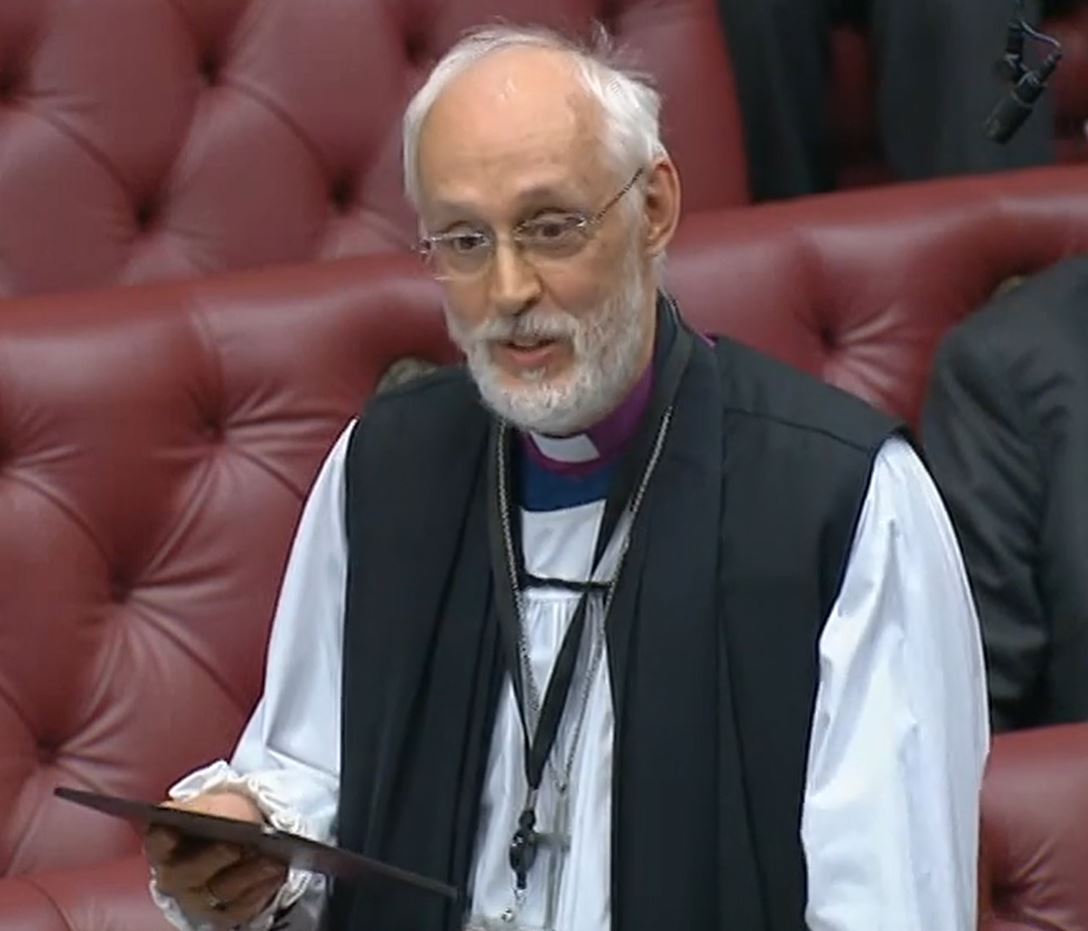
The Bishop of Manchester spoke in support of amendments to the Financial Services and Markets Bill focused on consumer protection and affordable credit on 7th September 2026:
The Lord Bishop of Manchester: My Lords, I support Amendment 2 in the name of the noble Baroness, Lady Bowles of Berkhamsted, to which I have added my name. As we have already heard, this amendment would ensure that, when provisions of the Consumer Credit Act are repealed or replaced by FCA rules, the overall level of consumer protection would not be diminished. The Consumer Credit Act has long provided established routes of redress to consumers; it has done so for decades. It provides a core of fundamental protections enshrined in primary legislation and developed through parliamentary scrutiny, and probably is fairly well known.
As financial services continue to evolve, the ways in which consumers are protected must be capable of adapting to change. Were we to open up the CCA to repeal by the Treasury and the FCA without putting significant statutory protections in place, it would risk reducing standards of consumer protection for all people. Indeed, in its own review of the Consumer Credit Act, the FCA stated that many of its provisions
“could not be replaced by FCA rules”
under its current powers
“without adversely affecting … consumer protection”.
I have spoken many times before about the importance of equal financial opportunity for underserved communities, especially those who have less financial literacy or who face language barriers. The Joseph Rowntree Foundation tells us that a record number of people in this country are currently living in “very deep poverty”. Without equal access to financial services, they are deprived of the tools that might help them to stay afloat. For many families, credit is a lifeline in the face of the cost of living crisis. It is what enables them to make ends meet, but accessibility must be accompanied by adequate protection.
Data from the last year shows that 25% of cases seen by the Financial Ombudsman involved vulnerable consumers. It is these groups who are least able to advocate for themselves when things go wrong or to navigate complex complaints processes on their own. To increase access to financial services of vulnerable groups while simultaneously hollowing out the protections from which they disproportionately benefit introduces greater risk for those who already stand to lose the most.
The protections of the Consumer Credit Act are to be opened up to repeal. We must be certain that consumers will enjoy protections that are at least as strong as those from which they benefited before. This amendment is essential to preserving the fundamental rights which enable vulnerable groups to participate fully in economic life and provide consumers with the confidence they need that they will be protected when things go wrong—as from time to time they do.
Lord Pitt-Watson (Lab, Treasury): On Amendments 2 and 3, I fully agree that consumers must continue to benefit from robust protections and effective routes to redress. The Government would not be proceeding with this reform if we felt otherwise. However, I do not consider that the duty proposed is an appropriate mechanism to achieve this. The Government have already concluded that certain important protections should remain in legislation, including Section 75, which allows consumers to claim their money back from their lender where products and services purchased on credit are faulty or do not arrive, and the unfair relationships provisions in Sections 140A to 140D. As I have said, the FCA Handbook already contains important protections, including for creditworthiness and affordability assessments.
Nothing that we are doing here seeks to lessen consumer protections—a concern of the right reverend Prelate the Bishop of Manchester and the noble Baroness, Lady Altmann. However, the Consumer Credit Act is highly prescriptive in the information requirements, which can produce poor outcomes for consumers. The current regime can be difficult for those with lower literacy and financial capability. Some documents require a reading ability at an undergraduate level. These reforms will make it possible for the FCA to enable firms to tailor communications to consumer needs, which will improve accessibility and support better outcomes for vulnerable customers.
Baroness Neville-Rolfe (Con): My Lords, I am very grateful to the Minister for his response and his detailed explanation of how Clause 1 is framed. I am also grateful to the other noble Lords who have contributed to the debate—the noble Baronesses, Lady Bowles and Lady Altmann, and the right reverend Prelate the Bishop of Manchester—on the recasting of consumer protection law, which is very important to us all, and the noble Lord, Lord Sharkey, on mortgage prisoners. I would describe that as a sorry tale.
We remain of the view that, when this process of recasting takes place, Parliament and industry must have a practical mechanism through which they can exercise oversight and make such representations as they need to make, such as those that we have heard today, on how the powers are used. The system would not be undermined by that; it is a first-occasion proposal. That is what Amendment 93 and its consequentials seek to provide. It is a workable and proportionate mechanism which allows the Government to achieve their broader objective of introducing a more flexible regulatory framework, but not wholly at the expense of scrutiny, transparency and democratic accountability. We should not be signing away any rights and protections without knowing what will replace them.
Baroness Kramer (LD): My Lords, this group of amendments concerns itself with financial inclusion. I have two important but very different amendments in this group. The first is Amendment 11, to which the right reverend Prelate the Bishop of Manchester has added his name, and I thank him for that. The House will know that I have long been an advocate for CDFIs—community development financial institutions, which are usually banks or credit unions—which are dedicated to serving the banking and finance needs of local communities and small businesses, as our high street banks once did. They do what I suppose in modern terms we would call “place-based lending”;they know the community, its businesses and its people, and they are structured, staffed and skilled to provide those services. By contrast, SMEs struggle to get mainstream bank credit.
The Lord Bishop of Manchester: My Lords, I have sympathy with all the amendments in the group, but I will focus my comments on Amendment 11 in the name of the noble Baroness, Lady Kramer, to which I added my name. As we have heard, this would require the FCA to establish a framework assessing banks’ and building societies’ provision of affordable credit.
Credit is a lifeline for families facing debt and financial hardship. According to a recent report, 60% of the clients of Christians Against Poverty—CAP—an organisation that is very active in my diocese, find that they have to borrow money to pay for household essentials and bills. They are not borrowing for luxuries: when credit is unavailable, they are left to delay essential spending and go without meeting their most basic needs. Sometimes, spending a little now will save you spending a lot more down the line.
I am extremely grateful for the remarks made by the noble Lord, Lord Holmes of Richmond. Credit inaccessibility has real consequences for those who are struggling the most. According to CAP, 47% of UK adults who currently have debt that they are struggling to manage have been unable to access their preferred credit option in the past two years.
This kind of financial exclusion means that we are locking vulnerable families into a cycle of poverty. We are depriving them of the tools they need to climb their way out. Unable to look beyond the pressing need to put dinner on the table, it is those with the most desperate need who are forced to sacrifice the most to get by. Left with limited choices, they are the ones most likely to enter riskier credit deals and to pay the greatest poverty premium. I have worked as a vicar in parishes where loans were enforced by men with baseball bats.
Since Committee, we have had the report of the Commons Treasury Committee on the Government’s financial inclusion strategy. The report highlights the need for
“proportionate firm-level financial inclusion metrics. These should focus on the largest providers and on markets where exclusion causes the greatest consumer harm”.
That specifically includes “affordable credit”. The report proposes that metrics
“should be designed to identify whether progress is being delivered consistently across firms and sectors”.
The committee also concluded:
“Voluntary action and pilots … cannot be the main driver of a national financial inclusion strategy unless there are clear routes to scale and clear consequences if voluntary action fails”.
What is proposed in this amendment clearly has much wider parliamentary backing than simply from the noble Baroness, Lady Kramer, and me. Indeed, several major lenders indicated to the Treasury Committee that they would be entirely happy to provide financial inclusion data as part of a statutory system.
This Bill, and this amendment to it, provide a sensible and practical solution to implement what the Treasury Committee advocated. Importantly, it will place responsibility for access to affordable credit on the lender, and introduce a clear framework by which banks and building societies can be assessed on how effectively they are meeting the financial needs of underserved communities. The new requirement for this framework to be kept constantly under review will ensure that those requirements remain open to scrutiny and adaptable to ever changing patterns of financial exclusion—patterns that could become more dynamic and entrenched as society rapidly changes. This amendment is an important step towards ensuring that our financial services meet the needs and uphold the dignity of real people, rather than expecting individuals to adapt to systems that too often exclude them from full participation in economic and community life. The only people who will not like it are the dodgy lenders who harass people in my diocese. I pray that we all support this amendment.


You must be logged in to post a comment.