
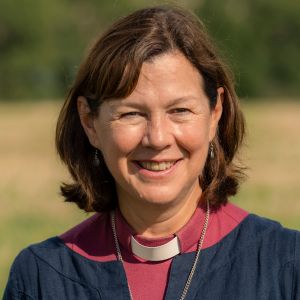
The Bishop of Peterborough received the following written answers on 12th October 2026:
The Lord Bishop of Peterborough asked His Majesty’s Government what assessment they have made of the relationship between rising social fragmentation and rising levels of poor mental health in the UK.
Baroness Merron (Lab, DHSC): The independent review into prevalence and support for mental health conditions, attention deficit hyperactivity disorder, and autism is examining changes in prevalence, need, and demand. Its interim report found that there is no single, simple explanation for rising levels of psychological distress and demand, and identified areas where the evidence remains uncertain.
The review is considering a range of factors that may be contributing to rising prevalence and demand for support. The final report, which will be published shortly, will bring together the full body of evidence and make recommendations on how the health system and wider public services can respond more effectively.
The Lord Bishop of Peterborough asked His Majesty’s Government what assessment they have made of the contribution of religious institutions to the promotion of community cohesion.
Baroness Blake of Leeds (Lab, MHCLG): As set out in Protecting What Matters(opens in a new tab), the Government’s plan setting out steps to improve social cohesion, faith and belief groups, including religious institutions, play an important role in bringing people together, building trust across difference, and supporting communities to respond to local challenges.
We see this contribution in practice through the involvement of faith and belief groups in numerous different programmes. As a part of the Pride in Place Programme, many faith and belief groups are playing an active role in local decision making to improve their area. Through projects being developed under the Common Ground Resilience Fund, local authorities and community organisations – including faith and belief groups – are being supported to strengthen relationships between different communities and build resilience to local tensions. Through long-standing government funded programmes such as Near Neighbours, faith and belief groups are helping to bring people together in religiously and ethnically diverse communities; and through Inter Faith Week they are helping to celebrate and promote the role of faith communities in building understanding and friendship across difference.
All of these examples underscore why the Government made a number of commitments in Protecting What Matters to work with and celebrate faith and belief communities in order to improve societal understanding of different religions and beliefs, support tolerance, and help build a more cohesive and resilient country.
The Lord Bishop of Peterborough asked His Majesty’s Government what assessment they have made of the finding of the report by the Education Policy Institute Growing apart: The evolution of the disadvantage gap, published on 10 June, that 40 per cent of the disadvantage gap at age 11 is already established by age 5; and what plans they have to address this gap in early years education.
Baroness Smith of Malvern (Lab, DFE): The government is committed to breaking the link between a child’s background and future success.
The department recognises that disadvantage can affect children’s development before they start school, which is why we have a target for 75% of children to reach a good level of development by the end of reception by 2028.
Early education gives all children, and especially disadvantaged children, the best start in life. The Early Years Pupil Premium (EYPP) improves educational outcomes of socio-economically disadvantaged children who are eligible for free early years entitlements in an early years setting.
Building on the largest ever uplift in 2025/2026, the EYPP rate has increased by 15% to £1.15 per hour in 2026/2027, equivalent to up to £655 per eligible child per year.
In addition, the Best Start Family Hubs and Healthy Babies service is backed by £900 million between 2026 and 2029. Every local authority is funded to provide parenting and home learning support for families with children aged 0 to 5, helping children build strong foundations for development before they start school.
The Lord Bishop of Peterborough asked His Majesty’s Government what assessment they have made of the findings of the Centre for Young Lives 2026 State of the Nation report on childhood vulnerability; and what plans they have to make reducing childhood vulnerability a national priority.
Baroness Smith of Malvern: The department welcomes the Centre for Young Lives’ 2026 State of the Nation report on childhood vulnerability and shares the report’s ambition that every child should be supported to thrive.
The department is delivering substantial reforms to support vulnerable children and families. Tackling child poverty is a key government priority and is central to giving every child the best start in life.
The Child Poverty Strategy sets out the steps being taken to reduce child poverty in the short term while putting in place the foundations for long-term change. It brings together action across government to boost family incomes, reduce the cost of essentials and strengthen local support for families.
The department is also supporting intensive earlier help for families, more expert child protection and greater use of family networks. Our Families First Partnership programme is backed by £2.4 billion in funding over this spending review period and provides families and children with access to improved local support, to break the cycle of late intervention and help more children and families stay together safely.


You must be logged in to post a comment.