On 10th November Lord Ramsbotham asked the Government “when they plan to announce (1) the chair, (2) the timeframe, and (3) the terms of reference, for the Royal Commission on criminal justice.” The Bishop of Durham asked a further question:
The Lord Bishop of Durham [V]: My Lords, prisoners serving short sentences for non-violent crimes often get stuck in a so-called revolving door, with serious consequences to their family relationships, housing and rehabilitation. Will the commission be considering reports into the issues around short sentences and consider alternatives to custodial sentences, to enable rehabilitation in the community? Continue reading “Bishop of Durham asks if criminal justice Royal Commission will examine short sentences”
On 10th November the Bishop of Oxford received written answers to three questions, on employment conditions in the gig economy:
The Lord Bishop of Oxford: To ask Her Majesty’s Government what assessment they have made of (1) the impact, and (2) the effectiveness, of requiring employers in the gig economy to provide workers and contractors with a written statement of their core terms of employment. [HL9569]
Lord Callanan: In response to the Taylor Review, the Government recognised that there was a significant lack of awareness among individuals and employers about applicable rights and responsibilities in non-standard contracts. We therefore amended legislation so that the Employment Rights Act 1996 entitles both employees and workers to receive a written statement of employment particulars that sets out the position regarding remuneration and hours of work etc. Continue reading “Bishop of Oxford asks about employment rights in the gig economy”
Parliament met in Westminster and online this week. The Bishop of Winchester was on duty in the House of Lords and read prayers at the start of each sitting day.
On 4th November 2020 the House of Lords debated the Government’s Health Protection (Coronavirus) (Restrictions) (England) (No. 4) Regulations 2020. The Regulations introduce a second coronavirus lockdown in England, including the susp0ension of public worship. The Bishop of Winchester responded:
The Lord Bishop of Winchester [V]: My Lords, I am grateful to Her Majesty’s Government for seeking to ensure that the appropriate measures are in place to protect the most vulnerable and restrict the spread of this virus. It is important that we do not prolong such stringent lockdown measures because of the way that they impact on the mental, physical and, indeed, spiritual well-being of the population. However, I will not be supporting the fatal Motion. I recognise the exceptional nature of these times, and welcome that the regulations will enable places of worship to remain open for private prayer and broadcasting acts of worship. Creating such broadcast acts of worship often requires a team of people, both amateurs and professionals. I would welcome more clarity from the Minister on the number of people allowed to do this.
Clergy across the country have worked hard to ensure that our church buildings are Covid-secure for public worship, education settings, food banks and other essential services. In most places, by distancing and limiting congregation sizes, communal worship can safely take place without the need for an outright ban.
On 4th November 2020 the House of Lords heard the repeat of a Government statement on economic support during the second Covid-19 lockdown. The Bishop of St Albans asked a question in response:
The Lord Bishop of St Albans [V]: My Lords, there has been a particular problem in the rental market, whereby renters and landlords have suffered as a result of these latest measures. Given the temporary protection from eviction for those living in tier 2 and 3 areas, could the Government confirm whether an eviction ban will now be extended across the country and whether they will now develop a strategy to help tackle arrears brought on by Covid to avoid a tragic spike in homelessness? Continue reading “Bishop of St Albans asks whether ban of evictions will be extended”
On 4th November 2020 Baroness Greengross asked the Government “what steps they are taking to ensure that changes to the planning system will deliver more homes that are accessible for people with disabilities.” The Bishop of St Albans asked a further question:
The Lord Bishop of St Albans [V]: My Lords, with regions such as the north-west, the north-east and Yorkshire hosting less than one disabled-access home for every 100 homes, and regions such as the West Midlands hosting just over one disabled-access home for every 300 homes, given that 15.2% of the population is elderly and 18% of the population is disabled, is it now time that the Government mandated targets for disabled-access homes rather than simply relying on local authorities? Continue reading “Bishop of St Albans asks about targets for disabled-access homes”
On 4th November 2020 the Bishop of Leeds received answers to four written questions on the military conflict in Nagorno Karabakh:
The Lord Bishop of Leeds: To ask Her Majesty’s Government what representations they have made to the governments of Armenia and Azerbaijan to cooperate with the International Committee of the Red Cross to facilitate the return of prisoners of war and bodies from the conflict in the Nagorno-Karabakh region. [HL9728] Continue reading “Bishop of Leeds asks about military conflict in Nagorno Karabakh”
On 3rd November 2020 the House of Lords heard the repeat of a statement made by the Prime Minister in the House of Commons, announcing a second lockdown in England to tackle coronavirus. The Bishop of Winchester responded to the news that public worship would not be allowed to continue during the lockdown period:
The Lord Bishop of Winchester [V]: My Lords, the situation facing the country is gravely concerning and we all have a collective responsibility to avoid over- whelming the NHS with the spread of the virus. Churches and faith communities continue to play a crucial role in supporting their local communities. The social and economic support of churches has been estimated at more than £12 billion a year. In my diocese, many churches have offered emergency food and essential supplies to those in desperate need as part of the love your neighbour initiative. It is pleasing, therefore, that the Government have recognised the significance of this contribution by permitting places of worship to continue to offer such essential services during lockdown. I also welcome the provision for private prayer, broadcast and the continuation of funerals.
However the most reverend Primates the Archbishops and the right reverend Prelate the Bishop of London said in their letter to clergy this weekend:
“The sacramental life of the church cannot be seen as an optional extra.”
On 3rd November 2020 Lord Haskel asked the Government “what steps they are taking (1) to rationalise the number of, and (2) to set standards for, qualifications to ensure that such qualifications are of value to (a) individuals, and (b) employers.” The Bishop of Winchester asked a further question:
The Lord Bishop of Winchester [V]: My Lords, a recent survey of apprenticeship employers published by the Department for Education indicates that employers see higher apprenticeships as better value for money than lower level 2 and 3 apprenticeships, so they are utilising levy funds to upskill existing staff, rather than to train new recruits. Can the Minister confirm what plans Her Majesty’s Government have to prevent further decline in level 2 apprenticeships to ensure that these apprenticeship pathways are available to new recruits across the country? Continue reading “Bishop of Winchester asks whether employers are using apprenticeship funding for new recruits”

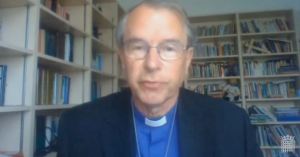 The Lord Bishop of Durham [V]: My Lords, prisoners serving short sentences for non-violent crimes often get stuck in a so-called revolving door, with serious consequences to their family relationships, housing and rehabilitation. Will the commission be considering reports into the issues around short sentences and consider alternatives to custodial sentences, to enable rehabilitation in the community? Continue reading “Bishop of Durham asks if criminal justice Royal Commission will examine short sentences”
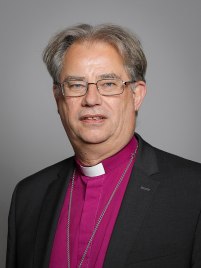 The Lord Bishop of Oxford: To ask Her Majesty’s Government what assessment they have made of (1) the impact, and (2) the effectiveness, of requiring employers in the gig economy to provide workers and contractors with a written statement of their core terms of employment. [HL9569]
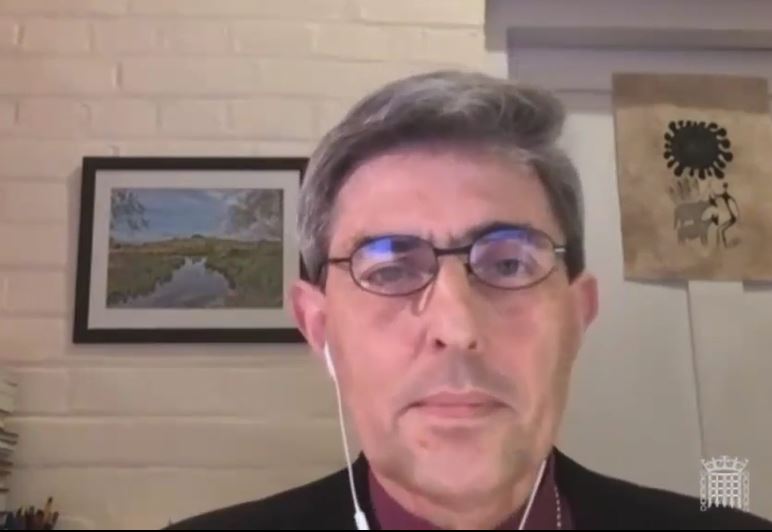
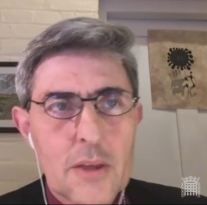 The Lord Bishop of Winchester [V]: My Lords, I am grateful to Her Majesty’s Government for seeking to ensure that the appropriate measures are in place to protect the most vulnerable and restrict the spread of this virus. It is important that we do not prolong such stringent lockdown measures because of the way that they impact on the mental, physical and, indeed, spiritual well-being of the population. However, I will not be supporting the fatal Motion. I recognise the exceptional nature of these times, and welcome that the regulations will enable places of worship to remain open for private prayer and broadcasting acts of worship. Creating such broadcast acts of worship often requires a team of people, both amateurs and professionals. I would welcome more clarity from the Minister on the number of people allowed to do this.
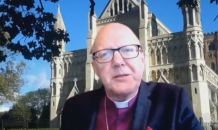 The Lord Bishop of St Albans [V]: My Lords, there has been a particular problem in the rental market, whereby renters and landlords have suffered as a result of these latest measures. Given the temporary protection from eviction for those living in tier 2 and 3 areas, could the Government confirm whether an eviction ban will now be extended across the country and whether they will now develop a strategy to help tackle arrears brought on by Covid to avoid a tragic spike in homelessness?
 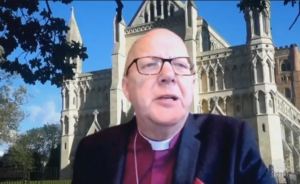 The Lord Bishop of St Albans [V]: My Lords, with regions such as the north-west, the north-east and Yorkshire hosting less than one disabled-access home for every 100 homes, and regions such as the West Midlands hosting just over one disabled-access home for every 300 homes, given that 15.2% of the population is elderly and 18% of the population is disabled, is it now time that the Government mandated targets for disabled-access homes rather than simply relying on local authorities?
 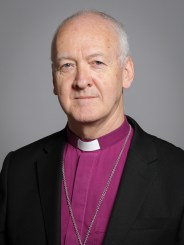 The Lord Bishop of Leeds: To ask Her Majesty’s Government what representations they have made to the governments of Armenia and Azerbaijan to cooperate with the International Committee of the Red Cross to facilitate the return of prisoners of war and bodies from the conflict in the Nagorno-Karabakh region. [HL9728]
 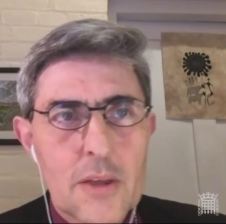 The Lord Bishop of Winchester [V]: My Lords, a recent survey of apprenticeship employers published by the Department for Education indicates that employers see higher apprenticeships as better value for money than lower level 2 and 3 apprenticeships, so they are utilising levy funds to upskill existing staff, rather than to train new recruits. Can the Minister confirm what plans Her Majesty’s Government have to prevent further decline in level 2 apprenticeships to ensure that these apprenticeship pathways are available to new recruits across the country?

You must be logged in to post a comment.