On 20th October Lord Ravensdale asked the Government “what assessment they have made of the report by the International Energy Agency World Energy Outlook 2020, published on 13 October.” The Bishop of Salisbury asked a follow up question:
The Lord Bishop of Salisbury [V]: My Lords, the report from the IEA focuses on the impact of the pandemic on macro energy generation and distribution, and it emphasises the vulnerability of the national grid. The pandemic has emphasised the importance of the local, so how does the Minister see the Government’s role in encouraging the rapid development of local micro energy generation? Continue reading “Bishop of Salisbury asks Government about investment in local micro-energy generation”
On 19th and 20th October the House of Lords considered the Government’s UK Internal Market Bill at its Second Reading. The Bishop of Leeds spoke in the debate:
The Lord Bishop of Leeds [V]: My Lords, I add my congratulations to the noble Baroness, Lady Hayman of Ullock, and look forward to her future contributions to this House. I fully endorse the arguments set out by the noble and learned Lord, Lord Judge. I concur with the concerns set out in the report cited by other noble Lords earlier. I even welcome the commitments articulated by the Minister, but I question how they can be trusted, given the underlying ethic of the Bill—and it is absolutely right for archbishops to ask questions of such matters.
Relations with potential partners usually depend on integrity. Trade, security, migration and so on all rest on fundamental trust. Trust cannot be one-sided, or it is not trust at all. Respecting one’s interlocutors is essential. This is inevitably evidenced in language. The Bill before us assumes that our interlocutors cannot be trusted and will behave in bad faith, and that we need to be protected from them. If they do not give us what we demand, we are free to do our own thing, including breaking the law and reneging on agreements made less than a year ago that were said at the time to be “oven ready”—a good arrangement that required “no more negotiations”. What the Bill does not ask is why our word should be trusted by others. Continue reading “UK Internal Market Bill: Bishop of Leeds says trust, integrity and morality matter in international relations”
On 19th October the House of Commons considered and passed the General Synod (Remote Meetings) (Temporary Standing Orders) Measure. The Second Church Estates Commissioner, Andrew Selous MP, introduced the Measure:
First Delegated Legislation Committee [Julie Elliott in the Chair]
General Synod (Remote Meetings) (Temporary Standing Orders) Measure
The Second Church Estates Commissioner (Andrew Selous): I beg to move,
That the Committee has considered the General Synod (Remote Meetings) (Temporary Standing Orders) Measure (HC 879).
It is a pleasure to serve under your chairmanship, Ms Elliott. I reassure Members that we should be able to dispose of this matter reasonably speedily. The Measure will enable the General Synod, which is the legislative body for the Church of England, to meet and conduct its business remotely. The current coronavirus restrictions mean that it is not practically possible for the Synod to meet in the usual way with 500 people from across England gathering in the same place, either over the road in Church House here in London, or in York. In this Parliament, as we are all aware, we have been able to make provision for remote participation in sittings using the orders of the House. However, as the General Synod was created by statute law, it does not have the same freedom, and legislation is required to enable it to meet remotely. Continue reading “House of Commons passes General Synod (Remote Meetings) (Temporary Standing Orders) Measure”
On 19th and 20th October the House of Lords considered the Government’s UK Internal Market Bill at its Second Reading. The Archbishop of Canterbury spoke in the debate, repeating the concerns he and his fellow UK Anglican Primates had raised about the rule of law, devolution and the Northern Ireland peace process, in an open letter published that day by the Financial Times:
The Archbishop of Canterbury: My Lords, I look forward to hearing, here and online, the contributions to come, especially the maiden speeches of the noble Baroness, Lady Hayman of Ullock, and the noble Lord, Lord Sarfraz.
I also concur totally with the powerful and remarkable speech by the noble and learned Lord, Lord Judge. What we are called to do above all in this country, deeply embedded in our Christian culture and history, is to act justly and honestly. We cannot do so if we openly speak of breaking a treaty under international law, reached properly, on which peace in part of the UK relies. My distinguished former colleague Sentamu, who paid with beatings for his defence of law and justice in Uganda would have spoken trenchantly. I regret his absence.
There are some who claim that I and my colleagues who wrote in the FT this morning are misinformed. But the letter—and this intervention—followed the lead of those who have spent their lives seeking peace in Ireland. Peace is surely something of which religious leaders should speak. We also listened to the Select Committee on the Constitution, to all five living former Prime Ministers, two former Conservative leaders, and distinguished judges, including former Presidents of the Supreme Court and the former Lord Chief Justice of England and Wales, to name but a few. Continue reading “UK Internal Market Bill: Archbishop warns of consequences for Northern Ireland peace and UK reputation if international law is broken”
On 19th October 2020 Lord Alton of Liverpool asked the Government “what estimate they have made of the costs of their decision to appeal the decision of the High Court on 19 December 2019 in Project for the Registration of Children as British Citizens versus Home Office.” The Bishop of London asked a further question:
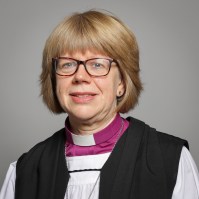
The Lord Bishop of London: My Lords, the judgment in December 2019 highlighted that the Home Office application fee to register a British citizen was £1,012 for children, even though the Home Office estimated the cost of processing applications for registration as £372. Putting a financial barrier on being able to access one’s rights is a clear barrier to one’s access to justice. What assessment have Her Majesty’s Government made of the number of people whose rights are limited by the level of the fee that has been set? Continue reading “Bishop of London asks Government about high cost of registering children as British citizens”
On Monday 19th October the Bishop of St Albans received a written answer to a question on stalled housing developments:
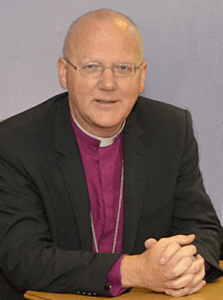
The Lord Bishop of St Albans: To ask Her Majesty’s Government, further to the Written Answer by Lord Greenhalgh on 1 October (HL8296) and the White Paper Planning for the Future, published on 6 August, what assessment they have made of the reasons for low market absorption rates as the responsible factor for stalled developments. [HL8828] Continue reading “Bishop of St Albans asks Government about stalled housing developments”
On 15th October 2020 Lord Baker of Dorking asked the Government “further to the estimate by the Office for National Statistics in Labour market overview, UK: October 2020, published on 13 October, that approximately 60 per cent of those unemployed as a result of the COVID-19 pandemic are aged between 16 and 24, what action they are taking to reduce youth unemployment.” The Bishop of Oxford asked a further question:
The Lord Bishop of Oxford: My Lords, I thank the Minister for the compassion and passion in her answers but, as we must acknowledge, this is a very serious situation. The Resolution Foundation now forecasts that unemployment among the 18 to 29 year-olds could triple to 17% by late 2020—a level not seen since 1984. Given the well-established link between unemployment and mental health, and the risks of a mental health epidemic, will the Government undertake to fund support for additional mental health provision, in addition to the education and employment initiatives which she has unpacked, to support this very hard-pressed and vulnerable Covid generation? Continue reading “Bishop of Oxford – more mental health funds needed due to Covid and rise in youth unemployment”

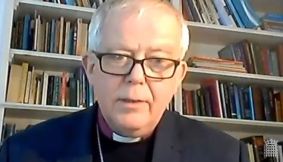 The Lord Bishop of Salisbury [V]: My Lords, the report from the IEA focuses on the impact of the pandemic on macro energy generation and distribution, and it emphasises the vulnerability of the national grid. The pandemic has emphasised the importance of the local, so how does the Minister see the Government’s role in encouraging the rapid development of local micro energy generation? Continue reading “Bishop of Salisbury asks Government about investment in local micro-energy generation”
 On 20th October the Bishop of St Albans received a written answer to a question he had asked Government about the restoration of wood pasture:
 The Lord Bishop of London: To ask Her Majesty’s Government what assessment they have made of the impact of visiting restrictions at care homes on the wellbeing of residents; and what plans they have to review their policy on visiting arrangement at care homes during the COVID-19 pandemic. [HL8737]
 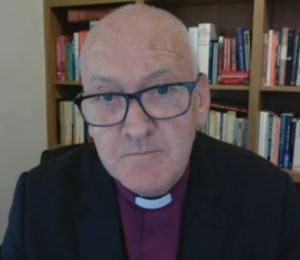 The Lord Bishop of Leeds [V]: My Lords, I add my congratulations to the noble Baroness, Lady Hayman of Ullock, and look forward to her future contributions to this House. I fully endorse the arguments set out by the noble and learned Lord, Lord Judge. I concur with the concerns set out in the report cited by other noble Lords earlier. I even welcome the commitments articulated by the Minister, but I question how they can be trusted, given the underlying ethic of the Bill—and it is absolutely right for archbishops to ask questions of such matters.
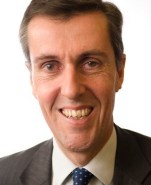 It is a pleasure to serve under your chairmanship, Ms Elliott. I reassure Members that we should be able to dispose of this matter reasonably speedily. The Measure will enable the General Synod, which is the legislative body for the Church of England, to meet and conduct its business remotely. The current coronavirus restrictions mean that it is not practically possible for the Synod to meet in the usual way with 500 people from across England gathering in the same place, either over the road in Church House here in London, or in York. In this Parliament, as we are all aware, we have been able to make provision for remote participation in sittings using the orders of the House. However, as the General Synod was created by statute law, it does not have the same freedom, and legislation is required to enable it to meet remotely.
 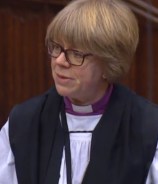 The Lord Bishop of London: My Lords, the judgment in December 2019 highlighted that the Home Office application fee to register a British citizen was £1,012 for children, even though the Home Office estimated the cost of processing applications for registration as £372. Putting a financial barrier on being able to access one’s rights is a clear barrier to one’s access to justice. What assessment have Her Majesty’s Government made of the number of people whose rights are limited by the level of the fee that has been set?
 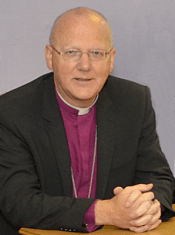 The Lord Bishop of St Albans: To ask Her Majesty’s Government, further to the Written Answer by Lord Greenhalgh on 1 October (
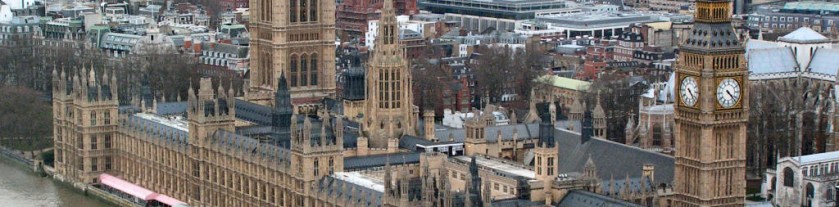 Parliament met this week in Westminster and online. Prayers were read at the start of each sitting day in the House of Lords by the Bishop of Oxford.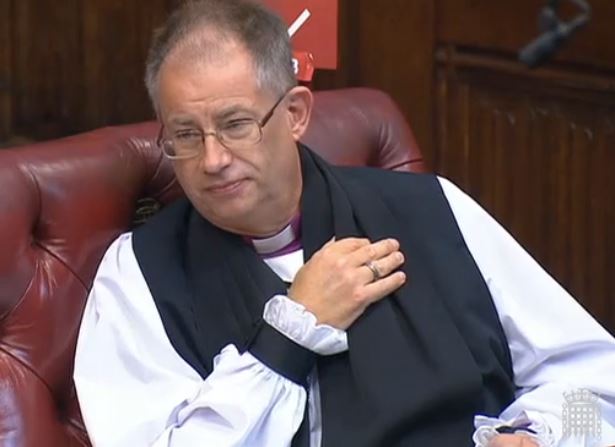
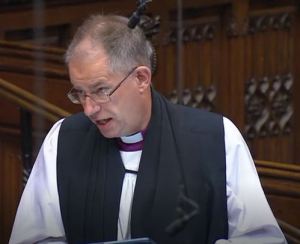 The Lord Bishop of Oxford: My Lords, I thank the Minister for the compassion and passion in her answers but, as we must acknowledge, this is a very serious situation. The Resolution Foundation now forecasts that unemployment among the 18 to 29 year-olds could triple to 17% by late 2020—a level not seen since 1984. Given the well-established link between unemployment and mental health, and the risks of a mental health epidemic, will the Government undertake to fund support for additional mental health provision, in addition to the education and employment initiatives which she has unpacked, to support this very hard-pressed and vulnerable Covid generation?

You must be logged in to post a comment.