House of Lords approves Church of England Channel Islands Measure

On 15th July 2020 the House of Lords approved a Motion to pass for Royal Assent the Church of England Channel Island Measure, which was introduced by the Bishop of Birmingham, Rt Revd David Urquhart. The full debate is below.

Channel Islands Measure

Motion to Direct

Moved by The Lord Bishop of Birmingham:

That this House do direct that, in accordance with the Church of England Assembly (Powers) Act 1919, the Channel Islands Measure be presented to Her Majesty for the Royal Assent.
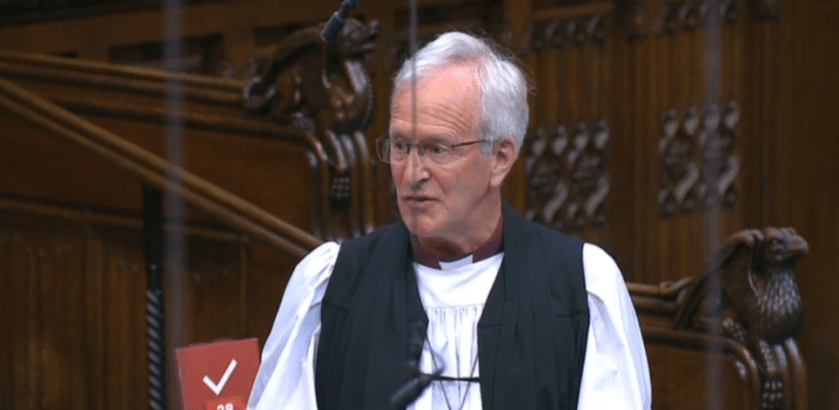
The Lord Bishop of Birmingham: My Lords, I shall give some brief historical and current background to the Channel Islands Measure, then outline its content.

Until the 16th century, the Channel Islands were part of the Church of France and the diocese of Coutances. In 1496, Henry VII obtained a papal bull transferring the islands to the English diocese of Salisbury, but it seems this was not put into effect. The islands finally became part of the Church of England in 1569, when they were transferred to the diocese of Winchester by Order in Council of Elizabeth I. Since then, the Church of England has been the established Church of the islands.​ Continue reading “House of Lords approves Church of England Channel Islands Measure”
Bishop of St Albans asks Government for sufficient resources for small businesses needing help with Brexit transition

On 15th July 2020 a Government statement was repeated in the House of Lords on preparations for the end of the Brexit transition period. The Bishop of St Albans, Rt Revd Alan Smith, asked a follow-up question:

The Lord Bishop of St Albans [V]: My Lords, most larger businesses will have the personnel and resources to advise and steer them through the transition period. However, some SMEs are very worried about how they will navigate complex regulations with little support. One feature of the lockdown is that it has often been impossible to speak to an adviser on a helpline and people have been directed to websites that are difficult to use. Can the Minister assure the House that there will be sufficient resources, including helplines staffed by knowledgeable people who can help SMEs as they go through this process? Continue reading “Bishop of St Albans asks Government for sufficient resources for small businesses needing help with Brexit transition”
Bishop of Durham asks Government about impact of two-child limit on poverty in working families

On 15th July 2020 Lord McNicol of West Kilbride asked the Government “what steps they are taking to reduce the number of children living in poverty in working households.” The Bishop of Durham, Rt Revd Paul Butler, asked a follow-up question:

The Lord Bishop of Durham [V]: My Lords, in the light of the Minister’s last answer about continual review, in April 2019 59% of families affected by the two-child limit were working, with many struggling to afford essentials. When the new statistics on the policy are released tomorrow, will Her Majesty’s Government finally agree to review and assess the evidence that the two-child limit negatively impacts children in working families and that lifting it is the most effective way to reduce the number of children living in poverty? Continue reading “Bishop of Durham asks Government about impact of two-child limit on poverty in working families”
Bishop of St Albans supports food security amendments to the Agriculture Bill

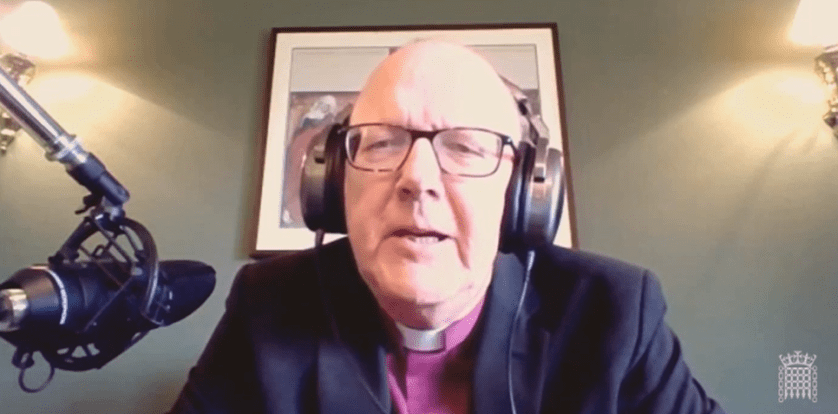
On 14th July the House of Lords considered the Government’s Agriculture Bill in Committee. The Rt Revd Alan Smith, Bishop of St Albans, spoke in the debate on amendments focusing on food security.

The Lord Bishop of St Albans: My Lords, I support a number of amendments in this group, in particular those that touch on food security, such as Amendments 35 and 60. Food security is crucial, both for our protection and for the flourishing and survival of any nation. History teaches us that food shortages have always occurred. They are often caused by many different factors and occur at an alarming rate. One of the earliest historical examples of this is found in the Hebrew scriptures, in Genesis chapters 41 and 42, where we read of Jacob storing up grain in Egypt ready for the seven years of famine. Not only did his actions save the lives of many, but underlying this narrative is the message that food is also about political power:

“And all the world came to Egypt to buy grain from Joseph, because the famine was severe everywhere.”

Continue reading “Bishop of St Albans supports food security amendments to the Agriculture Bill”

Bishop of Birmingham asks Government about relocation of the House of Lords

On 14th July Lord Young of Cookham asked Her Majesty’s Government “whether they plan to relocate the House of Lords to York.” The Rt Revd David Urquhart, Bishop of Birmingham, asked a follow up question focusing on the relocation of the House of Lords.

The Lord Bishop of Birmingham: Does the Minister agree that, whether temporarily or permanently, it is better, in a bicameral system, as the noble Lord, Lord Lang, alluded to, for the two Houses to be placed together? In terms of reaching the people, would he also commend the Lord Speaker’s outreach programme to bring civic duties and understanding to schools as a good way of communicating? By the way, when this was last talked about here, the incoming Archbishop of York offered his garden, which is extensive, as a place. May I humbly suggest that there is a nearer alternative in Birmingham?

Continue reading “Bishop of Birmingham asks Government about relocation of the House of Lords”

Bishop of Birmingham asks Government about supply chains for all UK imports

On 14th July Lord Haskel asked Her Majesty’s Government “whether clauses (1) protecting human rights, and (2) maintaining environmental standards, will be inserted in the trade agreements being negotiated as a result of the United Kingdom’s departure from the European Union.” The Rt Revd David Urquhart, Bishop of Birmingham, asked a follow up question focusing on good working conditions.

The Lord Bishop of Birmingham: My Lords, just this week we have heard reports of poor working conditions and pay in factories in Leicester, but the UK is also heavily reliant on international supply chains. Will the Minister specify what steps the Government are taking to ensure that trade agreements insist that all UK imports are produced by workers with good conditions and dignified pay?

Continue reading “Bishop of Birmingham asks Government about supply chains for all UK imports”

Commons passes Church of England Channel Islands Measure

On 14th July the House of Commons approved a Motion to give Royal Assent to the Church of England Channel Islands Measure. The Motion, taken in a Delegated Legislation Committee, was introduced by the Second Church Estates Commissioner, Andrew Selous MP.

Channel Islands Measure

Sixth Delegated Legislation Committee

[Graham Stringer in the Chair]

The Second Church Estates Commissioner (Andrew Selous): I beg to move,

That the Committee has considered the Channel Islands Measure (HC 548).

It is a pleasure to serve under your chairmanship, Mr Stringer. I am grateful to colleagues for turning up this morning; I hope that the Measure will not detain us for long. The Measure is very simple: it will transfer the Channel Islands from the diocese of Winchester to the diocese of Salisbury. The transfer will be achieved by an Order in Council. The reason for it is that back in 2008 there was a safeguarding incident on Jersey, and the handling of the matter led to a dispute between the Dean of Jersey and the Bishop of Winchester. In 2018 the Archbishop of Canterbury appointed a commission, chaired by the former Bishop of London, Lord Chartres, to consider and report on the relationship between the Channel Islands and the wider Church of England. Continue reading “Commons passes Church of England Channel Islands Measure”

Bishop of Salisbury asks Government about overseas aid for Sudan and South Sudan

On 13th July Lord Chidgey asked Her Majesty’s Government “what assessment they have made of the impact of (1) the COVID-19 pandemic, and (2) desert locusts, on food security in countries in east Africa, and in particular in (a) Sudan, and (b) South Sudan”. The Rt Revd Nick Holtam, Bishop of Salisbury asked a follow up question, focusing on overseas aid.

The Lord Bishop of Salisbury: With the economy of Sudan collapsing and inflation rocketing, the Anglican Archbishop of Khartoum said recently that people would rather die of Covid-19 than of hunger. In South Sudan the Anglican Archbishop of Juba said that mortality rates were already high and, in response to the virus, hygiene and social isolation are difficult—indeed, almost impossible. The diocese of Salisbury has a long-standing partnership with the Anglican churches in those countries and we have launched an emergency appeal this month for at least £50,000 for hygiene and food. What are the British Government doing to support the improvement of hygiene and food in those countries? What does the Minister think we are learning about the motivation for our giving aid to these countries?

Continue reading “Bishop of Salisbury asks Government about overseas aid for Sudan and South Sudan”

Bishop of Newcastle asks Government about coastal communities in the North East

On 13 July the Rt Revd Christine Hardman, Bishop of Newcastle, received a written answer to a question from Lord Greenhalgh on the Coastal Communities Fund.

Lord Bishop of Newcastle: HL6244 To ask Her Majesty’s Government what proportion of the Coastal Communities Fund has been spent since 2012 on regions (1) in the North East of England, and (2) north of the River Tyne in England.

Continue reading “Bishop of Newcastle asks Government about coastal communities in the North East”

Church Commissioner’s Written Answers: choral singing during Covid-19

On 10th July 2020 the Second Church Estates Commissioner, Andrew Selous MP, answered a written question on singing in churches from Bell Ribeiro-Abby MP.

Bell Ribeiro-Addy: 69712 To ask the Member for South West Bedfordshire, representing the Church Commissioners, what the timescale is for allowing churches to resume choir singing; and what guidance will be published for churches on resuming choir singing safely during the covid-19 outbreak.

Continue reading “Church Commissioner’s Written Answers: choral singing during Covid-19”