On 3rd March 2020 the House of Lords considered the Government’s Divorce, Dissolution and Separation Bill at its Committee Stage. The Bishop of Salisbury, Rt Revd Nicholas Holtam, supported two amendments on relationship support, to ensure that divorcing couples had access to information about support and mediation to enable them to consider alternative ways forward before being issued with a final divorce order, and that this resource is funded. One of the amendments was put by the former Bishop of Oxford, Lord Harries of Pentregarth. The amendments were resisted by Government on grounds that they did not consider the Bill to be the right vehicle for tackling the wider issues that lead to relationship breakdown. The amendments were debated before being withdrawn.
 The Lord Bishop of Salisbury: My Lords, I rise in support of Amendments 3 and 21 and to provide a brace of bishops. I want to observe the seriousness and the quality of this debate as we as a House navigate the support of marriage as an institution and of couples in keeping their vows while recognising that marriages break down and trying to provide adequately for those circumstances. If the noble Baroness, Lady Tyler, is right that support for the relationship support services sometimes depends on the whim of a Minister or Prime Minister, one might hope that the present occupant of 10 Downing Street would take a particular interest in these matters.
On average, the Church of England conducts about 1,000 weddings a week. We have experience of conducting, preparing people for and supporting them in marriages. Quite often, couples that I have prepared say that they want to get married in church because they know that they are standing and making their vows in a solemn and serious place that has significance in the community and before God. They want the support of the community gathered around them.
Continue reading “Divorce, Dissolution and Separation Bill: Bishop of Salisbury supports amendments on relationship support”

 On 5th March 2020 the Bishop of Carlisle, Rt Revd James Newcome, received a written answer to a question on podiatry:
 On 4th March 2020 Lord Campbell-Savours asked the Government “what assessment they have made of the management of investigations into historic sexual offences.” The Bishop of Salisbury, Rt Revd Nicholas Holtam, asked a follow up question:
 This week in Parliament the Bishop of Gloucester led a debate on early years interventions to help children and families, spoke during the passage of the Government’s Terrorist Offenders (Restriction of Early Release) Bill, and and also spoke in a debate on alternatives to prison custody for women who offend.
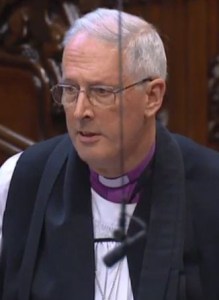 The Lord Bishop of Southwark: My Lords, I am grateful to the noble Baroness, Lady Tonge, for securing this important debate. I also express my gratitude to the Minister and to his officials for the careful but clear
 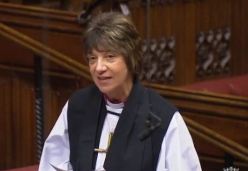 On 27th February 2020 the House of Lords debated a motion from Lord Bates, “to ask Her Majesty’s Government what assessment they have made of the findings of the Checkpoint programme, run by Durham Constabulary, to reduce reoffending rates and custodial sentences.” The Bishop of Gloucester, Rt Revd Rachel Treweek, spoke in the debate:
 The Lord Bishop of Leeds: My Lords, I am grateful for that Statement and look forward to the review by Dame Louise Casey. Does the Minister agree that many elements of civil society, particularly churches, faith communities and charities, while waiting for this, are out on the streets almost every night? I refer to what we call floating shelters in many parts of the country through the winter months—which can be five months—which skew the figures a bit, because they take people off the streets. There are some excellent examples in my neck of the woods, where the churches host rough sleepers overnight and the mosques provide the curry.

You must be logged in to post a comment.