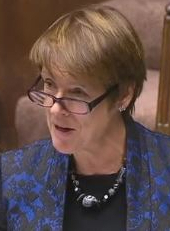
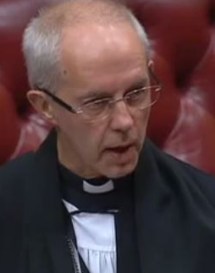
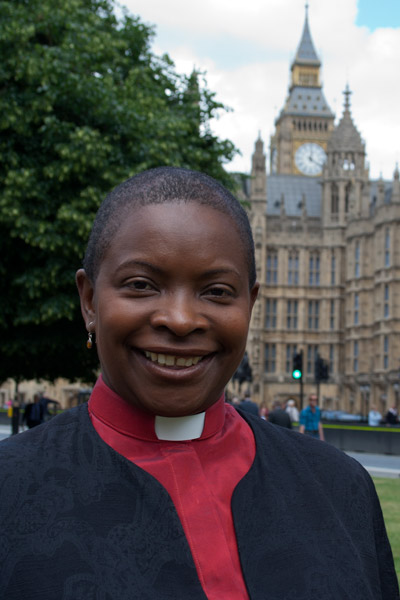
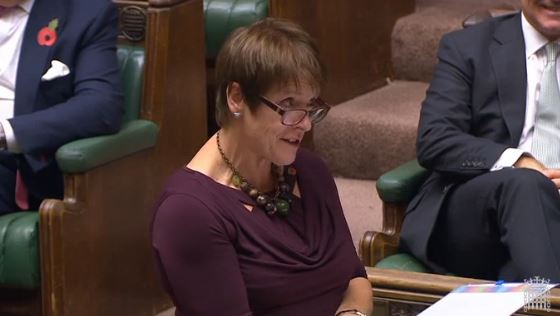
This week in the House of Lords bishops spoke on serious youth violence, and the need to scrap the ‘two-child limit’ welfare policy. They asked questions about climate change, problem gambling in the armed forces, independent living for disabled people, child refugees, higher education funding, music education, and prescription opiates. In the House of Commons the Second Church Estates Commissioner asked the Foreign Secretary about religious literacy training for diplomats, and answered a question on Commissioner landholdings in Scotland. Continue reading “Week in Westminster, 24th-28th June 2019”
Author: parliamentaryunit
Bishop of Chichester calls for “unprincipled and harmful” two-child limit benefits policy to be scrapped
On 27th June 2019 the House of Lords debated a motion from the Liberal Democrat Peer Baroness Janke, “That this House takes note of the impact of recent benefit changes on vulnerable people.” The Bishop of Chichester, Rt Revd Martin Warner, spoke in the debate:

The Lord Bishop of Chichester: My Lords, I too am grateful to the noble Baroness, Lady Janke, for her introduction to this important debate, which touches on a subject that is the responsibility of us all. We should acknowledge that there have been small though welcome attempts by the current Secretary of State to mitigate some of the injustices that have developed in the benefits system in recent years. But I urge that more radical remedial action is needed. In particular, urgent reconsideration is needed of the impact of the two-child limit—a policy which could eventually affect over 3 million children, pushing more than a million who are already in poverty into deeper material and emotional misery.
The introduction of the two-child limit represented a significant shift in social policy. It broke the long-standing principle, upheld by various Governments of all parties, that entitlement to benefits should be linked to need. In its place, no discernible alternative principle underlies the application of the two-child limit.
Bishop of St Albans says community-led approach is crucial in tackling serious youth crime
On 27th June 2019 the House of Lords debated a motion from Lord Paddick, “That this House takes note of the impact of government policy on knife crime”. The Bishop of St Albans, Rt Revd Alan Smith, spoke in the debate:
The Lord Bishop of St Albans: My Lords, I too am grateful to the noble Lord, Lord Paddick, for obtaining this debate and for his excellent analysis of some of the causes and, indeed, the work that has been done on how we might address them, which is a holistic approach. I am also delighted that a number of experts in policing are speaking in this debate. I come to this with little knowledge of that, but I have knowledge through the 136 schools in my diocese—I have been to two this week—and in many of the urban areas across Bedfordshire and Hertfordshire, which seek to bring together groups of young people to reflect on how this can be addressed.
This debate looks at the impact of government policies on serious youth violence. As the causes are many and varied, we need to look at a wide range of different issues. We are all aware that access to lethal weapons has escalated and intensified conflict. Demonstrably, when the year to March 2018 represented the highest number of knife homicides in England and Wales since 1946, it is all too clear to us that it is too easy to obtain weapons, notwithstanding the Offensive Weapons Act 2019. Indeed, from previous problems, for example acid attacks, we are aware that simply removing one way of attacking other people does not necessarily immediately solve a problem. I am therefore delighted that government action in reducing weapon accessibility has had some success, with Operation Sceptre taking some 10,000 knives off the streets. Yet piecemeal approaches will never be enough.
Bishop of Chichester asks Government to consider impact on smaller institutions and effect on local areas, of higher education funding changes
On 27th June 2019 Lord Blunkett asked the Government “what is their estimate of the likely reduction in spend by higher education institutions in England on student teaching and contact time were the recommendations of the independent panel report to the Review into Post-18 Education and Funding implemented.” The Bishop of Chichester, Rt Revd Martin Warner, asked a follow up question:
The Lord Bishop of Chichester: My Lords, any reduction in higher education funding is likely to have a particular impact not merely on teaching and student contact time but on the very future of smaller institutions, such as the Cathedrals Group universities. Does the Minister agree that, as the Government consider reforms, they need to take into account, first, the effect of those reforms on the diversity of the sector and, secondly, their impact on particular localities? Chichester, for example, is the only university in West Sussex. A threat to its funding would seriously damage its contribution to the regeneration of the disadvantaged coastal areas that it serves.
Bishop of Oxford asks Government for its climate change priorities
On 26th June 2019 Lord Bird asked the Government, “by what means, if at all, they require public bodies to act, and to demonstrate how they act, in a manner which seeks to ensure that the needs of the present generation are met without compromising the ability of future generations to meet their own needs.” The Bishop of Oxford, Rt Revd Steven Croft, asked a follow-up question:
The Lord Bishop of Oxford: My Lords, it has been a real privilege today—as the noble Lord, Lord Bird, mentioned—to spend time with some of the 16,000 people, many of them young, representing all faiths and none, who have come to say to Parliament that the time is now on climate change. I very much support the proposal from the noble Lord, Lord Bird. Does the Minister agree that the issues of climate change, both in the material sense and the perceived sense—public opinion—are absolutely the pressing priority for the future generation? Following the commendable adoption of the net zero by 2050 target, will the Minister share with the House what the Government’s next three priorities are in combating climate change?
Continue reading “Bishop of Oxford asks Government for its climate change priorities”
Church Commissioners written answer: Scottish landholdings
Continue reading “Church Commissioners written answer: Scottish landholdings”
Bishop of St Albans asks Government about British arms exported to Saudi Arabia used in Yemen conflict
On 25th June 2019 the Bishop of St Albans asked the Government “what assessment they have made of the impact of weapons exported from the United Kingdom to Saudi Arabia on the conflict in Yemen”. The Lord Bishop, Rt Revd Alan Smith, then asked a follow-up question:
Earl of Courtown (Con): My Lords, Her Majesty’s Government take their arms export responsibilities seriously. We draw on a range of sources in making assessments, including from NGOs and international organisations which detail political and humanitarian developments in Yemen. We also consult regularly with colleagues at our overseas missions and in other government departments to ensure that we have all the relevant information to make an informed decision.
Bishop of St Albans: I thank the Minister for his reply. I was given an assurance in a past written response to a Question that every sale of arms from the UK undergoes a rigorous assessment in the light of serious violations of international humanitarian law. Yet in 2018 a Minister in the other place said:
“The MOD does not investigate allegations of IHL violations”,
and in 2016, as evidenced in the Court of Appeal last week, the decision was made that there would be no assessment of past violations of international humanitarian law with regard to Saudi Arabia. Can the Minister clarify whether international humanitarian law is taken into consideration when selling weapons?
Bishop of Chichester raises concerns about the mental health of unaccompanied child refugees
On 25th June 2019 Lord Dubs asked the Government “how many unaccompanied child refugees have entered the United Kingdom since the beginning of 2016 under (1) section 67 of the Immigration Act 2016 or (2) the provisions of the Dublin III Regulation”. The Bishop of Chichester, Rt Revd Martin Warner, asked a follow-up question:
The Lord Bishop of Chichester: My Lords, is the Minister aware of the recent report by the Church of England’s Children’s Society entitled DistressSignals, in which the mental health of unaccompanied children entering the UK for asylum was examined? The report notes that these children show a high risk of suicide and self-harm and find it extremely difficult to communicate their needs and fears to professionals. Does she recognise the value of these young people being assured and guaranteed access to a guardian—a respected, stable, safe and trained person—so that they can have the support they need?
Caroline Spelman asks Foreign Secretary about religious literacy of diplomats
On 25th June 2019 during Foreig Office Questions, the Second Church Estates Commissioner, Rt Hon Dame Caroline Spelman MP, asked the Foreign Secretary about diplomats and religious literacy:
Dame Caroline Spelman: This Foreign Secretary deserves credit for setting up an independent review into the persecution of Christians worldwide, but will he ensure that a lasting legacy is achieved, whatever the outcome of that review, by ensuring that diplomats who are sent to countries where persecution occurs receive training in religious literacy?
Continue reading “Caroline Spelman asks Foreign Secretary about religious literacy of diplomats”
Bishop of London asks if UK is “going backwards” on independent living for disabled people
On 24th June 2019 Baroness Campbell of Surbiton asked the Government “what crisis prevention measures are in place to address the difficulties of those working-age disabled adults who have lost the support needed to live independently in the community”. The Bishop of London, Rt Revd Sarah Mullally, asked a follow-up question:
Bishop of London: My Lords, the UN Committee on the Rights of Persons with Disabilities has recently stated that the UK was going backwards in terms of independent living and went on to say that it was a human catastrophe. In the Minister’s view, are we are doing enough to involve disabled people in producing, designing and providing better solutions for independent living?
You must be logged in to post a comment.