On 5th December 2018 the House of Lords debated a motion to take note of the Government’s EU Withdrawal Agreement, alongside an Opposition ‘motion to regret’. The Archbishop of Canterbury, Most Revd and Rt Hon Justin Welby, spoke in the debate, emphasising the importance of reconciliation and for the poorest in society to be protected should there be an economic downturn.
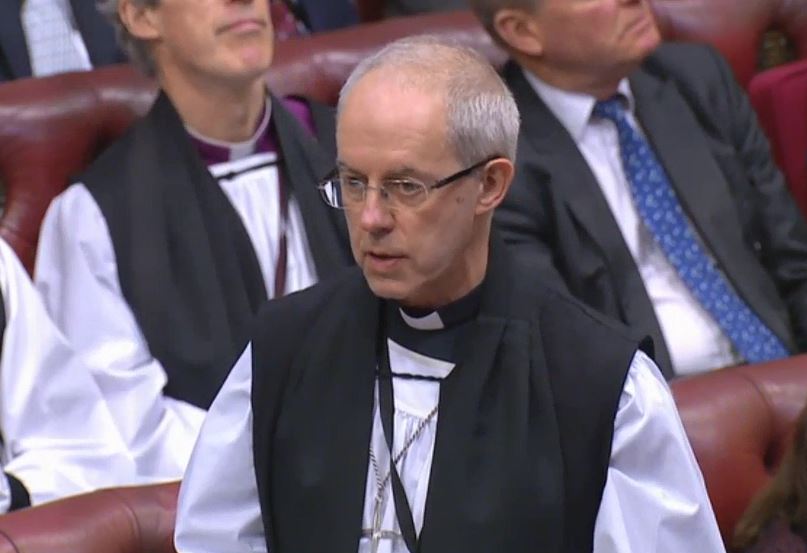 The Archbishop of Canterbury: My Lords, of the choice of psalms that form part of our daily prayers in the Lords, we have Psalm 46, which we heard today,
“The nations rage, the kingdoms totter”,
and Psalm 121, which we will doubtless hear tomorrow,
“I lift up my eyes to the hills …
My help comes from the Lord,
who made heaven and earth”.
Eyes need to be lifted now more than ever, and that is a gift of this House, perhaps more than others. It is a skill and a calling here.
The withdrawal agreement and the political declaration are essentially political more than economic; the debate has moved on from the referendum campaign, which was the other way round. Another change, as we know particularly since yesterday evening, is that the great decisions are now left firmly in the hands of Parliament—as is right.
The decision on this agreement and consequent legislation is thus about not just the immediate politics but national policy and identity, and our future place in the world and how we develop it. It is long term: it is for the child born yesterday and not just for parliamentarians today. The decision must be made in the interests of those who will be here for the long term. In the midst of political struggle, that is a very hard thing to do, but it is the calling of Parliament and one to which it has risen in equal crises in the past. Continue reading “Archbishop of Canterbury speaks on EU Withdrawal Agreement”

 On 5th December 2018 Baroness Randerson asked Her Majesty’s Government “what steps they are taking to raise awareness among the general public of the health impacts of emissions from diesel vehicles.” The Bishop of Carlisle, Rt Revd James Newcome, asked a follow-up question:
 On 5th December 2018 Baroness D’Souza asked Her Majesty’s Government “what plans they have to support and provide resources for reconstruction programmes in Syria.” The Bishop of Coventry, Rt Revd Christopher Cocksworth, asked a follow-up question:
 On 5th December 2018 the Second Church Estates Commissioner, Rt Hon Dame Caroline Spelman MP, answered a written question on the Dean of Christ Church, Oxford:
 On Monday 3rd December 2018 Baroness Benjamin asked Her Majesty’s Government “what financial and other resources will be available to the UK Council for Internet Safety.” The Bishop of Chelmsford, Rt Revd Stephen Cottrell, asked a follow-up question:
 On 4th December 2018 the Bishop of Portsmouth, Rt Revd Christopher Foster, received written answers to four questions on welfare benefits and the two-child limit:
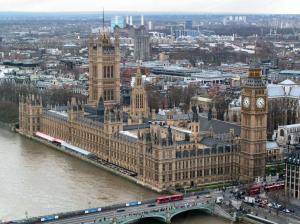 This week in Parliament bishops spoke in debates on child refugees and school funding, and asked questions on gambling-related harm, underage gamblers, tuberculosis, mental health crisis support, support for shipbuilders, and the establishment of the Church of England. They also took part in a vote on the Mental Capacity (Amendment) Bill. In the House of Commons the Second Church Estates Commissioner answered questions on the Northern Forest Initiative, persecuted Christians overseas, the Dean of Christ Church Oxford, the Church of England’s Christmas campaign, church social action projects, problem gambling, redundant churches, and charitable donations.
 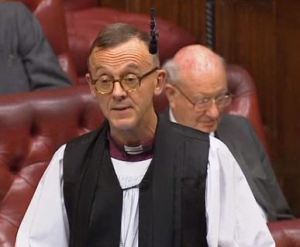 On 29th November 2018 Baroness Morris of Yardley led a debate in the Lords on the motion “That this House takes note of the impact on schools of Her Majesty’s Government’s approach to school funding.” The Bishop of Worcester, Rt Revd John Inge, spoke in the debate:

You must be logged in to post a comment.