
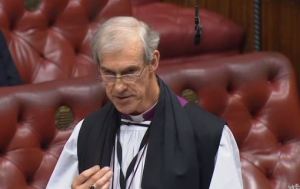
 On 5th July 2018 Lord Darzi of Denham led a debate to mark the 70th anniversary of the NHS, “That this House takes note of the creation of the National Health Service in 1948, and the case for integration of health, mental health, social and community care to equip the National Health Service for the next 70 years.” The Bishop of Carlisle, Rt Revd James Newcome, who is the lead bishop for healthcare, spoke in the debate:
The Lord Bishop of Carlisle: My Lords, I too am most grateful to the noble Lord, Lord Darzi, for securing this timely debate. On the one hand, I am grateful because it is an opportunity to recall and be thankful for the establishment of the NHS in 1948 as one part of a comprehensive vision of social welfare—which, incidentally, owed much to the insight and energy of Archbishop William Temple and other Christian thinkers and activists. Temple and Beveridge were close friends, and much of the post-World War II vision that led to the creation of the welfare state by Bevan and others emerged from church-led consultations. Continue reading “In debate on NHS at 70 Bishop of Carlisle highlights importance of public health and spiritual care”
 On 5th July 2018 Baroness Brinton led a debate on the question to Her Majesty’s Government, “what steps they are taking to ensure that social care in England is adequately funded.” The Bishop of Rochester, Rt Revd James Langstaff, spoke in the debate:
 On 5th July 2018 Baroness Bakewell led a debate on the motion “That this House takes note of part-time and continuing education, and in particular the future of the Open University.” The Bishop of Oxford, Rt Revd Steven Croft, spoke in the debate:
 On 5th July Baroness Thornton asked Her Majesty’s Government “what steps they will take to ensure that National Health Service patients have equitable access to the benefits of (1) artificial intelligence, (2) genomic medicine, (3) new drugs, and (4) innovative treatments.” The Bishop of Oxford, Rt Revd Steven Croft, asked a follow-up question:
 On 4th July 2018 Lord Curry of Kirkharle led a debate in the House of Lords, “To ask Her Majesty’s Government what steps they are taking to address the current humanitarian crisis in South Sudan and to support the delivery of a lasting peace settlement and longer term economic and social development.” The Bishop of Rochester, Rt Revd James Langstaff, spoke in the debate:
 On 3rd July 2018 Baroness Burt of Solihull asked Her Majesty’s Government “how they will ensure that provision for women in the prison system is properly funded, following their decision to abandon plans for five community prisons for women in England and Wales.” The Bishop of Gloucester, Rt Revd Rachel Treweek, asked a follow-up question:
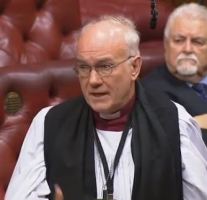 On 2nd July 2018 Baroness Evans of Bowes Park repeated a Statement on the European Council that had been made by the Prime Minister earlier that day in the House of Commons. The Bishop of Chester, the Rt Revd Dr Peter Forster, asked a question about regional disembarkation platforms, which are proposed centres for dealing with migrants and refugees seeking to enter the EU:
 On 2nd July 2018 Lord Cameron of Dillington moved that ‘this House takes note of the Report from the Select Committee on the Natural Environment and Rural Communities Act 2006 “The countryside at a crossroads: Is the Natural Environment and Rural Communities Act 2006 still fit for purpose?” The Bishop of St Albans, the Rt Revd Dr Alan Smith, spoke in the debate:
  This week in the House of Lords the Bishop of London made her first speech during a debate on disability, and the Bishop of St Albans’s Marriage Registration Bill passed its next parliamentary stage. Bishops also spoke about conflict in Nigeria, and asked questions about private finance for prisons, terrorism, and the apprenticeship levy.


You must be logged in to post a comment.