
On 8th November 2016 the House of Commons debated a motion from Labour’s Lisa Nandy MP “That this House notes recent proposals by the Government to expand the role of grammar and faith schools; and calls on the Government to conduct a full assessment of the evidence relating to the effect of grammar schools and faith schools on children’s learning.” The Second Church Estates Commissioner, Rt Hon Dame Caroline Spelman MP, spoke in the debate about the important role of Church of England schools:
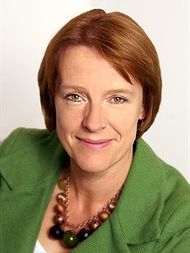 The Second Church Estates Commissioner (Dame Caroline Spelman): I rise to speak on behalf of the Church of England in this important Back-Bench debate. The Church has a long and successful history of educating children in our country. It provided education before the state did. In fact, it is still the largest provider of education besides the state. It has 4,700 schools, most of which are primaries, with 200 secondary schools. Some 84% of its primary and 74% of its secondary schools are good or outstanding.
Many of the remaining schools are in remote rural locations, although I should point out that there are some excellent rural schools. The challenge of trying to sustain a class for each year group in a remote rural area and the difficulty in attracting teachers there make it hard to achieve higher standards in those schools. The Church is committed to raising standards, and with the help of digital means and remote learning methods, it is possible to bring the best teaching to such schools. The Church has fought to sustain these schools for the sake of social cohesion, where other institutions might by now have given up. I am sure that hon. Members with rural constituencies will immediately identify with the importance of the village school, which, with the parish church, may be the only institutional hub for such communities. That underlines the importance of keeping them sustainable.
I want to scotch the myth that Church schools are forces for segregation. That could not be further from the truth. Continue reading “Caroline Spelman MP highlights the role of church schools in promoting excellence and social integration”
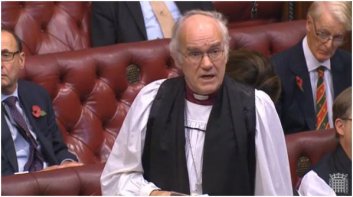 On the 7th November 2016, Earl Howe repeated a statement on the Government’s strategy for the future of the Defence Estate. The Bishop of Chester, the Rt Revd Peter Forster, asked a follow-up question.
  On 7th November 2016, Lord Bridges of Headley repeated a Government statement on the judicial ruling that Parliament must trigger the process for leaving the European Union (Article 50). The Bishop of Leeds, the Rt Rev Nick Baines, asked a follow-up question.
 On 7th November 2016, Lord Laming asked the Government “what steps they are taking to ensure that children in local authority care are placed in a location close to their extended family and current school.” The Bishop of Durham, the Rt Revd Paul Butler, asked a supplementary question.

 On 1st November 2016 the Second Church Estates Commissioner, Rt Hon Caroline Spelman MP, answered a written question from Stewart Jackson MP about progress towards disposing of Church land in Peterborough.
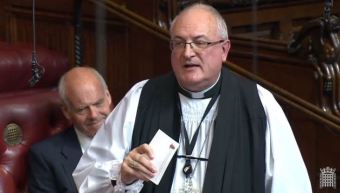 On 31st October 2016, the Bishop of Ely, the Rt Rev Stephen Conway, received a written answer from Lord Nash (Department for Education), to a question about educational support and careers advice provided to disabled young people.
 The Church of England in Parliament
You must be logged in to post a comment.