
On 9th February 2017 the House of Lords debated a motion from Crossbench Peer Baroness Cox “To ask Her Majesty’s Government what is their assessment of recent developments in Syria.” The Bishop of Coventry, Rt Revd Christopher Cocksworth, spoke in the debate:
 The Lord Bishop of Coventry: My Lords, I thank the noble Baroness for securing this debate. My main reason for speaking is to draw your Lordships’ attention and, especially, Her Majesty’s Government, to a recent report by the World Council of Churches, The Protection Needs of Minorities in Syria and Iraq. It is a serious piece of field study that has gathered the first-hand views of some 4,000 people, over 2,000 of them Syrians from minority communities: Christians, Yazidis, Druze, Turkmen and many others. I was in Baghdad and Irbil last month as part of a World Council of Churches delegation to test the findings of the report with community leaders and members, as well as with UNAMI and locally based NGOs, and confirm the soundness of its recommendations. I have every reason to believe that the report’s analysis of the Syrian situation is as credible as we found its Iraqi analysis to be. Therefore I ask the Minister that the Government engage with this robust report. Continue reading “Bishop of Coventry on peacebuilding and need to protect minority communities in Syria”
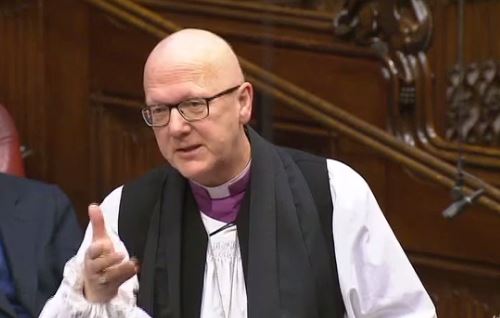
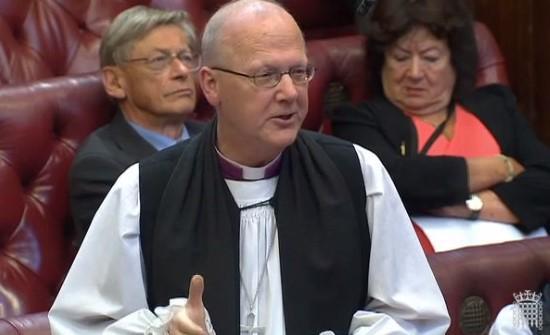
 The Lord Bishop of Chester: My Lords, this is an important amendment because it touches upon the bigger issue of the impact of artificial intelligence on all sorts of aspects of our lives. There is a law called Moore’s law, which says that every two years the power of computers doubles. That has been true over the past 20 or 30 years and we should assume that that power will continue to develop. Artificial intelligence in all its impacting forms will be more and more prevalent in our society and more and more potent in the hands of terrorists in the years to come.
 On the 8th February 2017, Lord Harrison asked Her Majesty’s Government “what measures they are taking to improve productivity in the United Kingdom economy.” The Bishop of St Albans, the Rt Revd Alan Smith, asked a follow-up question.
 On 7th February 2017, Lord Bourne gave a statement to the House on the publication of the Government’s new White Paper on housing. The Bishop of Chester, Rt Revd Peter Forster, asked a question about falling house prices.
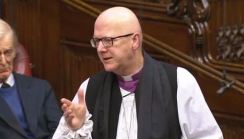 On 7th February 2017, Lord Bourne of Aberystwyth made a statement to the House of Lords on the publication of the Government’s new White Paper on housing. The Bishop of St Albans, Rt Revd Alan Smith, responded, welcoming the report and asking about the Government’s plans to develop rural housing.

You must be logged in to post a comment.