
 On 11th April 2016, Lord Holmes of Richmond asked Her Majesty’s Government “what steps they are intending to take to address the issue of the unbanked and underbanked in the United Kingdom.” Lord Ashton of Hyde responded. The Bishop of Durham, the Rt Revd Paul Butler, asked a follow up question. Continue reading “Bishop of Durham highlights importance of Credit Unions”
Author: parliamentaryunit
Bishop of Leeds asks Government about Daesh atrocities, Iraq and Kurdistan
 On 5th April 2016 the Bishop of Leeds, Rt Revd Nick Baines, received written answers to five questions to Government on Daesh atrocities, Iraq and Kurdistan:
The Lord Bishop of Leeds: To ask Her Majesty’s Government what assessment they have made of reports of the use of chemical weapons by Daesh in Iraq.
Baroness Anelay of St Johns: There are credible reports that Daesh has used chemical weapons in Iraq. The Government of Iraq, with support from the Organisation for the Prohibition of Chemical Weapons (OPCW), investigated allegations of chemical weapons use in Iraq last year and has concluded that sulphur mustard was used against Peshmerga fighters on 11 August 2015. Continue reading “Bishop of Leeds asks Government about Daesh atrocities, Iraq and Kurdistan”
Bishop of Coventry asks Govt about religious freedom, reconciliation and reconstruction in Iraq
 On 5th April 2016 the Bishop of Coventry, Rt Revd Christopher Cocksworth, received written answers to three questions on religious freedom, and post-conflict reconciliation and reconstruction in Iraq and Iraqi Kurdistan:
The Lord Bishop of Coventry: To ask Her Majesty’s Government what assessment they have made of the extent of freedom of religion or belief in Iraq and in Iraqi Kurdistan. Continue reading “Bishop of Coventry asks Govt about religious freedom, reconciliation and reconstruction in Iraq”
Bishop of Southwark asks about humanitarian aid and displaced persons in Iraq
 On 1st April 2016 the Bishop of Southwark, Rt Revd Christopher Chessun, received three written answers on Iraq, aid and displaced persons:
The Lord Bishop Of Southwark: What percentage of the Department for International Development’s humanitarian effort in Iraq has been transferred to partners and agencies working in Iraq. [HL7308] Continue reading “Bishop of Southwark asks about humanitarian aid and displaced persons in Iraq”
Bishop of Coventry asks Government about humanitarian aid for those fleeing conflict in Iraq
 On Friday 1 April the Bishop of Coventry, Rt Revd Christopher Cocksworth, received a written answer to a question on humanitarian assistance in Iraq:
The Lord Bishop Of Coventry: What steps they are taking to ensure that they have sufficient measures in place to meet any humanitarian need arising from military efforts to liberate Mosul from Daesh. [HL7270] Continue reading “Bishop of Coventry asks Government about humanitarian aid for those fleeing conflict in Iraq”
Church of England Week in Westminster, 21st – 23rd March 2016
 Welcome to the Church of England’s weekly round-up of activity in Parliament.
This week bishops in the House of Lords sponsored, spoke to and voted on amendments to the Government’s Immigration Bill and Housing and Planning Bill. Bishops also spoke in debates on the 2016 Budget and asked questions on rural transport, the case of Asia Bibi and Disability Living Allowance appeals. The Lords rose on Wednesday for the Easter recess. Continue reading “Church of England Week in Westminster, 21st – 23rd March 2016”
Budget debate: Bishop of Portsmouth calls on Government to ‘set economic course with a stronger moral compass’
On 23rd March 2016 the House of Lords debated the 2016 Budget statement. The Bishop of Portsmouth, Rt Revd Christopher Foster, spoke in the debate:
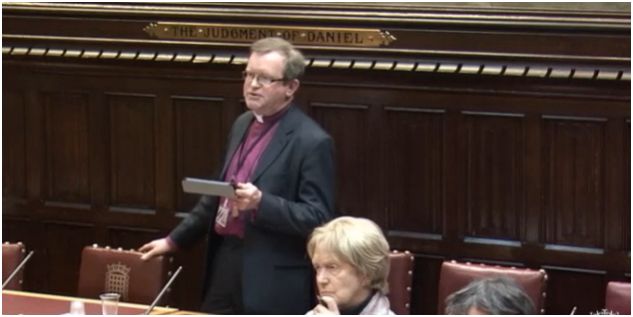 The Lord Bishop of Portsmouth: My Lords, in contributing to this debate and responding to the Chancellor of the Exchequer’s Budget Statement last week, to the subsequent events and to the debate in the other place, I welcome some proposals, express some surprise, and register disappointment—indeed, shock—at some of the measures announced. First, it is good to congratulate the Chancellor and Government on the intention to raise the tax free personal allowance to £11,500 this time next year. Lifting about 1.3 million people out of income tax is, of itself, welcome, although there are some potential drawbacks to which I will return a little later. Continue reading “Budget debate: Bishop of Portsmouth calls on Government to ‘set economic course with a stronger moral compass’”
Housing and Planning Bill: Bishop of St Albans supports amendment to planning requirements on small developments
On 23rd March, the Bishop of St Albans, the Rt Revd Alan Smith, supported an amendment at Committee Stage of the Government’s Housing and Planning Bill. The amendment, tabled by Baroness Royall, sought to protect the right of local authorities to impose section 106 requirements on smaller developments. It was withdrawn after the debate. Baroness Williams of Trafford responded on behalf of the government.

Bishop of St Albans asks Government about support for rural transport
On 22nd March 2016 Lord Greaves asked Her Majesty’s Government “what assessment they have made of the levels of service provision and council tax following local authority budget decisions for 2016–17.” The Bishop of St Albans, Rt Revd Alan Smith, asked a follow up question about rural bus services.
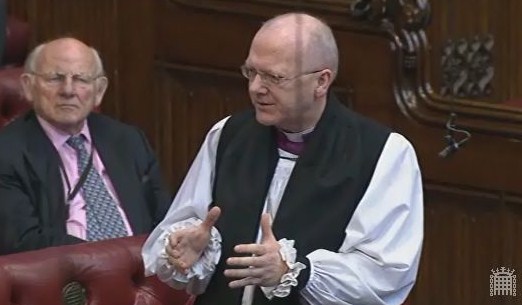 The Lord Bishop of St Albans: My Lords, recently the Campaign for Better Transport has estimated that local authority subsidies for rural bus services are likely to be cut this year alone by £27 million. In Hertfordshire, where I live and work, there have been cuts since 2010 of 62%. Forty rural bus services have seen radical declines and 14 have gone altogether. While I recognise some of the things the Government are doing, not least the serious increase in the rural services delivery grant, will the Minister tell your Lordships’ House the long-term plans of Her Majesty’s Government to engage with local authorities to ensure that we have proper rural transport as one of the essential elements of rural sustainability? Continue reading “Bishop of St Albans asks Government about support for rural transport”
Bishop of St Albans asks Government about disability living allowance appeals
On 22nd March the Bishop of St Albans received two written answers to questions on Disability Living Allowance appeals.
The Lord Bishop of St Albans: To ask Her Majesty’s Government how many individuals who previously claimed a motability allowance under the Disability Living Allowance have (1) lost that allowance after being reassessed for Personal Independence Payments, and (2) kept that allowance after being reassessed for Personal Independence Payments. [HL6794] Continue reading “Bishop of St Albans asks Government about disability living allowance appeals”
 The Church of England in Parliament
You must be logged in to post a comment.