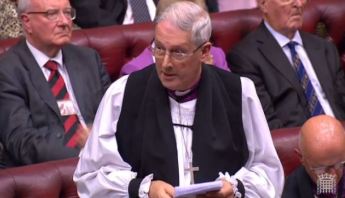
 On the 12th April 2016 the Bishop of Southwark, the Rt Revd Christopher Chessun received a written answer to a question about Syrian refugees.
Continue reading “Bishop of Southwark: Written Question on Syrian Refugees”

On the 12th April 2016 the Bishop of Southwark, the Rt Revd Christopher Chessun received a written answer to a question about Syrian refugees.
Continue reading “Bishop of Southwark: Written Question on Syrian Refugees”
 On the 5th April 2016 the Bishop of Southwark, the Rt Revd Christopher Chessun received a written answer to a question about Iraq and the Islamic State.
Continue reading “Bishop of Southwark: Written Question on Iraq and Daesh”
On 11th April 2016 the House of Lords considered the Government’s Housing and Planning Bill at Report Stage. The Bishops of Coventry and Chester took part in a number of votes that were held on amendments: Continue reading “Divisions: Housing and Planning Bill”
 On 11th April, Baroness Stowell of Beeston repeated a statement regarding the Panama Papers made by the Prime Minister in the House of Commons. The Bishop of Coventry, the Rt Revd Christopher Cocksworth, asked a follow up question. Continue reading “Bishop of Coventry responds to statement on Panama Papers”
 On 11th April 2016, the House of Lords debated the Government’s Housing and Planning Bill at its Report stage. Lord Best and Lord Beecham tabled amendments to increase the period for which Starter Homes had to be sold at a discount. The Bishop of Coventry, the Rt Revd Christopher Cocksworth, spoke in support of these amendments, and Baroness Williams of Trafford responded on behalf of the government. In a subsequent vote, amendment 1 was passed by 275 votes to 181.
Lord Bishop of Coventry: My Lords, I apologise for not engaging with the Bill at an earlier stage. Other colleagues from this Bench who have engaged with it are unable to be here today. I declare an interest: I have five children, and I worry very much about how they will own their own properties. Two have already managed to; the other three will need to work on it. It will be a little bit difficult for them. They will not have a great deal from me to help them, as they come from a clergy family. That is my second declaration of interest. Living on a clergy stipend for most of my adult life and living in clergy accommodation means that I have got to know the letting world reasonably well as a way of trying to make provision for my future and my family’s future when I am evicted from my house at some point. Continue reading “Housing and Planning Bill: Bishop of Coventry supports increased controls on Starter Homes”
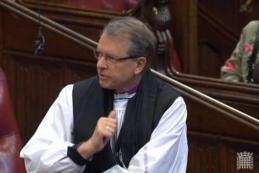 On 11th April 2016, Lord Holmes of Richmond asked Her Majesty’s Government “what steps they are intending to take to address the issue of the unbanked and underbanked in the United Kingdom.” Lord Ashton of Hyde responded. The Bishop of Durham, the Rt Revd Paul Butler, asked a follow up question. Continue reading “Bishop of Durham highlights importance of Credit Unions”
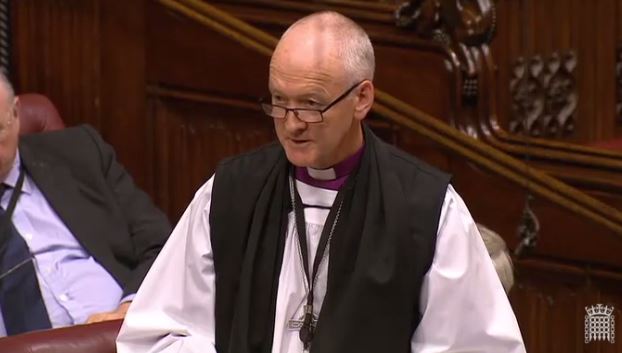 On 5th April 2016 the Bishop of Leeds, Rt Revd Nick Baines, received written answers to five questions to Government on Daesh atrocities, Iraq and Kurdistan:
The Lord Bishop of Leeds: To ask Her Majesty’s Government what assessment they have made of reports of the use of chemical weapons by Daesh in Iraq.
Baroness Anelay of St Johns: There are credible reports that Daesh has used chemical weapons in Iraq. The Government of Iraq, with support from the Organisation for the Prohibition of Chemical Weapons (OPCW), investigated allegations of chemical weapons use in Iraq last year and has concluded that sulphur mustard was used against Peshmerga fighters on 11 August 2015. Continue reading “Bishop of Leeds asks Government about Daesh atrocities, Iraq and Kurdistan”
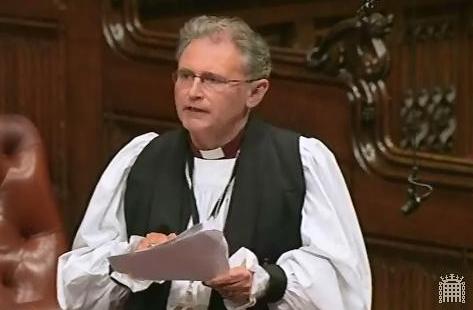 On 5th April 2016 the Bishop of Coventry, Rt Revd Christopher Cocksworth, received written answers to three questions on religious freedom, and post-conflict reconciliation and reconstruction in Iraq and Iraqi Kurdistan:
The Lord Bishop of Coventry: To ask Her Majesty’s Government what assessment they have made of the extent of freedom of religion or belief in Iraq and in Iraqi Kurdistan. Continue reading “Bishop of Coventry asks Govt about religious freedom, reconciliation and reconstruction in Iraq”
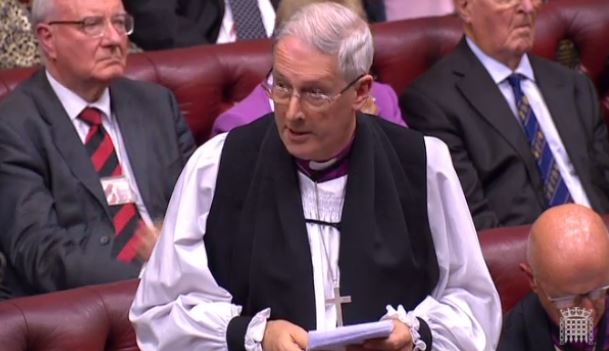 On 1st April 2016 the Bishop of Southwark, Rt Revd Christopher Chessun, received three written answers on Iraq, aid and displaced persons:
The Lord Bishop Of Southwark: What percentage of the Department for International Development’s humanitarian effort in Iraq has been transferred to partners and agencies working in Iraq. [HL7308] Continue reading “Bishop of Southwark asks about humanitarian aid and displaced persons in Iraq”
 On Friday 1 April the Bishop of Coventry, Rt Revd Christopher Cocksworth, received a written answer to a question on humanitarian assistance in Iraq:
The Lord Bishop Of Coventry: What steps they are taking to ensure that they have sufficient measures in place to meet any humanitarian need arising from military efforts to liberate Mosul from Daesh. [HL7270] Continue reading “Bishop of Coventry asks Government about humanitarian aid for those fleeing conflict in Iraq”


You must be logged in to post a comment.