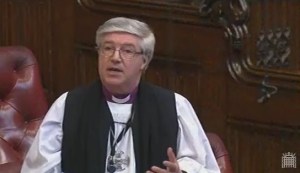
 On 21st March the House of Lords considered the Government’s Immigration Bill at Report Stage. The Bishop of Norwich, Rt Revd Graham James co-sponsored and spoke in support of a series of amendments on care leaving support for young people in the immigration system. Introducing the amendments the Earl of Listowel said:
“These amendments ensure that young people leaving care are able to continue to access leaving-care support from their local authorities in circumstances where their departure from the UK is not envisaged. This includes young people with pending applications to remain in the UK whose long-term future may be in the UK, and young people who cannot leave the UK because there is a genuine obstacle to their removal.”
The amendments were not put to a vote. The Bishops’ speech and the Minister’s response are below.
The Lord Bishop of Norwich: My Lords, the situation of most young adults in this country reveals why this group of amendments is needed. I am glad to add my name to it and pay tribute to the noble Earl for his introduction. In 2015, half of all young people aged 21 in this country and 40% of all 24 year-olds were still living with their parents. As many Members of your Lordships’ House will know from personal experience, even adult children who have left home often return when need arises. Indeed, my own personal experience of adult children is that territorial control of bedrooms continues even when they have got married or have their flats elsewhere—I am thinking of introducing a bedroom tax in Bishop’s House in Norwich. Continue reading “Immigration Bill: Bishop of Norwich supports amendment on supporting care leavers”

 Welcome to the Church of England’s weekly round-up of activity in Parliament.

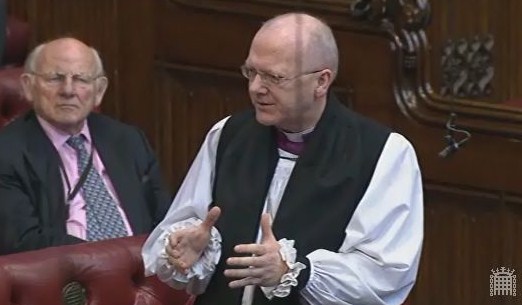
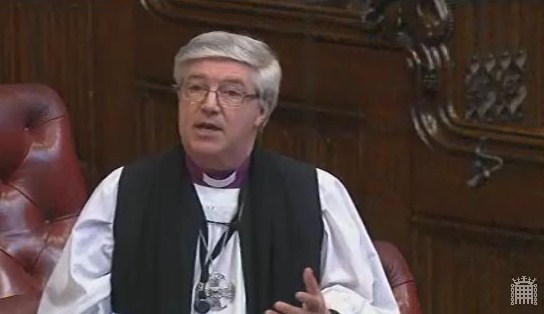

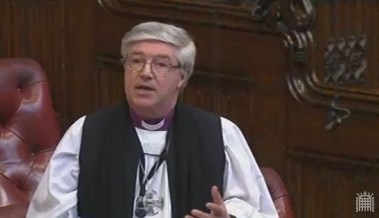 On 21st March the House of Lords considered the Government’s Immigration Bill at Report Stage. Lord Hylton tabled an amendment, co-sponsored by the Bishop of Southwark, that would expand the rules on family reunion and asylum. The Bishop of Norwich, the Rt Revd Graham James, spoke in support of the amendment, and Lord Bates responded on behalf of the Government. The amendment was withdrawn after debate.
  On 21st March the House of Lords considered the Government’s Immigration Bill at Report Stage. Labour Peer Lord Dubs tabled an amendment to require the Secretary of State to make arrangements for relocating 3,000 unaccompanied refugee children to the UK, from other countries in Europe. The Bishop of Chelmsford, the Rt Revd Stephen Cottrell, co-sponsored the amendment, speaking and voting in support. In the subsequent Division the amendment was agreed by 306 votes to 204.

You must be logged in to post a comment.