Bishop of Derby – South Sudan (Written Answers)

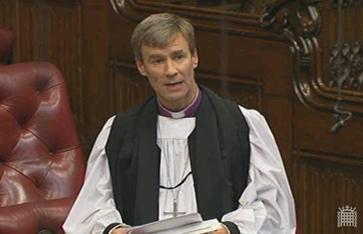
On 27th November 2014, the Bishop of Derby, the Rt Revd Alastair Redfern, received answers from the Foreign and Commonwealth Office to four written questions about South Sudan.

Bishop of DerbyThe Lord Bishop of Derby: To ask Her Majesty’s Government what steps they are taking to encourage greater and co-ordinated regional political pressure being put on all parties to the conflict in South Sudan to cease fighting and to respect agreements signed to date.[HL2864]

The Minister of State, Foreign and Commonwealth Office (Baroness Anelay of St Johns): The UK is actively supporting regional efforts, led by the Intergovernmental Authority on Development (IGAD), to resolve the crisis in South Sudan. We raise the need for continued regional engagement through our Embassies in IGAD capitals, contacts between Ministers and through the UK Special Representative’s engagement in the peace talks. Continue reading “Bishop of Derby – South Sudan (Written Answers)”

Bishop of Birmingham leads call for improved regulation of payday loan advertising

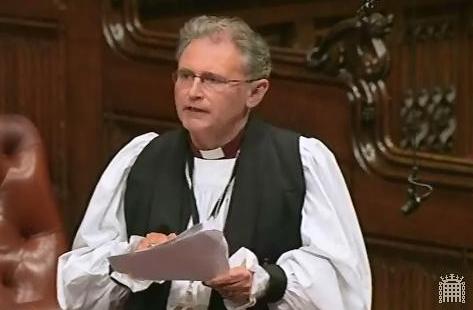
01.04.14 Bishop of BirminghamOn 26th November 2014, the Bishop of Birmingham, the Rt Revd David Urquhart, led the debate on two amendments to the Government’s Consumer Rights Bill, during its Report Stage. The amendments,which the bishop spoke to on behalf of the Bishop of Truro, the Rt Revd Tim Thornton, sought to improve the regulation of payday loan adverstising in two ways – first, through preventing payday lenders from targeting children with advertising on television and second, through the regulation of unsolicited telephone Bishop of Truro 20.6.13calls from payday lenders. Amendment 47, related to pre-watershed advertising, was pressed to a vote by members of the House of Lords. No bishop took part in the division, and the vote was not successful. The Government did, however, state that the regulator, the Broadcast Committee of Advertising Practice (BCAP) had agreed to broaden the remit of its review into the content of payday loan advertising to consider scheduling rules. Continue reading “Bishop of Birmingham leads call for improved regulation of payday loan advertising”

Bishop of Coventry takes part in debate on the UK’s membership of the European Union

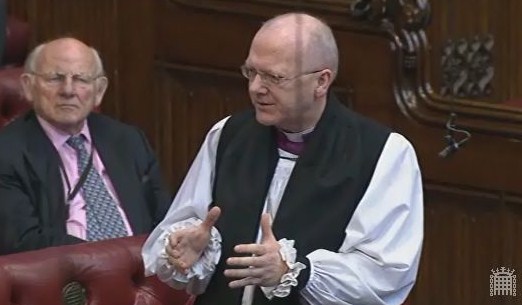
In the House of Lords on 25th November 2014, Labour Peer Lord Liddle led a take-note debate on the case for the United Kingdom’s membership of the European Union. The Bishop of Coventry, the Rt Revd Christopher Cocksworth, took part in the debate. In his remarks, he noted that a shift in focus from economic costs and benefits to the European Union’s role as an institution of peace and reconciliation is necessary for meaningful debate to take place on the UK’s place in the EU. He noted that reform was necessary, not least to rebalance the democratic deficit between national and supra-national governance. He noted that churches may be well placed to create safe and neutral spaces in which informed and serious debate on the UK’s place in Europe can take place.

13.10 Bishop of CoventryThe Lord Bishop of Coventry: My Lords, I, too, am grateful to the noble Lord, Lord Liddle, for securing this debate, although I enter it with some trepidation in such company. I am constrained to do so by the story of Coventry, from where I come, and by the originating Christian contribution to the possibilities that some form of common life might have for Europe and, thereby, for the world. When in your daily life you see the scars of warfare upon a city, when you hear the testimony of those who lost homes and families on one night in November 1940, when each year you are joined by Germans in the commemoration of your city’s 500 dead, and when you join them as they remember their city’s thousands of dead, you know that peace counts and that reconciliation is indeed a precious gift, and you give thanks for the project which has had peace as its fundamental purpose. Continue reading “Bishop of Coventry takes part in debate on the UK’s membership of the European Union”

Domestic Violence – Bishop of Birmingham asks Government about culture change in the police and CPS

In the House of Lords on 25th November 2014 Baroness Gale asked Her Majesty’s Government ‘what progress has been made since March, when the Domestic Violence Disclosure Scheme, known as “Clare’s Law”, was implemented in all police forces in England and Wales.’ The Bishop of Birmingham, Rt Rev David Urquhart, asked a supplementary question:
01.04.14 Bishop of Birmingham
The Lord Bishop of Birmingham: My Lords, I am grateful to the noble Baroness for her response to some of the questions. I would like to press her a little further on the deep need for culture change, specifically in the area of training for the police and the Crown Prosecution Service. Is she minded to enable the Government to make that mandatory?

Continue reading “Domestic Violence – Bishop of Birmingham asks Government about culture change in the police and CPS”

Bishop of St Albans – Work Capability Assessment (Written Answer)

On 25th November 2014, the Bishop fo St Albans, the Rt Revd Alan Smith, received a written answer from the Depatment of Work and Pensions on the Work Capability Assessment.

Bishop of St AlbansThe Lord Bishop of St Albans: To ask Her Majesty’s Government whether people who are undergoing a work capability assessment because of mental health problems are guaranteed assessment by health professionals who have psychiatric expertise.[HL2851]

The Parliamentary Under-Secretary of State, Department for Work and Pensions (Lord Freud): All healthcare professionals who carry out work capability assessments on behalf of the DWP are fully trained in disability assessment and are registered with their respective Regulatory Body. Healthcare professionals receive comprehensive training in the functional effects of mental health conditions. In addition all health professionals are supported by mental function champions who have specialist knowledge of mental health conditions and provide support and best practice advice.

(via Parliament.uk)

Consumer Rights Bill – Vote

On 24th November 2014, three bishops took part in a division of the House of Lords, during Report Stage of the Government’s Consumer Rights Bill.

Amendment 31

House of Lords Division Lobby

Labour Peer Baroness Hayter of Kentish Town moved amendment 31, which sought to remove the requirement for trading standards officers to give 48 hours notice before inspecting businesses, as the Bill currently requires.

The Bishop of Chester, the Rt Revd Peter Forster, the Bishop of Derby, the Rt Revd Alastair Redfern and the Bishop of St Albans, the Rt Revd Alan Smtih, voted ‘content’. No bishop voted ‘not content’.

There were Contents: 194 | Not Contents: 220 | Result: Government Win

(via Parliament.uk)

Bishop of St Albans presses Government on effect of welfare reform on in-work poverty

On 24th November 2014, Lord McKenzie of Luton asked Her Majesty’s Government how many households are in receipt of the housing element of Universal Credit. The Bishop of St Albans, the Rt Revd Alan Smith, asked a supplementary question:

Bishop of St AlbansThe Lord Bishop of St Albans: My Lords, the House will be aware that the Chancellor has announced that the working allowances for universal credit will be frozen until April 2018. There is a real danger, if there is no lift in those allowances—at least in line with inflation—that that will significantly reduce the real net incomes of low earners. Could the Minister tell your Lordships’ House what assessment Her Majesty’s Government have made of the impact of these measures on the level of poverty among those who are already in work, especially for those families who are earning too little to benefit from further rises in the personal tax allowances?

Lord Freud: The working allowances in universal credit are much greater than under the legacy system, so there is a freeze that will have a small effect. Nevertheless, the poverty impacts are to take 300,000 children out of poverty.

(via Parliament.uk)

Farewell to the Bishop of Newcastle

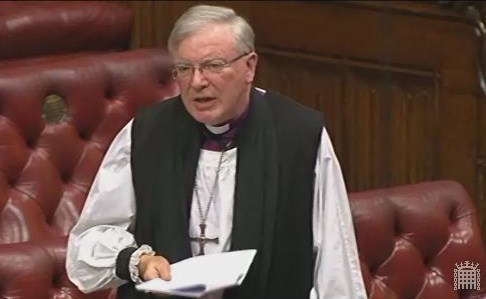
After twelve years on the Bishops’ Benches in the House of Lords, Rt Rev Martin Wharton retires as Bishop of Newcastle at the end of this month. We look back at some of his work in parliament.14.03 Bishop of NewcastleRt Rev Martin Wharton joined the House of Lords in 2002, five years after becoming Bishop of Newcastle. At the time of his retirement in November 2014 only two other serving Lords Spiritual had spent longer in the House. His contributions over those years were notable for being measured, meaningful – usually aimed at highlighting a matter of social or economic injustice – and very often involved reference to the people and communities of the north-east. Continue reading “Farewell to the Bishop of Newcastle”

Church of England Week in Westminster, 17th – 21st November 2014

Welcome to the Church of England’s weekly round-up of activity in Parliament.

Westminster-abbeyThis week bishops spoke in debates about the Modern Slavery Bill, the Azure Card and the UN Convention on the Rights of the Child. They also took part in divisions on the Government’s Consumer Rights Bill.

They also asked questions about the regulation of cold calling, the Gangmasters Licensing Authority, local authority welfare spending, the Istanbul Convention, adoption services and visa applications from the Commonwealth.


Continue reading “Church of England Week in Westminster, 17th – 21st November 2014”

Bishop of Worcester takes part in debate on relationship between children’s rights and internet use

“The Church of England schools’ commitment to this aim is seen in the breadth of our holistic educational vision. We seek to conceive of education as developing children’s creativity and awareness of the world around them—of course, we are not alone in that. To fit students for a life of active civic engagement, and not just to learn facts, is what education should be about.”

On 20th November 2014, Baroness Kidron led a debate in the House of Lords to take note of the impact of the United Nations Convention on the Rights of the Child on children’s and young people’s online and digital interactions. The Bishop of Worcester, the Rt Revd John Inge, took part in the debate, which was timed to mark the 25th anniversary of the Convention. The Bishop spoke about the ability of online education resources to release the talents of all children, noting the Church of England’s commitment to a holistic educational vision in its schools. He also highlighted some of the risks associtated with young people using the internet and supported calls for the government to review how the UNCRC can be applied to the context of these online and digital interactions.

WorcesterThe Lord Bishop of Worcester: My Lords, I begin by echoing the congratulations offered to the noble Baroness, Lady Shields, on an excellent maiden speech. I join her in applauding the wonderful work in this area of the noble Baroness, Lady Kidron, to whom I am also grateful for providing the House with an opportunity to take stock of the changes wrought over the past couple of decades by the growth of the internet and evolution of digital technologies—on this auspicious day, 25 years since the establishment of the UN Convention on the Rights of the Child, which coincides, as she pointed out, with the beginning of the development of the internet. What a different world we live in now that the convention has come of age. It behoves us to consider the new cultural landscape in which we find ourselves, in which 81% of 12 to 15 year-olds use the internet every day. Continue reading “Bishop of Worcester takes part in debate on relationship between children’s rights and internet use”