Bishop of Derby takes part in debate on future of civil society

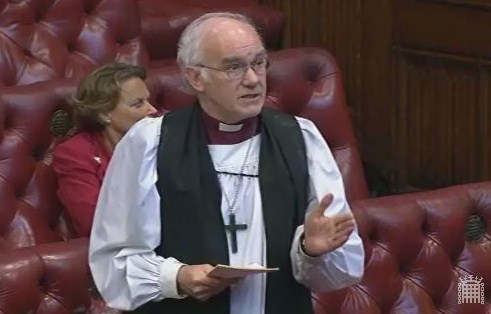
On 18th July 2013, Baroness Prosser led a debate in the House of Lords on the future of civil society. The Bishop of Derby, the Rt Revd Alastiar Redfern, spoke during the debate. The Bishop concern that as the traditional elements of civil society – family, nation and church – had become weak, civil society had become an elective exercise and that people now had to be persuaded to come together to create the energy and momentum for human flourishing.

Bishop of DerbyThe Lord Bishop of Derby: My Lords, I, too, thank the noble Baroness for securing this debate. I shall pursue the definition that the noble Lord, Lord Hastings, began to open up in his speech with the notion of the three legs of the stool and what civil society means. I start from the presupposition that we live in an age of liberalism in the technical sense; that is, we are very concerned for the individual to be free, and to be liberal about all those freedoms. Those freedoms are very good things, but any good often creates a problem.

I want to preface what I am saying with some words from TS Eliot. He said that the danger in liberalism is that it releases energy rather than accumulates it. It releases energy and then it is difficult to gather it together, because everybody is free, to make the building blocks of a civil society. He said that it relaxes rather than fortifies. The more we create rights, the bigger the problem with what we call cohesion. The more we are concerned about individual good, the bigger the problem with the common good. The more people have individual freedom, the more chance there is of becoming isolated, lonely and marginalised. It is very important to debate the civil society at this time when we desperately need energy to be accumulated around people for their well-being and flourishing and not dissipated into people being atomised on their own. The Government want to work with civil society—for the state to co-operate in accumulating energy for good things to happen. The National Council for Voluntary Organisations defines civil society as when,

“people come together to make a positive difference to their lives, and the lives of others”—

accumulating energy, making a positive difference to their lives and the lives of others. Continue reading “Bishop of Derby takes part in debate on future of civil society”

Bishop of Norwich updates House on Church of England role in WW1 commemorations

On 18th July 2013, Lord James of Blackheath asked Her Majesty’s Government whether they will discuss with the Church of England how to commemorate the 304 British soldiers who were executed by the British Government in World War I and who are currently not commemorated in any existing war memorials. The Bishop of Norwich, the Rt Revd Graham James, asked a supplementary question:

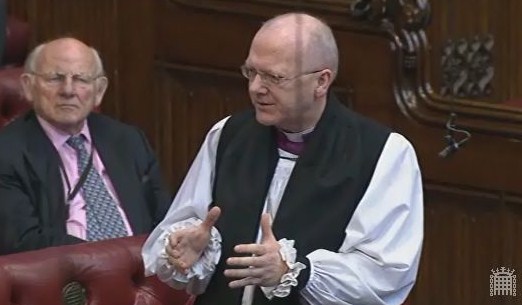
14.06.12 Bishop of NorwichThe Lord Bishop of Norwich: My Lords, while I am sure the Minister is aware that the Church of England does not have sole responsibility to add names to war memorials but would be glad to work with others on this important issue, is he aware of the work being undertaken by the Church of England, the Imperial War Museum and the War Memorials Trust together to develop educational materials linked to the centenary of World War I to help school children and the wider public to learn more about all the people commemorated and to cherish these memorials and all that they represent?

Lord Gardiner of Kimble: I entirely agree with the right reverend Prelate and I am aware of the very important work being done by the Imperial War Museum, the Commonwealth War Graves Commission and the Heritage Lottery Fund. The important thing is that English Heritage is restoring, as we all see, the national memorial in Whitehall. I commend it for doing that and I hope very much that others will take that lead so that war memorials across the land, in whosever ownership or custodianship, are in very good order for the commemorations.

(via Parliament.uk)

Bishop of Norwich speaks in debate on Mesothelioma Bill

On 17th July 2013, the Bishop of Norwich, the Rt Revd Graham James took part in the debate on the Report Stage of the Mesothelioma Bill. The Bishop, recalling that the former Bishop of Peterborough Ian Cundy had suffered from Mesothelioma before his death in 2009, spoke in support of a group of amendments which sought to impose a levy to stimulate research. The Bishop argued that the proposed levy would stimulate more high-quality researchers to think that mesothelioma was a worthwhile and reliable area in which to have a sustained work programme. A division was called on Lord Alton’s amendment on research funding. More information can be found here.

14.06.12 Bishop of NorwichThe Lord Bishop of Norwich: My Lords, I support this group of amendments and I thank the Minister for his work, which was well illustrated at the beginning of this debate. I knew very little about mesothelioma until I saw its debilitating effects on friends, including the former Bishop of Peterborough, Ian Cundy, who some Members may recall died in 2009. The knowledge that the cause of this cancer has been lurking in one’s body for 20 years or more of active life may suggest in itself that more research into detection and treatment may prove valuable. There is nothing that can be done to rewrite someone’s life history, which may include often unwitting exposure to asbestos while young, but much can be done to promote research into a disease that will kill 2,400 people in the UK this year—the equivalent of wiping out one of Norfolk’s smaller market towns within 12 months. If that sort of tragedy happened it would be front page news but this passes us by too easily. Continue reading “Bishop of Norwich speaks in debate on Mesothelioma Bill”

Bishop of Norwich asks Government about oversight of public forest estate

On 17th July 2013, Baroness Royall of Blaisdon asked Her Majesty’s Government what further developments there have been since the publication of their response to the report of the Independent Panel on Forestry. The Bishop of Norwich, the Rt Revd Graham James, asked a supplementary question:

14.06.12 Bishop of NorwichThe Lord Bishop of Norwich: My Lords, can the Minister assure us that the Government will keep faith with the recommendation to establish guardians of the public forest estate and, if so, tell us what their role will be in relation to the new management organisation that is being established?

Lord De Mauley: My Lords, before I answer that perhaps I should reiterate my thanks to the right reverend Prelate the Bishop of Liverpool and his independent panel for the work that they did for us on this.

We envisage that there will be a group of guardians who will draw on the interests and expertise of public forest users and will be able to advise and support the delivery of the new body’s remit. The guardians will be focused on the outcomes that the management body delivers, such as environmental biodiversity and social benefits, and any questions of significant land acquisitions and disposals.

(via Parliament.uk)

Bishop of Norwich raises concerns with civil legal aid reforms

On 17th July 2013, Lord Bach moved a motion to regret on the Civil Legal Aid (Financial Resources and Payment for Services) Regulations 2013.The Bishop of Norwich, the Rt Revd Graham James, expressed concern that the level at which permitted disposable capital was set would render some older people in particular less capable of securing legal aid without selling their homes. He hoped that if vulnerable people’s access to legal representation were damaged by the regulations the government would change course on humanitarian grounds and not defend the regulations on the basis of a flawed ideology.

14.06.12 Bishop of NorwichThe Lord Bishop of Norwich: My Lords, a key reference in this Motion of Regret is to “vulnerable people”, which is why this non-lawyer dares to stand amid such legal luminaries and feels a bit vulnerable himself.

A civilised country is one where we are all free under the law and where vulnerable people are not left defenceless against unjust treatment by another person, organisation or even an agent of government. Vulnerability is relative, of course, but the calculations that inform the regulations under discussion concern people who may be a very long way, as we have heard, from financial comfort and security, and may have multiple other needs. Continue reading “Bishop of Norwich raises concerns with civil legal aid reforms”

Votes – Mesothelioma Bill

On 17th July 2013, the Bishop of Norwich, the Rt Revd Graham James, took part in two divisions on the Government’s Mesothelioma Bill.

House of Lords Division Lobby

Crossbench Peer Lord Alton of Liverpool moved amendment 2, calling for a one per cent levy to raise funds to support research into the causes and treatments of mesothelioma.

The Bishop of Norwich voted ‘content’. No bishop voted ‘not content’.

There were: Contents: 192 | Not Contents: 199 | Result: Government Win

(via Parliament.uk)

Continue reading “Votes – Mesothelioma Bill”

Bishop of Leicester calls for greater stability in private rental contracts

On 16th July 2013 Baroness Turner of Camden asked Her Majesty’s Government what steps they are taking to deal with the level of rents being charged by private landlords, particularly in London, and their impact on housing benefit. The Bishop of Leicester, the Rt Revd Tim Stevens, asked a supplementary question:

LeicesterThe Lord Bishop of Leicester: My Lords, more than one-third of privately renting households are families with children, yet typical tenancies remain short-term with little assurance about when rents may rise or how long they will be able to stay in their home. Uncertainty of this kind is particularly damaging for families trying to give their children stability. Will the Government give serious consideration to Shelter’s proposal to develop and promote stable rental contracts that would offer renters a five-year tenancy agreement and tie rent increases to inflation?

Lord Ahmad of Wimbledon: The right reverend Prelate makes an important point. I have seen the Shelter policy. Security of tenure has increased. Recent figures from the English Housing Survey show that only 9% of tenancies are ended by the landlord. We have seen an increasing percentage of people staying in their accommodation for more than two years. That is to be appreciated. We are looking at Shelter’s proposition, which came out in its September 2012 report.

(via Parliament.uk)

Bishop of Derby – Depression and Human Trafficking (Written Answers)

On 16th July 2013 the Bishop of Derby, the Rt Revd Alastair Redfern, received answers to two written questions, on the topics of elderly people and depression, and human trafficking.


Elderly People: Depression

Bishop of DerbyThe Lord Bishop of Derby: To ask Her Majesty’s Government what steps are in place to ensure that the elderly are assessed routinely for depression during medical consultations.

The Parliamentary Under-Secretary of State, Department of Health (Earl Howe): NHS England is completing the nationwide rollout of psychological therapy services for adults who have depression or anxiety disorders, and as part of this is paying particular attention to ensuring appropriate access for people over 65 years of age.

NHS England has recently funded an advertising campaign with Age UK to promote Improving Access to Psychological Therapies (IAPT) services for older people. The promotional campaign challenges views that depression is natural in older people and to encourage general practitioners to refer older people to IAPT services and older people themselves to self-refer.

Another strand of IAPT development is a project which aims to ensure that psychological therapies are routinely available to people with long term physical health conditions and medically unexplained symptoms. Given that many older people have such physical health conditions, this project will lead to them being encouraged to access IAPT services when necessary.

(via Parliament.uk) Continue reading “Bishop of Derby – Depression and Human Trafficking (Written Answers)”

Archbishop of York takes part in debate on Local Audit and Accountability Bill

On 15th July 2013, the Archbishop of York, the Most Revd and Rt Hon. John Sentamu, took part in the Report Stage of the Government’s Local Audit and Accountability Bill. The Archbishop queried the inclusion of the term “fair view” in an amendment on a clause dealing with the general duties of auditors. The amendment, tabled by the Government, was agreed to.

Archbishop of YorkThe Archbishop of York: My Lords, on Amendment 12, if the statement is true, are not the words “fair view” fatuous? Could you have a true statement which needs qualifying as being unfair? If it is true, it is true. Are those warm words, are they warming up the word “true”? What do they add, those words “fair view”? If it is true, it is true.

Lord Palmer of Childs Hill (Government response): My Lords, unfortunately in accountancy there is a certain jargon. “True and fair view” is jargon used by firms of accountants and auditors from time immemorial, probably since the formation of the Institute of Chartered Accountants of Scotland, which was the first institute.

My query is whether this is not something which could be included in the external auditors’ audit report in the normal way. Currently, the external auditors’ audit report will say that the accounts have been true and fair and all the other jargon that goes with it in a format which has evolved over the years. The amendment seems to provide that the auditors must be satisfied that the local authority presents its accounts in a true and fair way. If that be the case, I wonder whether my noble friend can say, either now or in writing, whether the auditors’ report itself will need to be amended. Currently, the auditors’ reports just say that the accounts are, in their opinion, true and fair—or words of that nature. Now we seem to be saying that the external auditor must be satisfied that the local authority has presented its accounts in a true and fair way, which seems to be going beyond the opinion that those figures are true and fair. I know that we have a jargon and that the statement should be true but not fair seems completely wrong, but this is a form of words which has been used by accountants for years and is being replicated in the Bill. Continue reading “Archbishop of York takes part in debate on Local Audit and Accountability Bill”

Bishop of Norwich debates pension provisions in Marriage (Same Sex Couples) Bill

On 15th July 2013, the Bishop of Norwich, the Rt Revd Graham James, took part in the Third Reading debate on the Government’s Marriage (Same Sex Couples) Bill. The Bishop spoke in support of a group of amendments seeking to remove inequalities in relation to survivor benefits under occupational pension schemes and thanked the Minister and the Government for accommodating the needs of the Church of England and other faith traditions within the Bill. As the Third Reading is the final opportunity for debate in the legislative process, Baroness Stowell of Beeston noted the work of the Bishop of Leicester during the passage of the Bill.

14.06.12 Bishop of NorwichThe Lord Bishop of Norwich: My Lords, I support this group of amendments. A review of the benefits accruing to all survivors under occupational pension schemes is both desirable and necessary. The principle of equity under the law for those whom the law holds to have the same status in relation to the deceased is a sound one. Hard-pressed pension schemes must be tempted to limit benefits, and the complexity of some schemes may hide inequity, so this principle is clear and just and I support it. Indeed, the Church of England pension scheme already treats surviving civil partners in precisely the same way as widows and widowers.

There is a wider reason for supporting these amendments. It is no secret that the majority of Christian churches and other world faiths do not believe that same-sex marriage accords with their understanding of marriage itself. However, many of us, including on these Benches, welcome the social and legal recognition of same-sex partnerships and believe that our society is a better and healthier one for such recognition. That is why I support this group of amendments. This point has sometimes been obscured in public commentary on what has been taking place here, but not in the debates in your Lordships’ House. The courtesy and clarity with which your Lordships have listened to each other represent our very best traditions, and I echo all that has already been said in this brief debate. Continue reading “Bishop of Norwich debates pension provisions in Marriage (Same Sex Couples) Bill”