Bishop of St. Albans asks Government about the classifaction of development aid

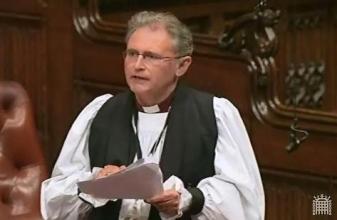
Bishop St Albans June 2015On 6th July 2016, Lord McConnell of Glenscorrodale asked Her Majesty’s Government “when they will publish the outcome of the Bilateral Aid Review.” The Bishop of St. Albans, the Rt. Rev. Alan Smith, asked a follow-up question.

The Lord Bishop of St Albans:My Lords, I am a strong supporter of the Government’s aid and development commitments, but I am concerned about the porous lines between international aid and furthering the national interest. As the International Development Committee stated back in March, poverty reduction must remain a top priority for UK aid. Can the Minister indicate whether Her Majesty’s Government will seek to strengthen the conditions under which government spending can be classed as overseas development aid?

Bishop of Salisbury raises concerns about impact on civilians of Sudanese Government military actions

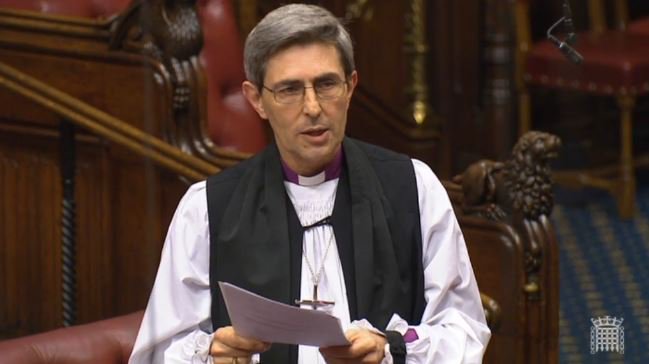
SalisburyOn 6th July 2016, Baroness Cox asked Her Majesty’s Government “what is their assessment of the current situation in Sudan in the light of continuing military offensives and aerial bombardments by the Government of Sudan in South Kordofan, Blue Nile and Darfur”. The Bishop of Salisbury, Rt Revd Nicholas Holtam, asked a follow up question:

The Lord Bishop of Salisbury: My Lords, I should like to underline the points made by the noble Baroness in her opening question about the significance of deliberate and targeted terrorism by the Sudanese Government on their own people, particularly in the bombing in the Nuba mountains, where Anglican schools have been repeatedly destroyed. My own diocese, the diocese of Salisbury, has a link with what is now Sudan and South Sudan that goes back more than 40 years, and there is a delegation from the Anglican communion in Sudan this week. Will the Minister inform the House how the Government intend to continue to provide leadership in relation to humanitarian aid in this continuing crisis?

Continue reading “Bishop of Salisbury raises concerns about impact on civilians of Sudanese Government military actions”

Bishop of St Albans asks Government to consider removing incentives to bulk buying of alcohol

St Albans 2On 5th July 2016 Lord Brooke of Alverthorpe asked Her Majesty’s Government “when they expect Public Health England to publish its independent evidence-based report on alcohol”. The Bishop of St Albans, Rt Revd Alan Smith, asked a follow up question:
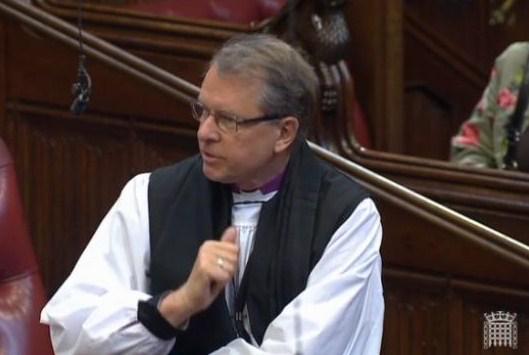
The Lord Bishop of St Albans: My Lords, back in 2011 the Scottish Government passed legislation which meant that there was no financial advantage in multibuy alcohol purchases so that each can or whatever it was would be the same price. That has discouraged the bulk buying of alcohol and as a consequence has reduced levels of harmful drinking. Have Her Majesty’s Government considered a similar law, and if not, why not? Continue reading “Bishop of St Albans asks Government to consider removing incentives to bulk buying of alcohol”

Bishop of Ely urges Government to speak out against attacks on EU citizens living in UK

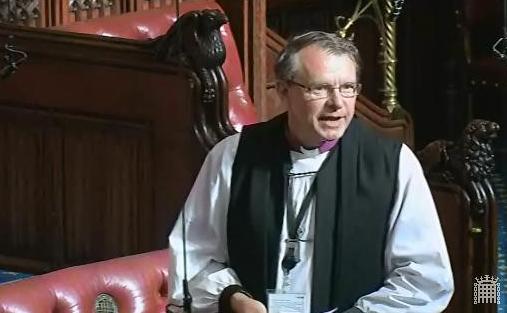
On 4th July 2016 Lord Soley asked Her Majesty’s Government “what role they see for the United Kingdom in relation to the European Union”. The Bishop of Ely, Rt Revd Stephen Conway, asked a follow up question.

ElyThe Lord Bishop of Ely: Whatever happens in the long term, in the meantime will the Government speak up trenchantly against the ugly and unseemly behaviour of some of our fellow citizens in the way they speak to and are violent towards citizens from the EU who are resident here, and who are productive citizens in our midst?

Baroness Anelay of St Johns: The right reverend Prelate is of course not only right but clearly has the complete agreement of this House. This country has proved throughout its history that it not only tolerates but welcomes those who come here to contribute to our society. I deplore attacks upon them.

(via Parliament.uk)

Bishop of Chelmsford calls for strengthening of religious education to combat hatred and xenophobia

Chelmsford 251115On 30th June 2016  Lord Taverne asked Her Majesty’s Government “in what way the guidance produced by Dr Satvinder Juss on the implications of the High Court’s ruling in R (Fox) v Secretary of State for Education is “inaccurate” as they have stated.” The Bishop of Chelmsford, Rt Revd Stephen Cottrell, asked a follow up question.

The Lord Bishop of Chelmsford: My Lords, I address the House at this point in my capacity as a lapsed atheist. I make it clear that I welcome the place of non-religious world views in religious education; they are very important. However, will the Minister further agree that one of the best ways in which people can counter the race hatred, xenophobia and misunderstandings that we see in our society at the moment is by strengthening religious education in schools? Continue reading “Bishop of Chelmsford calls for strengthening of religious education to combat hatred and xenophobia”

Bishop of Rochester asks Government about radicalisation and extremism in prisons

RochesterOn 27th & 30th June 2016 the Bishop of Rochester, Rt Revd James Langstaff, received written answers to questions on radicalisation in prisons.

The Lord Bishop of Rochester: To ask Her Majesty’s Government what discussions they are having with prison chaplains, including those of Muslim and Christian faith, to address concerns about radicalisation and extremism in prisons. [HL599] Continue reading “Bishop of Rochester asks Government about radicalisation and extremism in prisons”

Bishop of Chelmsford condemns hate crime, calls for better religious literacy

On 29th June 2016 Lord Ahmed repeated to the House of Lords a Government statement made in the House of Commons about hate crime. The Bishop of Chelmsford, Rt Revd Stephen Cottrell, asked a follow up question about religious literacy and education.Chelmsford 251115

The Lord Bishop of Chelmsford: My Lords, perhaps I may ask the Minister two specific questions about religious literacy and religious education. First, I welcome the Statement and the responses from the other Front Benches, and of course to express my own great dismay at the incidents that we have experienced in recent days. As I said in the House on Monday, the diocese where I serve includes some of the most multicultural parts of this country. I have heard many disturbing stories, and even more of them here today.

My first question relates to religious education. We have discovered in recent days something that is already there within us and that has been stirred up and legitimised by some of the debate, yet religious education has less of a place in the national curriculum than it used to. I wonder whether this is another opportunity for the Government to look again at the place of religious education in schools.

My second question is about religious literacy. I serve on this House’s Select Committee on Communications. We have recently completed a report on the renewal of the BBC charter. Religious broadcasting has almost disappeared from public service broadcasting, and the BBC no longer has a commissioning editor for religious broadcasting. Surely this is a time when we need to do more about this. It is a very practical matter that the Government could address. Continue reading “Bishop of Chelmsford condemns hate crime, calls for better religious literacy”

Bishop of Chelmsford asks about Free Speech in Universities

Chelmsford 251115On the 27th June 2016, Lord Leigh of Hurley asked the Government “what steps they are taking to counter anti-Semitism on university campuses in the United Kingdom.” The Bishop of Chelmsford, the Rt Revd Stephen Cottrell, asked a supplementary question: Continue reading “Bishop of Chelmsford asks about Free Speech in Universities”

Deprivation: Church Commissioners Written Answer

Caroline SpelmanOn 15th June 2016 the Second Church Estates Commissioner, Rt Hon Caroline Spelman MP, answered a written question from SNP MP Deidre Brock, on deprived communities.

Deidre Brock (Edinburgh North and Leith): To ask the right hon. Member for Meriden, representing the Church Commissioners, if the Church of England will make an assessment of the effect of austerity on communities in the most deprived areas as measured by the English Indices of Deprivation 2015 [40353].

Mrs Caroline Spelman: The Church Commissioners have no plans to undertake such an assessment. Through its network of parishes and dioceses the Church of England is present in all the communities of England. The clergy and people of the Church of England are well placed to hear, articulate and respond to the needs and concerns of local communities. This plays an important role in informing the public engagement of the Church on social policy matters especially at local level.

(via Parliament.uk)

Bishop of Worcester urges Government to work closely with leaders of persecuted Christian communities in Middle East

On 14th June 2016 Lord Alton of Liverpool asked Her Majesty’s Government “what assessment they have made of reports of the public burning to death, in Mosul, by ISIS, of 19 women from Iraqi religious minorities.” The Bishop of Worcester, Rt Revd John Inge, asked a follow up question:

worcesterThe Lord Bishop of Worcester: My Lords, at the wonderful parliamentary prayer breakfast in Westminster Hall that I attended this morning along with 750 others, including 150 parliamentarians, many of them from this House, we were addressed by Bishop Angaelos of the Coptic Orthodox Church in the UK. He spoke movingly of the plight of Christians in the Middle East. While I acknowledge that the vast majority of those killed by ISIS are Muslims, will the Minister assure the House that the Government will work ever more closely with the leaders of the appallingly persecuted Christian community in the Middle East, such as Bishop Angaelos, and other religious leaders there in order to learn their perspective on what is happening? Continue reading “Bishop of Worcester urges Government to work closely with leaders of persecuted Christian communities in Middle East”