Bishop of Derby – South Sudan (Written Answer)

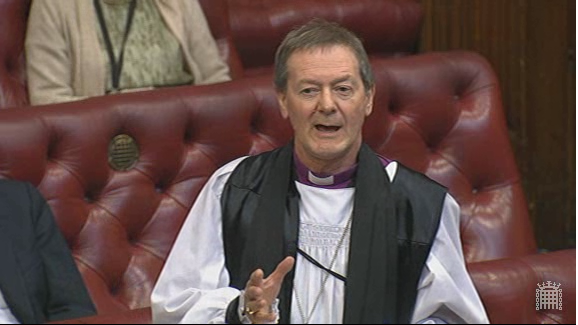
On 1st December 2014, the Bishop of Derby, the Rt Revd Alastair Redfern, received an answer to a written question on South Sudan.
DerbyThe Lord Bishop of Derby: To ask Her Majesty’s Government what discussions they have had with other donor countries about the case for innovative funding arrangements to meet long-term humanitarian needs in South Sudan. [HL2868]

The Parliamentary Under-Secretary of State, Department for International Development (Baroness Northover): The UK has led conversations with other donors on improving linkages between humanitarian and development programmes, and ways to increase self-sufficiency and resilience among populations who are in need of humanitarian assistance. With our partners we are looking to fast track and implement innovative ways to stimulate markets to address food insecurity and build livelihoods, link development programmes in health and education with humanitarian provision of these services, and improve co-ordination in-country between humanitarian and development planning and provision. Continue reading “Bishop of Derby – South Sudan (Written Answer)”

Sir Tony Baldry welcomes investment in Cathedrals

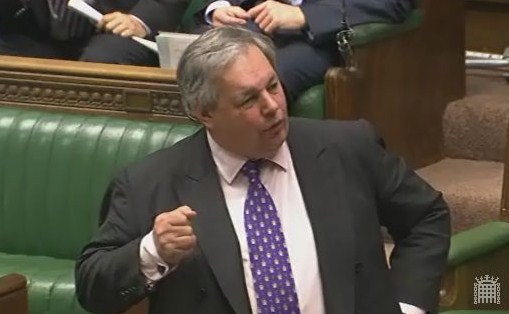
On 27th November 2014, the Second Church Estates Commissioner, the Rt Hon Sir Tony Baldry MP, asked a supplementary question about funding for cathedrals during questions to the Secretary of State for Culture, Media and Sport. The exchange is reproduced in full below.14.01 CCQ Baldry

Cathedrals

Mr Robin Walker (Worcester): What recent funding his Department has provided for the fabric of cathedrals in England. [906279]

The Secretary of State for Culture, Media and Sport (Sajid Javid): In this year’s Budget, the Chancellor announced a £20 million fund to allow cathedrals to undertake urgent repair work. As my hon. Friend knows, that included £330,000 for the beautiful Worcester cathedral. In addition, cathedrals have access to the listed places of worship grant scheme, which has a budget of up to £42 million per annum.

Mr Walker: I am grateful for that answer. May I add my condolences on the tragic death of Phil Hughes, who is fondly remembered in Worcestershire, where he used to play? I was pleased recently to welcome the Secretary of State to Worcester cathedral for a magnificent performance of Shakespeare. Will he join me in celebrating the fact that, in the year that Bishop John of Worcester has taken the lead for the Church of England on cathedrals and church buildings, the east window at Worcester cathedral will be being restored with that grant of £330,000?

Sajid Javid: May I first say to my hon. Friend that I thoroughly enjoyed visiting the cathedral with him and seeing “Julius Caesar”. It is an excellent demonstration of how our cathedrals can be open to so many activities in our local communities. In fact, I have seen similar events recently at Rochester and Portsmouth cathedrals. With regard to Bishop John, I was actually just discussing that very matter with His Grace the Archbishop of Canterbury yesterday, and I join my hon. Friend in warmly congratulating the bishop on his position.

Sir Tony Baldry (Banbury): I warmly thank the Secretary of State for the £20 million grant for cathedrals, which has enabled some 41 cathedrals to carry out various works and repairs from fixing leaking roofs, repairing stained-glass windows and spires and carrying out many other important works to enable them to commemorate the centenary celebrations. Does my right hon. Friend agree that cathedrals are powerful symbols of our shared history and are also the envy of the world? They bring in many tourists, so this investment by the state in our cathedrals is great value for taxpayers.

Sajid Javid: Yes, I agree fully with my right hon. Friend. He will know that of the £20 million we allocated in that grant, £13 million has been used so there is still about £7 million left to go. I urge other cathedrals to take advantage of that and to work to help their local communities.

(via Parliament.uk)

Bishop of St Albans – Energy Prices (Written Answer)

On 27th November 2014, the Bishop of St Albans, the Rt Revd Alan Smith, receieved an answer to a written question on energy prices.

Bishop of St AlbansThe Lord Bishop of St Albans: To ask Her Majesty’s Government what were the outcomes of the round-table event convened by Ofgem on 29 October on price differences between various payment methods for domestic consumers of electricity and gas, particularly in relation to addressing the higher fuel costs of pre-payment meters.[HL2852]

The Parliamentary Under-Secretary of State, Department of Energy and Climate Change (Baroness Verma): There was general agreement at the workshop that payment differentials was a complex issue and that any changes to the rules would create winners or losers with no clear benefit to vulnerable groups. For example, of households who were fuel poor in England in 2012, around 48% paid for their electricity and 40% paid for their gas through direct debit and around 27% paid for their electricity and 20% paid for their gas through prepayment meters. Changing rules in favour of pre-payment meter customers would make direct debit customers worse-off. Continue reading “Bishop of St Albans – Energy Prices (Written Answer)”

Bishop of Derby – South Sudan (Written Answers)

On 27th November 2014, the Bishop of Derby, the Rt Revd Alastair Redfern, received answers from the Foreign and Commonwealth Office to four written questions about South Sudan.

Bishop of DerbyThe Lord Bishop of Derby: To ask Her Majesty’s Government what steps they are taking to encourage greater and co-ordinated regional political pressure being put on all parties to the conflict in South Sudan to cease fighting and to respect agreements signed to date.[HL2864]

The Minister of State, Foreign and Commonwealth Office (Baroness Anelay of St Johns): The UK is actively supporting regional efforts, led by the Intergovernmental Authority on Development (IGAD), to resolve the crisis in South Sudan. We raise the need for continued regional engagement through our Embassies in IGAD capitals, contacts between Ministers and through the UK Special Representative’s engagement in the peace talks. Continue reading “Bishop of Derby – South Sudan (Written Answers)”

Domestic Violence – Bishop of Birmingham asks Government about culture change in the police and CPS

In the House of Lords on 25th November 2014 Baroness Gale asked Her Majesty’s Government ‘what progress has been made since March, when the Domestic Violence Disclosure Scheme, known as “Clare’s Law”, was implemented in all police forces in England and Wales.’ The Bishop of Birmingham, Rt Rev David Urquhart, asked a supplementary question:
01.04.14 Bishop of Birmingham
The Lord Bishop of Birmingham: My Lords, I am grateful to the noble Baroness for her response to some of the questions. I would like to press her a little further on the deep need for culture change, specifically in the area of training for the police and the Crown Prosecution Service. Is she minded to enable the Government to make that mandatory?

Continue reading “Domestic Violence – Bishop of Birmingham asks Government about culture change in the police and CPS”

Bishop of St Albans – Work Capability Assessment (Written Answer)

On 25th November 2014, the Bishop fo St Albans, the Rt Revd Alan Smith, received a written answer from the Depatment of Work and Pensions on the Work Capability Assessment.

Bishop of St AlbansThe Lord Bishop of St Albans: To ask Her Majesty’s Government whether people who are undergoing a work capability assessment because of mental health problems are guaranteed assessment by health professionals who have psychiatric expertise.[HL2851]

The Parliamentary Under-Secretary of State, Department for Work and Pensions (Lord Freud): All healthcare professionals who carry out work capability assessments on behalf of the DWP are fully trained in disability assessment and are registered with their respective Regulatory Body. Healthcare professionals receive comprehensive training in the functional effects of mental health conditions. In addition all health professionals are supported by mental function champions who have specialist knowledge of mental health conditions and provide support and best practice advice.

(via Parliament.uk)

Bishop of St Albans presses Government on effect of welfare reform on in-work poverty

On 24th November 2014, Lord McKenzie of Luton asked Her Majesty’s Government how many households are in receipt of the housing element of Universal Credit. The Bishop of St Albans, the Rt Revd Alan Smith, asked a supplementary question:

Bishop of St AlbansThe Lord Bishop of St Albans: My Lords, the House will be aware that the Chancellor has announced that the working allowances for universal credit will be frozen until April 2018. There is a real danger, if there is no lift in those allowances—at least in line with inflation—that that will significantly reduce the real net incomes of low earners. Could the Minister tell your Lordships’ House what assessment Her Majesty’s Government have made of the impact of these measures on the level of poverty among those who are already in work, especially for those families who are earning too little to benefit from further rises in the personal tax allowances?

Lord Freud: The working allowances in universal credit are much greater than under the legacy system, so there is a freeze that will have a small effect. Nevertheless, the poverty impacts are to take 300,000 children out of poverty.

(via Parliament.uk)

Bishop of Worcester calls for simplification of visa rules for Commonwealth countries

On 19th November 2014, Lord Lea of Crondall asked Her Majesty’s Government whether they have made any proposal to other European Union member states, either severally or collectively, which would limit (1) the right of United Kingdom citizens to live and work in other European Union member states, or (2) the parallel right of citizens of other European Union member states to live and work in the United Kingdom. The Bishop of Worcester, the Rt Revd John Inge, asked a supplementary question:

WorcesterThe Lord Bishop of Worcester: My Lords, the Minister mentioned the reputation that this country has for hospitality. Is he aware of an associated issue: the difficulty that members of the Commonwealth face in obtaining a visa even to visit, let alone to work and live in this country, which seriously hampers a lot of very important overseas links with dioceses, including my own—so much so that my friends in Tanzania were unable to be present at my wife’s funeral earlier this year? Is that sort of impediment government policy and, if not, can he assure us that it will be addressed?

Lord Bates: We very much encourage people to come to this country, whether to study or to work. We want to encourage the best and the brightest to come to this country, as well as tourists; there are many people we want to encourage—but there is a difference between that and people who significantly abuse the system in coming here because of benefits.

(via Parliament.uk)

Bishop of Worcester calls on Government to help tackle negative perceptions of adoption

On 18th November 2014, Baroness King of Bow asked Her Majesty’s Government what assessment they have made of the recent drop in referrals of children for adoption by local authorities. The Bishop of Worcester, the Rt Revd John Inge, asked a supplementary question: 

WorcesterThe Lord Bishop of Worcester: My Lords, does the Minister agree that, whatever the assessment of these figures, there remains a task to be done concerning negative perceptions about adoption in this country? Does he agree with the observation of a judge in the adoption of one of my children that whereas conception is sometimes a biological accident, adoption is always an act of love? Does he agree that it is a noble task and a noble thing to do? What are the Government doing to promote adoption in that light?

Lord Nash: As is well known, the Government have in place a very active reform programme on adoption which has had quite a substantial effect. I agree entirely with the right reverend Prelate’s comments. I was interested to see recent research by Professor Julie Selwyn at Bristol which shows that only 3% of adoptions break down. I think there is cross-party consensus that where there is no option of staying with the birth family, a long-term relationship with loving adoptive parents who have been well scrutinised is clearly in the best interests of the child.

(via Parliament.uk)

Bishop of St Albans raises concerns about protection of local welfare budgets

On 18th November 2014, Baroness Farrington of Ribbleton asked Her Majesty’s Government what assessment they have made of cuts in funding to local authorities in the most deprived and least deprived areas of England. The Bishop of St Albans, the Rt Revd Alan Smith, asked a supplementary question: 

Bishop of St AlbansThe Lord Bishop of St Albans: My Lords, the dedicated funding for local welfare provision has been vital in providing a net for some of the most vulnerable in society. It is proposed that this will no longer be ring-fenced but will be part of a general grant to local councils, at a time when their budgets are increasingly pressed—indeed, there may be a move for that money to be used for core statutory services in future. If that money is not to be ring-fenced, will the Minister tell us how Her Majesty’s Government will monitor the effects of these changes and whether they will be willing to report back to your Lordships’ House on them, to ensure that the most vulnerable are not even further disadvantaged?

Baroness Williams of Trafford: The right reverend Prelate makes a good point. The ring-fenced funding pots were not always used for their intended purposes. It is the Government’s belief that in devolving funds straight to local authorities they will make the best use of them. I shall follow up the right reverend Prelate’s question on reporting back—I am sure that we can report back in due course.

(via Parliament.uk)