
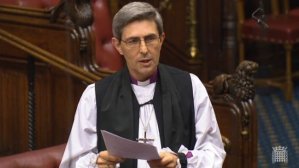
 On 20th March 2018 the House of Lords paid tribute to former Leader of the House, Lord Richards, whose death had been announced. The Bishop of Winchester paid tribute on behalf of the Bishops’ Benches:
The Lord Bishop of Winchester: My Lords, on behalf of these Benches, I also pay tribute to Lord Richard and associate myself with the comments already made. Lord Richard’s life was clearly one devoted to public service: MP, ambassador to the United Nations, where he worked hard on both the Middle East and then Rhodesia, and EU Commissioner before coming to this House, where he first became Leader of the Opposition and ultimately Leader of the House. Most of us aspire to making an impression in one area alone: he clearly excelled in many. Continue reading “Bishop of Winchester pays tribute to former Leader of the House of Lords”
 The Lord Bishop of Portsmouth: My Lords, my first duty today is one of great joy: to welcome on behalf of this Bench, and I am sure the whole House, the right reverend Prelate the Bishop of Lincoln, and to congratulate him on a fine maiden contribution. Its quality was no surprise to me. He is remembered with great respect in the Diocese of Portsmouth, which I now serve and where my colleague and friend was parish priest and archdeacon. I know that his erstwhile congregation in Petersfield was delighted that he was able to visit them last year.
  Lord Bishop of Lincoln (Maiden Speech): My Lords, I thank those who have made me so welcome to your Lordships’ House, not least those who hail from Lincolnshire, including several proud doorkeepers who either live in the county or have served there in the armed services. We share a love for our historic county, the beauty of landscape and building, not least Lincoln Cathedral, about which noble Lords may have heard from the noble lord, Lord Cormack; the pleasure of its food—I am a bigger man now than I was when I went there—and, most importantly, the rugged, independent-mindedness of its people. I also thank those who have said warm words of encouragement in this debate.
  On 13th March 2018, Lord Young of Cookham repeated an answer given to an urgent question about inflammatory letters inciting a ‘Punish a Muslim’ day. The Bishop of Newcastle, Rt Revd Christine Hardman, denounced these letters, expressed her solidarity with the Muslim community, and asked the Government what action it is taking to support grass-roots relationships.
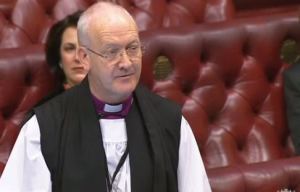 On 6th March 2018, The Earl of Courtown repeated a statement on the UK’s relationship with Russia amidst speculation about an incident in Salisbury, where a man and his daughter were found unconscious outside a shopping centre. The Bishop of Leeds, the Rt Revd Nick Baines, made comments about speculation about the incident.
 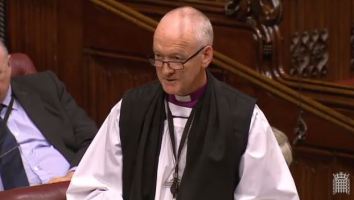 On 5th March the Lord Privy Seal, Baroness Evans of Bowes Park, made a statement on the UK’s future economic partnership with the European Union. The Bishop of Leeds, the Rt Revd Nick Baines, responded with a concern about the language used:
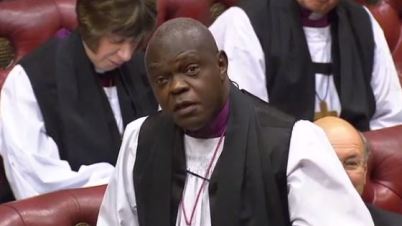 On 5th March peers debated the EU Withdrawal Bill on its fourth day at Committee Stage. The Archbishop of York, the Most Revd John Sentamu, spoke in the debate about reciprocal rights:
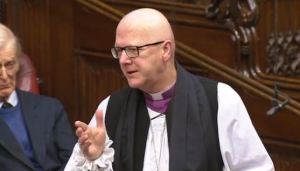 On 1st March 2018 Baroness Jones of Moulsecoomb led a debate in the House of Lords on her question to Her Majesty’s Government ‘what proposals they have for the use of facial recognition technology in security and policing.’ The Bishop of St Albans, Rt Revd Alan Smith, spoke in the debate:
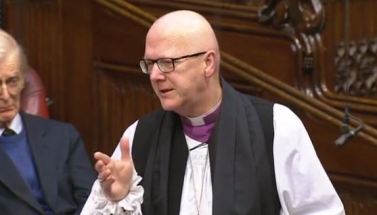 On the 22nd February 2018 Lord Loomba led a debate in the House of Lords on the question “to ask Her Majesty’s Government what priority they give to women and girls, including widows, when developing and implementing Department for International Development initiatives and projects.” The Bishop of St Albans, the Rt Revd Alan Smith, spoke in the debate.
 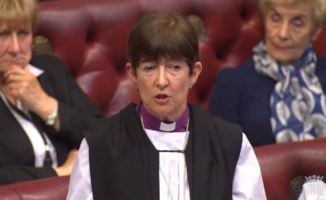 On the 21st February 2018 Baroness Armstrong of Hill Top led a short debate on the question
 The Church of England in Parliament
You must be logged in to post a comment.