
On 19th October the House of Commons considered and passed the General Synod (Remote Meetings) (Temporary Standing Orders) Measure. The Second Church Estates Commissioner, Andrew Selous MP, introduced the Measure:
First Delegated Legislation Committee [Julie Elliott in the Chair]
General Synod (Remote Meetings) (Temporary Standing Orders) Measure
The Second Church Estates Commissioner (Andrew Selous): I beg to move,
That the Committee has considered the General Synod (Remote Meetings) (Temporary Standing Orders) Measure (HC 879).
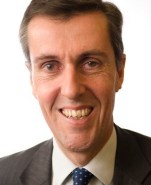 It is a pleasure to serve under your chairmanship, Ms Elliott. I reassure Members that we should be able to dispose of this matter reasonably speedily. The Measure will enable the General Synod, which is the legislative body for the Church of England, to meet and conduct its business remotely. The current coronavirus restrictions mean that it is not practically possible for the Synod to meet in the usual way with 500 people from across England gathering in the same place, either over the road in Church House here in London, or in York. In this Parliament, as we are all aware, we have been able to make provision for remote participation in sittings using the orders of the House. However, as the General Synod was created by statute law, it does not have the same freedom, and legislation is required to enable it to meet remotely. Continue reading “House of Commons passes General Synod (Remote Meetings) (Temporary Standing Orders) Measure”

 The Lord Bishop of Blackburn: My Lords, I am very exercised, as I imagine we all are, with the challenge of not just restrictions but possible shutdown and closure of different industries. Hospitality is but one: there are also entertainment and cinema, theatre, concerts and opera, aviation and travel, to name but a few. Those closures and threat of closures and the way they have been communicated are bringing grief, anxiety, debt and mental health issues to many lives and families, especially, I would say, in the north.
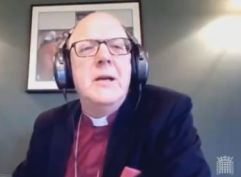 The Lord Bishop of St Albans [V]: My Lords, I plan to say a few words on Amendment 20, moved by the noble Lord, Lord Grantchester. I am also sympathetic to Amendments 23, 25 and 26.
 The Lord Bishop of Rochester: My Lords, I welcome the opportunity to speak in this debate, and I broadly and warmly welcome the provisions in these regulations. While the effects of the pandemic certainly give increased importance to these provisions, the issues are, of course, of very much longer standing. I pay tribute to organisations, including the Children’s Society, which have long campaigned on these matters, as well as to the honourable Member for Rochester and Strood, Kelly Tolhurst, my own Member of Parliament, who, before she was made a Minister, proposed a Private Member’s Bill in the other place to address some of these issues.
  The Lord Bishop of Rochester: My Lords, like others, I tend to think that carrots are more effective than sticks. It is, therefore, vital, if people are to behave as the Government might wish, that they understand and assent to the reasons for particular restrictions.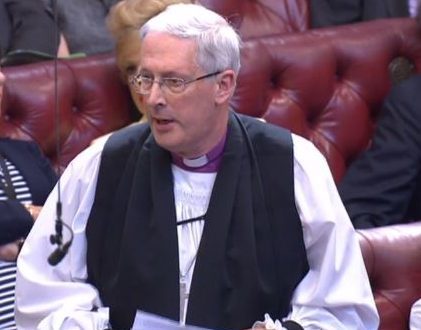
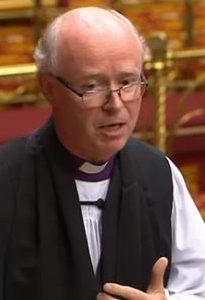 The Lord Bishop of Rochester: My Lords, I too was pleased to take part in the debate in March and recall noble Lords arguing points that they might not normally argue in that debate. Already in this debate we have heard some interesting contributions. I, too, look forward to the three maiden speeches that we are to hear.
 The Church of England in Parliament
You must be logged in to post a comment.