
On 11th June 2020 the House of Lords debated a motion from Baroness Hayman, “that this House takes note of the case for post-COVID-19 recovery strategies that will contribute to a fairer, cleaner, and more sustainable economy.” The Bishop of Oxford, Rt Revd Steven Croft, spoke in the debate:
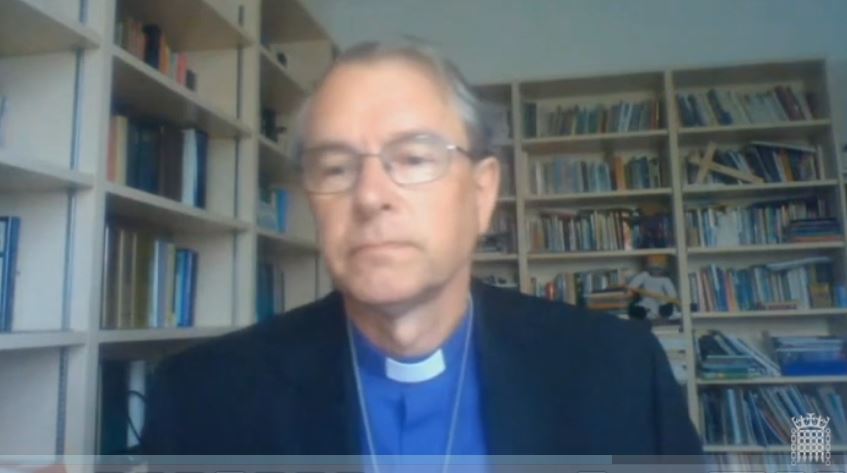
 The Lord Bishop of Oxford: My Lords, I warmly welcome this debate. The country faces the triple challenge in the next decade of the threat of climate change, the deepest recession for generations and the health challenges of Covid, all of which will exacerbate existing inequalities. I support much of what other noble Lords have said and will focus my remarks on the vital theme of digital inclusion.
 The Lord Bishop of Durham: My Lords, thankfully, the virus appears to be spreading slowly in most African countries, with Lesotho declaring its first case only last week. However, the World Bank forecasts
  The Lord Bishop of Durham: My Lords, I applaud the achievement of accommodation having been offered to 90% of rough sleepers. The community collaboration that achieved this reflects the focus of the housing commission set up by the most reverend Primate the Archbishop of Canterbury of building strong communities alongside homes. What plans do Her Majesty’s Government have to create multiagency partnerships to create an integrated homelessness system?
  The Lord Bishop of St Albans: My Lords, I thank the noble Baroness, Lady Boycott, for this debate and I declare my interest as president of the Rural Coalition. It is often said that the primary duty of government is the defence of the realm: equally important is the need to feed the population. When a crisis hits, we can survive for a considerable time without importing computers and machinery, but without food we last only a few weeks. Fortunately, during this pandemic the food chain has held up relatively well, although a number of shortages in the early days of the lockdown acted as a salutary warning. Within days of the lockdown, many of our churches here in Hertfordshire and Bedfordshire had set up food banks or parish pantries, not just in poorer areas such as Stevenage or Farley Hill, but in wealthier villages such as Flamstead and Ponsbourne.
  The Church of England in Parliament
You must be logged in to post a comment.