On 10th November the House of Lords considered the Government’s Immigration and Social Security Co-ordination (EU Withdrawal) Bill. Lord Dubs pressed again an amendment on child refugees and family reunion, his earlier amendment to the Bill having been rejected in a vote in the House of Commons. The Bishop of Southwark spoke in support of the amendment. Lord Dubs did not press it to a vote, accepting some concessions from the Government in its place.
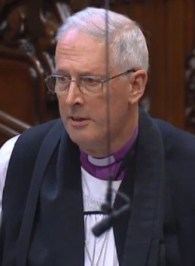 The Lord Bishop of Southwark: My Lords, I speak in favour of the amendment moved by the noble Lord, Lord Dubs. In doing so, I speak not only on my account but also in place of the right reverend Prelate the Bishop of Durham, who is locked down in the north-east and therefore, because of the procedures for consideration of Commons amendments, is unable to speak on this amendment, although that had been very much his intention.
Family life and kin relationships are vital in many parts of the world to ensure survival. Even in the UK, family means the difference between misery, destitution and poor mental health and a life where, even in the most difficult circumstances, there is practical care, support and love. Thus, I, too, welcome the Government’s steps towards ensuring safe and legal routes, including the commitment in case of a no-deal Brexit, to pursue bilateral negotiations on arrangements for family reunion, which I trust they will seek to ensure are equivalent to the Dublin regulations. I welcome the Minister’s commitments and await with interest her further comments following what the noble Lord, Lord Dubs, just said.
However, a step in the right direction is not the end of the journey. Continue reading “Immigration Bill: Bishop of Southwark supports Dubs amendment on child refugees and family reunion”

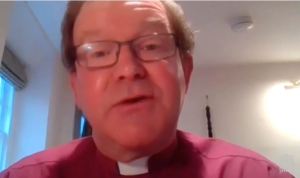 The Lord Bishop of Portsmouth [V]: My Lords, I was delighted to hear the Chancellor stress that the Government would continue to support the most vulnerable, but the proof of that assertion will be in how much money the Government are prepared to provide. That will be the barometer of what and who they consider most important. I therefore join my voice to those profoundly deprecating the proposed cut in development aid. I urge the Government to think again. Continue reading “Bishop of Portsmouth urges Government to keep uplift in universal credit for those ‘on cliff edge’”
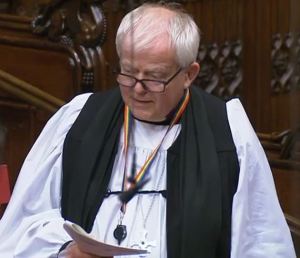 The Lord Bishop of Salisbury: My Lords, neither ship recycling nor Northern Ireland are my territory, though church is sometimes seen as an ark to gather people safely and hazardous materials are a concern for us all. It is important for Northern Ireland to thrive as best it can within the new political arrangements that are still unfolding. The purpose of this SI is clear and not controversial; it is to the benefit of one shipyard in Northern Ireland. The EU has developed a good scheme for overseeing this process and I am sure we will be glad to continue to use it.
 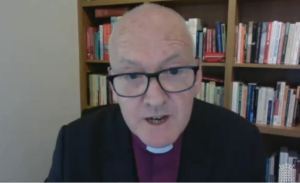 The Lord Bishop of Leeds [V]: My Lords, it is a great pleasure to follow the speech by the noble Baroness, Lady Suttie. I endorse completely the points made by the noble and learned Lord, Lord Judge, at the outset of this debate. I hope the Government will listen carefully to the advice from the noble Lord, Lord Empey, on the alternatives to what is before us. This is not an either/or situation.
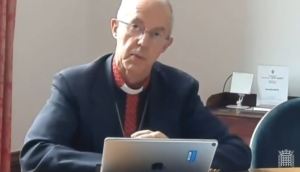 The Archbishop of Canterbury [V]: My Lords, I will speak to Amendment 161*, to which I have added my name, alongside the noble and right reverend Lord, Lord Eames, the noble Lord, Lord Hain, and the noble Baroness, Lady Ritchie of Downpatrick. The previous speeches have all been both moving and deeply eloquent, and I shall therefore be very brief.
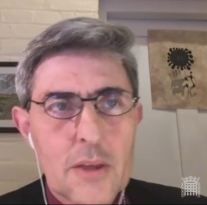 The Lord Bishop of Winchester [V]: My Lords, I am grateful to Her Majesty’s Government for seeking to ensure that the appropriate measures are in place to protect the most vulnerable and restrict the spread of this virus. It is important that we do not prolong such stringent lockdown measures because of the way that they impact on the mental, physical and, indeed, spiritual well-being of the population. However, I will not be supporting the fatal Motion. I recognise the exceptional nature of these times, and welcome that the regulations will enable places of worship to remain open for private prayer and broadcasting acts of worship. Creating such broadcast acts of worship often requires a team of people, both amateurs and professionals. I would welcome more clarity from the Minister on the number of people allowed to do this.
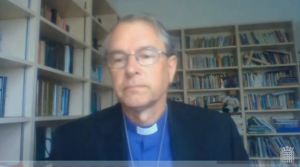 The Lord Bishop of Durham [V]: My Lords, I declare my interests as set out in the register. In welcoming warmly this new instrument to ensure that all schools are subject to inspection in the same way, we recognise the continuing value of inspections as a whole. I want to associate myself warmly with the comments made by the noble Baroness, Lady Massey, and the noble Lord, Lord Addington. However, although we welcome this instrument, we would also welcome the further postponing of Ofsted and school inspections, including the Section 48 inspections of schools with a religious designation, throughout the pandemic period.
  The Lord Bishop of Salisbury [V]: My Lords, this is not really my territory. I hesitate to come into this discussion but I will not delay noble Lords long. I note that the Delegated Legislation Committee in the other place dealt with this proposal in 13 minutes and, even then, the Minister commented on the widening of the discussion beyond the SI itself. That has already begun to happen in this discussion.
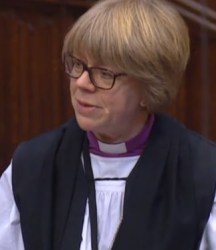 The Lord Bishop of London: My Lords, this Measure will enable the General Synod—the legislative body of the Church of England—to meet and conduct its business remotely. Current coronavirus restrictions mean it is not practically possible for the synod to meet in the usual way, with 500 people from across England gathering in the same place.

You must be logged in to post a comment.