Bishop of Leeds raises need for increased security in the UK and overseas during foreign affairs debate

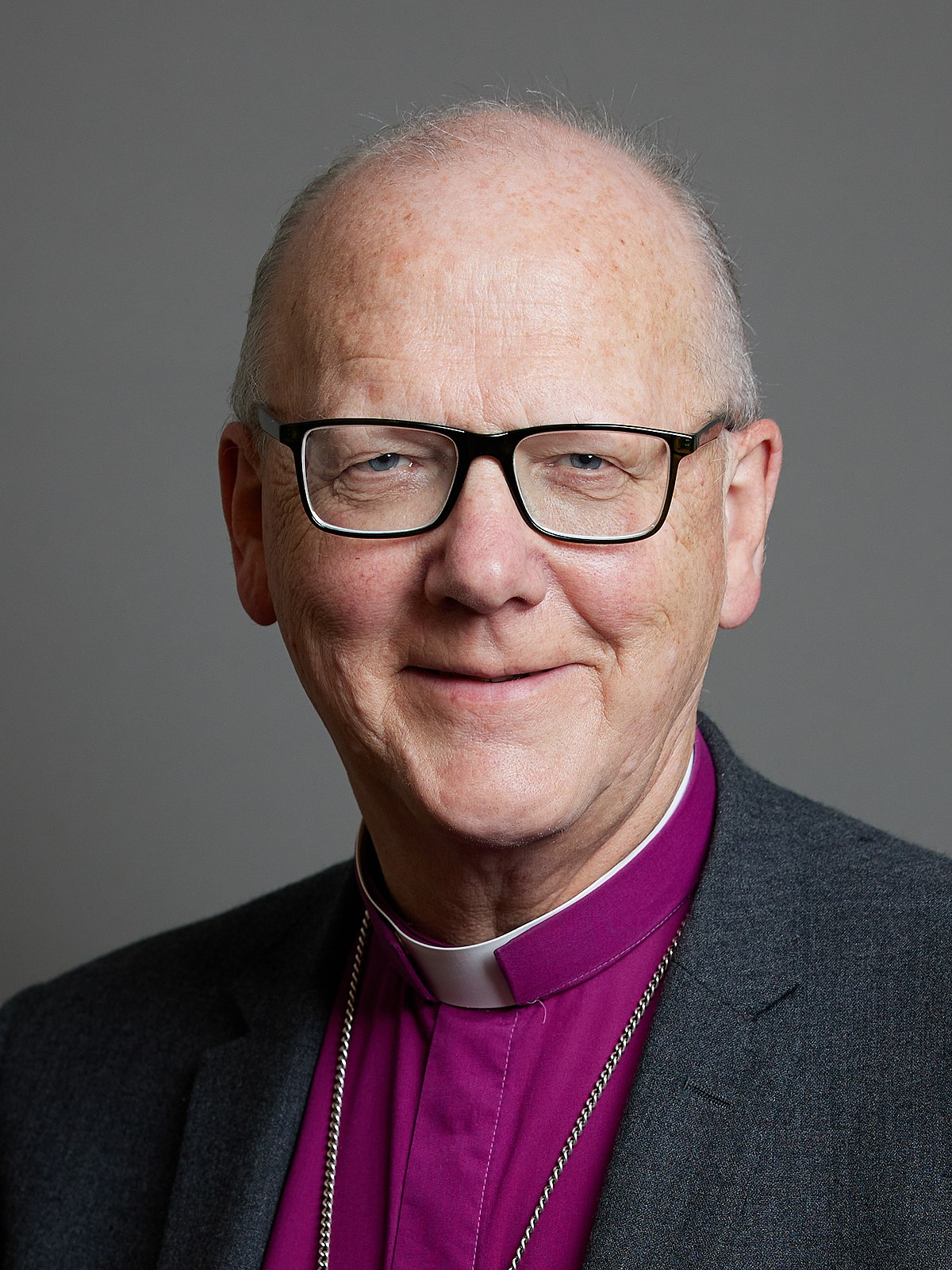
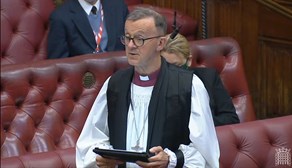
On 5th March 2024, the Bishop of Leeds gave a speech in response to a motion to take note of the UK’s position on foreign affairs, stressing the need for security in the UK and overseas, and making particular mention of the current civil war in Sudan:

The Lord Bishop of Leeds: My Lords, it is a great pleasure to follow the noble Lord, Lord Young. I endorse the comments made by many speakers about the great respect that we have for the noble Lords, Lord Cameron and Lord Ahmad. I note that it is not only the anniversary of the Fulton speech by Winston Churchill but the 71st anniversary of the death of Stalin—even tyrants are mortal.

Foreign policy is domestic policy, and vice versa. What happens in Gaza hits the streets of Leeds; what happens in Kashmir directly affects attitudes and events in Bradford. It is impossible to put foreign and domestic policies in separate compartments, which is why it is vital that the UK does not create a credibility gap when thinking that what we do in London is not noticed beyond these islands.

In the last 10 years, we have seen the absurdity of speaking of our neighbours as if they could not understand us—I witnessed Brexit—and of demanding adherence by Russia, China, Sudan and so on to the rule of law while being ready in this place to drop commitments made by us. I think that three Bills now have come to this House with a cover note saying that the Secretary of State cannot guarantee that our obligations under human rights legislation, for example, are being met. This country has achieved a credibility over decades, especially in the 80 years since the end of World War II, for honest diplomacy and pragmatic integrity. What takes decades to create can disappear in days when that integrity, or at least reputation for integrity, is compromised or questioned.

Continue reading “Bishop of Leeds raises need for increased security in the UK and overseas during foreign affairs debate”

Archbishop of Canterbury calls for peacebuilding to be prioritised in UK foreign policy

The Archbishop of Canterbury gave a speech in response to a motion to take note of the UK’s position on foreign affairs on 5th March 2024, expressing the hope that peacebuilding would be a focus of the government’s foreign policy:

The Lord Archbishop of Canterbury: My Lords, I join in the tributes to the noble Lord, Lord Ahmad, for his opening and his many distinguished years of service—may he continue in his current position—and to the energy that the noble Lord, Lord Cameron, as Secretary of State, has brought to the present process and this debate.

I want to focus, as the noble Baroness, Lady Smith of Newnham, did, on the means rather than the end. Like many noble Lords here, I was in Ukraine three weeks ago—for about a week, in my case—in Kyiv and Odesa. I was there, coincidentally, at the same time as the head of the European foreign service, and we managed, with some of his staff, accidentally to be in the same bomb shelter at the same time, which gives one an opportunity to talk to people. One of the things that came across was the determination of Europe to protect Ukraine from defeat—to support it. However, in conversations with senior politicians in Ukraine, as well as the most senior religious leaders in that very religious country, the question they put was not just what the West intends and what the UK intends—their warm words about the UK were very striking—but what were the means to those ends. You do not win wars by good intentions.

Continue reading “Archbishop of Canterbury calls for peacebuilding to be prioritised in UK foreign policy”

Bishop of Manchester asks about reforming police recruitment

The Bishop of Manchester tabled a question on the case for reforming police recruitment on 5th March 2024:

The Lord Bishop of Manchester: To ask His Majesty’s Government, following the first report of the Angiolini Inquiry published on 29 February, what assessment they have made of the case for reforming police recruitment.

In begging leave to ask the Question in my name on the Order Paper, I declare my interest as co-chair of the national police ethics committee.

Lord Sharpe of Epsom (Con, Home Office): My Lords, the horrific crimes committed by a then serving police officer shocked the nation and undermined public confidence in the police. My thoughts are with the family and friends of Sarah Everard; I cannot imagine how painful this must be for them. In the years since, the Home Office has worked closely with policing partners to strengthen the way that police officers are recruited, vetted, scrutinised and disciplined. The Government will continue to work with policing partners to consider the findings and recommendations of this report at pace, and will respond fully in due course.

Continue reading “Bishop of Manchester asks about reforming police recruitment”

Bishop of Albans asks about increase in piracy off the Horn of Africa

The Bishop of St Albans received the following written answer on 5th March 2024:

The Lord Bishop of St Albans asked His Majesty’s Government what assessment they have made of the recent increase in piracy off the Horn of Africa.

Lord Benyon (Con, Foreign Office): While the causes of recent maritime incidents in the Horn of Africa are unclear, the UK continues to monitor the situation in the region closely.

Continue reading “Bishop of Albans asks about increase in piracy off the Horn of Africa”

Bishop of St Albans asks about forced labour in China

The Bishop of St Albans received the following written answer on 5th March 2024:

The Lord Bishop of St Albans asked His Majesty’s Government what assessment they have made of recent Human Rights Watch research that suggests several major carmakers could be complicit in abuse of China’s Uyghur Muslims.

Lord Johnson of Lainston (Con, DfT): Modern slavery is a barbaric crime which we are determined to stamp out. In 2022, the UN Office of the High Commissioner for Human Rights published its assessment of the human rights situation in Xinjiang, which found that China had carried out “serious human rights violations” against Uyghurs and other predominantly Muslim minorities.

Continue reading “Bishop of St Albans asks about forced labour in China”

Safety of Rwanda (Asylum and Immigration) Bill: Bishop of Manchester supports amendments on power of the courts

During a debate on the Safety of Rwanda (Asylum and Immigration Bill on 4th March 2024, the Bishop of Manchester spoke in support of amendments 9 and 12 to the bill, tabled by Lord Anderson of Ipswich, which would allow the courts to take new factors into consideration when considering Rwanda’s safety in the future:

The Lord Bishop of Manchester: My Lords, I am grateful to the noble Lord, Lord Anderson of Ipswich, for sponsoring Amendments 9 and 12, to which I have added my name. They take up matters that I and the noble Lord, Lord Carlile, raised in Committee.

Continue reading “Safety of Rwanda (Asylum and Immigration) Bill: Bishop of Manchester supports amendments on power of the courts”

Votes: Safety of Rwanda (Asylum and Immigration) Bill

On 4th March 2024, the House of Lords debated the Safety of Rwanda (Asylum and Immigration Bill) in the first day of the report stage. Votes were held on amendments to the bill, in which Bishops took part:

Continue reading “Votes: Safety of Rwanda (Asylum and Immigration) Bill”

Safety of Rwanda (Asylum and Immigration) Bill: Archbishop of Canterbury supports amendments on rule of law

On 4th March 2024, the Archbishop of Canterbury spoke in a debate on the Safety of Rwanda (Asylum and Immigration) Bill, in support of a group of amendments seeking to ensure compliance with the rule of law in the application of the bill:

The Lord Archbishop of Canterbury: My Lords, at this stage of the debate on this group, we are looking at two distinct things. One is the question of whether Rwanda is safe. If, as the noble Lord just said, it is unquestionably safe, it seems to me that these amendments are not a problem because, at that point, the Secretary of State can easily say, “It’s safe”, and they will have evidence of that, for this and future Governments.

Continue reading “Safety of Rwanda (Asylum and Immigration) Bill: Archbishop of Canterbury supports amendments on rule of law”

Safety of Rwanda (Asylum and Immigration Bill): Bishop of St Edmundsbury and Ipswich supports amendments on modern slavery, right of return, and overall safety

On 4th March 2024, the House of Lords debated the Safety of Rwanda (Asylum and Immigration) Bill in the first day of the report stage. The Bishop of St Edmundsbury & Ipswich spoke in the debate, supporting amendments on assessing Rwanda’s safety, establishing right of return for asylum seekers after relocation, and protection for victims of modern slavery:

The Lord Bishop of St Edmundsbury & Ipswich: My Lords, I shall speak in favour of Amendments 1, 3 and 5 tabled by the noble Baroness, Lady Chakrabarti, to which I have added my name. I do not believe that we can enshrine in law a statement of fact without seeing and understanding the evidence that shows such a statement to be true, in particular when such a statement of fact is so contentious and for which the evidence may change. Ignoring for a second the strange absurdity of such declarations, we must also consider the real impact that this could have on the potentially vulnerable people whom the Government intend to send to Rwanda. As my most reverend friend the Archbishop of Canterbury, who is in his place, said at Second Reading,

Continue reading “Safety of Rwanda (Asylum and Immigration Bill): Bishop of St Edmundsbury and Ipswich supports amendments on modern slavery, right of return, and overall safety”

Bishop of Bristol asks about rates of modern slavery referrals in the UK

The Bishop of Bristol received the following written answer on 4th March 2024:

The Lord Bishop of Bristol asked His Majesty’s Government:

  • how many individuals referred to the National Referral Mechanism for modern slavery after arriving in the UK irregularly since January 2022 have been given (1) a positive reasonable grounds decision, (2) a negative reasonable grounds decision, (3) a positive conclusive grounds decision, and (4) a negative conclusive grounds decision.
  • how many individuals referred to the National Referral Mechanism for modern slavery after arriving in the UK irregularly since January 2022 were referred because of (1) exploitation which happened in the UK, and (2) trafficking to the UK.
Continue reading “Bishop of Bristol asks about rates of modern slavery referrals in the UK”