Church of England Week in Westminster 7th-11th December 2015

Welcome to the Church of England’s weekly round-up of activity in Parliament.

cropped-cropped-palace_of_westminster_london_-_feb_2007.jpgThis week bishops in the House of Lords tabled and spoke to amendments to the Government’s Welfare Reform and Work Bill and spoke in debates on the Scotland Bill, the Online Safety Bill and on residential care. Bishops also asked questions on flooding in Cumbria, adoption, delays in settling Syrian refugees and acute oak decline. In the House of Commons the Second Church Estates Commissioner led a debate on reform of marriage registration certificates, including the addition of mothers’ names. Continue reading “Church of England Week in Westminster 7th-11th December 2015”

Online Safety Bill – Bishop of Bristol supports aims and amendments

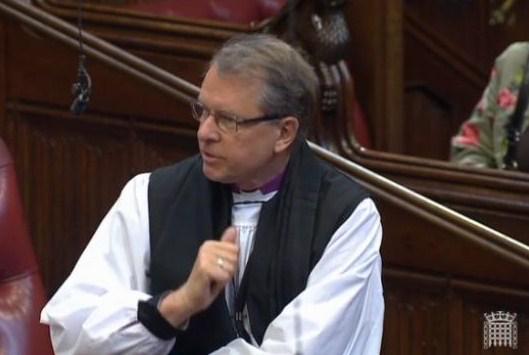
On 11th December 2015 the House of Lords considered in Committee the Online Safety Bill which had been tabled by Baroness Howe. The Bishop of Bristol, Rt Revd Mike Hill supported the Bill and spoke favourably to an amendment, later withdrawn, by Lord Morrow on filtering of adult content and age verification policies. 

Bishop of Bristol June 2015The Lord Bishop of Bristol: My Lords, I do not want to add too much to the way that the noble Lord, Lord Morrow, has framed his amendment today, but his point is worthy of serious scrutiny, simply because children living in households that are not serviced by the big four ISPs surely require the same level of protection as those in homes whose services are provided by the big four ISPs. Everyone in your Lordships’ House agrees that every child matters; I think that it is not at all controversial to say that.

It is a little confusing that the Prime Minister should seem so robust in his statement in the other place on 28 October, suggesting that the Government wanted to introduce legislation, yet the Minister—unless I misunderstand her—seems very happy to continue with a kind of voluntary regulation. I am not quite sure how that squares up. The point—and the noble Lord, Lord Morrow, makes it well—is that whatever we come up with cannot apply only to some children; surely it must apply to them all. Continue reading “Online Safety Bill – Bishop of Bristol supports aims and amendments”

Bishop of Bristol calls for greater priority on standards and funding for residential care

On 10th December 2015 the House of Lords debated a motion from  Baroness Wheeler “That this House takes note of the quality and viability of the residential care sector in the light of the Government’s decision to delay the implementation of the care cost cap.” The Bishop of Bristol, Rt Revd Mike Hill, spoke in the debate, calling for Government to give more priority to residential care standards and funding.

Bishop of Bristol June 2015The Lord Bishop of Bristol: My Lords, I join other Members of your Lordships’ House in thanking the noble Baroness for securing this debate. I admired her high-paced delivery of a lot of information without losing any clarity. Like the noble Baroness, I hope that this will not become a debate where we just trade statistics across the House, because in the end, as the noble Lord, Lord Filkin, has just drawn our attention to, this is about people and their lives, and therefore it is a matter that should be, and is, of great concern to us all.

If I stand in my bathroom and look out across the fields in north Bristol, I see the shell of Winterbourne View standing there as a testimony of what can go wrong with residential care when the business model is bust and the whole thing falls apart. It pains me to look at that building day by day. Continue reading “Bishop of Bristol calls for greater priority on standards and funding for residential care”

Welfare Reform Bill – Bishop of Durham supports amendments about parents of young children

On 9th December 2015 the House of Lords considered the Government’s Welfare Reform and Work Bill in its second day of Committee. 

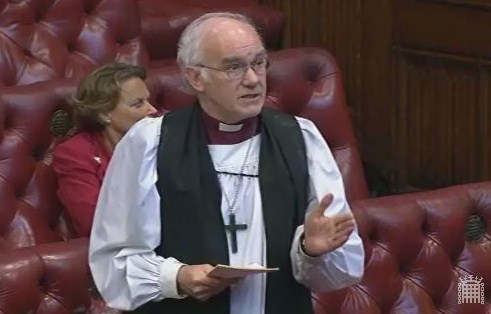
The Bishop of Durham, Rt Revd Paul Butler, spoke in support of a group of amendments to clause 15 of the Bill, concerned with work-related requirements and Universal credit. The amendments, which were withdrawn after the debate, sought to make the work-related requirements in legislation take into account particular circumstances of parents with young children or those with disabilities.


Bp Durham June 2015 b

The Lord Bishop of Durham: My Lords, I encourage the Minister to at least agree to go away and think very seriously about these amendments. The paramountcy of the welfare of the child, I am sure, we are all entirely agreed about. We know that the first two years of life are absolutely crucial to long-term life chances. The next two years matter as much again. So how we behave towards children in the first four or five years of life, before they go to school, is the most significant factor in their long-term life chances.

Continue reading “Welfare Reform Bill – Bishop of Durham supports amendments about parents of young children”

Welfare Reform Bill – Bishop of Durham supports amendments on children’s life chances

On 9th December 2015 the House of Lords considered the Government’s Welfare Reform and Work Bill in its second day of Committee. 

The Bishop of Durham, Rt Revd Paul Butler, spoke in support of a group of amendments to clauses 4 and 5 of the Bill, concerned with Government reporting on the life chances of children. The amendments sought to require the Government to lay before Parliament a report setting out the measures it proposes to take to improve children’s life chances, and to rename the proposed Social Mobility Commission the ‘Life Chances Commission’. The amendments were withdrawn after the debate.

Bp Durham June 2015 bThe Lord Bishop of Durham: My Lords, I rise to speak first to Amendment 31. Given the serious enthusiasm that the Government have for introducing “life chances” as a title and theme, it would make complete sense for the Government to want to report on improvement in children’s life chances in the future. So I commend this as being entirely in line with the purpose of the whole Bill—it would make sense to report. Continue reading “Welfare Reform Bill – Bishop of Durham supports amendments on children’s life chances”

Welfare Reform Bill – Bishop of Durham supports amendments on child poverty

On 9th December 2015 the House of Lords considered the Government’s Welfare Reform and Work Bill in its second day of Committee. 

The Bishop of Durham, Rt Revd Paul Butler, spoke in support of a group of amendments to clause 4 of the Bill, concerned with Government reporting on the life chances of children. The amendments sought to require the Government to report on the situation of children in low-income households, not only workless households and educational attainment. The amendments were withdrawn after the debate.


Bp Durham June 2015 bThe Lord Bishop of Durham: My Lords, I will speak in support of Amendments 24, 25 and 26. I know that everyone in this House, and indeed in the other place, is committed to protecting those children in our society who are vulnerable to suffering the worst effects of poverty. Indeed, I know that there is a broad recognition across the House that some form of statutory reporting on the issues of child poverty and children’s life chances is an important tool in driving initiatives that will combat that poverty. The questions about what should be included in Clause 4 are questions of best practice, rather than questions of best intention. Continue reading “Welfare Reform Bill – Bishop of Durham supports amendments on child poverty”

Floods in Cumbria – Bishop of Leeds asks question

On 9th December 2015 Lord Grantchester asked Her Majesty’s Government “what emergency measures they are considering to support the emergency services and local communities affected by flooding in Cumbria.” The Bishop of Leeds, Rt Revd Nick Baines, asked a follow-up question: 


LeedsThe Lord Bishop of Leeds: My Lords, what cognisance is taken by the Government of the stochastic modelling performed by the insurance industry and how many one-in-100-years events it takes for something to cease to be a one-in-100-years event?


Baroness Williams of Trafford: My Lords, I am sure that the right reverend Prelate will appreciate that this is probably a matter for God because every time that we have tried to predict, an even worse event has occurred. I do not make that point lightly. We are constantly reviewing the flood defences and how we can respond.


(via Parliament.uk)

Bishop of Chester supports measure in Scotland Bill stating permanence of Scottish Parliament and Government

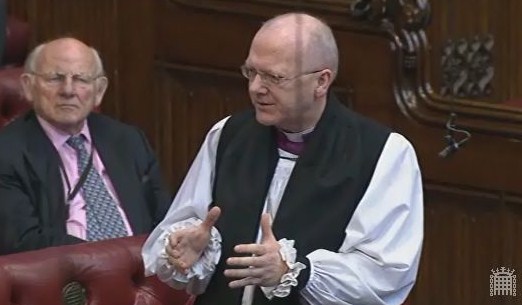
On 8th December 2015 the House of Lords considered the Government’s Scotland Bill at Committee stage. The Bishop of Chester, Rt Revd Peter Forster, spoke during debate on amendments to the Bill from Lord Norton of Louth and Lord Forsyth of Drumlean.

The amendment from Lord Norton proposed the removal from the Bill of two new clauses to be added to the 1998 Scotland Act, namely: 

(1) The Scottish Parliament and the Scottish Government are a permanent part of the United Kingdom’s constitutional arrangements.
(2) The purpose of this section is, with due regard to the other provisions of this Act, to signify the commitment of the Parliament and Government of the United Kingdom.

Lord Forsyth’s amendment sought to change the wording of (1) so that it instead read

(1) The Scottish Parliament and the Scottish Government are recognised as a permanent part of the United Kingdom’s constitutional arrangements.

The Bishop argued against both amendments on the grounds that they conflicted with settled political reality and would send unwelcome signals. The amendments were withdrawn after debate.


14.03 Bishop of Chester

The Lord Bishop of Chester: My Lords, it is always dodgy for bishops to speak about Scottish matters. The kirk has sometimes considered the possibility of introducing bishops but the one condition it has always applied is that they must not be like English bishops—they must be quite different.

I have some credentials inasmuch as I have had a close association with Scotland for 40 years, since I went to Edinburgh as a student. I have had a house in Scotland for 30 years, I have two Scottish degrees and one Scottish wife, who has kept my feet on the ground over the years. I shall also retire to Scotland shortly, and very much look forward to doing so. Continue reading “Bishop of Chester supports measure in Scotland Bill stating permanence of Scottish Parliament and Government”

Bishop of St Albans asks about negative impact on adoption figures of Welfare Bill proposals

On 8th December 2015 Baroness King of Bow asked Her Majesty’s Government “what assessment they have made of the drop in the number of children being placed for adoption”. The Bishop of St Albans, Rt Revd Alan Smith asked a follow up question on measures in the Welfare Reform and Work Bill:

Bishop of St AlbansThe Lord Bishop of St Albans: My Lords, just last night in this Chamber, noble Lords discussed amendments to the Welfare Reform and Work Bill which sought to exclude kinship carers and adoptive parents from the two-child limit in tax credits. Given the worrying decline in the number of adoptions, this seems an eminently sensible proposal. If things go through as they are at the moment, this would act as a significant financial disincentive for some families to take on extra children as kinship carers or adoptive parents. This House was told last night that that is not being considered in the present Bill, but no reasons were given. Will the Minister explain why this very helpful suggestion is not being taken up? Continue reading “Bishop of St Albans asks about negative impact on adoption figures of Welfare Bill proposals”

Second Estates Commissioner leads debate on reforming marriage registration certificates

On 8th December 2015 the Second Church Estates Commissioner, Rt Hon Caroline Spelman MP, held a debate in Westminster Hall about the reform of marriage registration certificates. Mrs Spelman said that certificates should be updated to bear mothers’ as well as fathers’ names and that the process ought also to be part of a wider overhaul of the registration system. She announced her intention to bring forward a Private Member’s Bill to that effect and that an internal consultation within the Church had shown support for the proposal. Her remarks introducing the debate and responding to others are reproduced below, but the full debate can be read in Hansard here.


SpelmanMarriagedebate081215 bMrs Caroline Spelman (Meriden) (Con): I beg to move,

That this House has considered marriage registration certificates.

It is a pleasure to serve under your chairmanship, Mr Brady. The latest intelligence that I heard is that we might have a vote at 2.45 pm, but of course we are on a running three-line Whip, so we will just have to see.

I am happy to have secured a Westminster Hall debate on this important subject. Since 1837—the beginning of Queen Victoria’s reign—marriage certificates in England and Wales have included the names of the spouses’ fathers, but not their mothers. I know that I am not alone in finding this state of affairs unacceptable in our modern society. Indeed, the Prime Minister said as much in August 2014.

The issue has attracted calls for reform from many Members: the hon. Member for Brighton, Pavilion (Caroline Lucas) has tabled two early-day motions on the subject, each of which attracted 100 signatures; a petition on change.org was signed by more than 70,000 members of the public; and the hon. Member for Neath (Christina Rees) has introduced a private Member’s Bill in an attempt to secure the inclusion of mothers’ names on marriage certificates. I believe that the Second Reading of that Bill is scheduled for 22 January, and it underlines the point that this is clearly an issue that concerns Members from across the House and requires urgent attention and reform.

The Church of England recently held an internal consultation exercise of archdeacons and legal officials to gauge the views of the clergy about changing the way we do marriage registration. It received an overwhelmingly positive response. It cannot be that difficult to change the format of marriage certificates so that the mothers’ details can be captured, can it? Continue reading “Second Estates Commissioner leads debate on reforming marriage registration certificates”