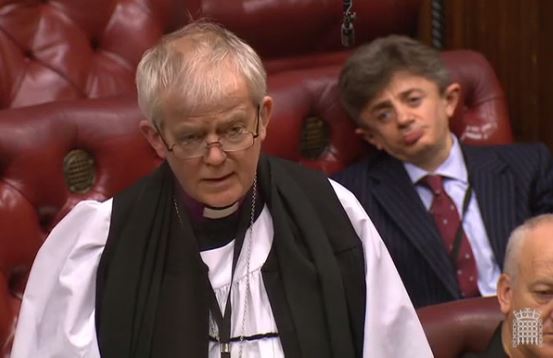
On 19th July 2016 the House of Lords debated the approval of the Government’s draft Carbon Budget Order 2016 and Climate Change Act 2008 (Credit Limit) Order 2016. The Bishop of Salisbury, Rt Revd Nicholas Holtham, spoke in the debate, welcoming the Orders, which were approved by Peers at the conclusion of the debate:
 The Lord Bishop of Salisbury: My Lords, I welcome both orders and welcome the Minister in her new role with its important responsibilities to further our progress in the care of our common home. I particularly welcome her as somebody who lives in the diocese of Salisbury, and I look forward to working with her in this new context.
The Committee on Climate Change’s Meeting Carbon Budgets—2016 Progress Report to Parliament says that it,
“comes at a critical point in the development of climate policy in the UK … against the backdrop of the Paris Agreement in December last year”.
The political circumstances could not be more significant. I was grateful to the noble Viscount, Lord Ridley, for his eloquent speech in favour of international agreements, which gave me a sense of urgency in relation to the implementation of the Paris agreement. I have taken on a preaching engagement in the autumn, about which I have been feeling some trepidation. It is to preach at the annual service for the Worshipful Company of Fuellers. I am now looking forward to that event and to trying to engage with that group of people on these issues. Continue reading “Bishop of Salisbury welcomes new Carbon Budget Orders”

 On 29th July 2016 the Bishop of Coventry, Rt Revd Christopher Cocksworth, received written answers to two questions on human rights and religious freedom in Bangladesh:
 On 21st July 2016 Lord Warner led a debate to highlight “the conditions in which Palestinian children are living and the impact on their health and wellbeing.” The Rt Revd Christopher Chessun, Bishop of Southwark, spoke in the debate, drawing on his experiences of visiting Gaza and the West bank. Baroness Mobarik responded for the Government to a number of points made by the Bishop. her remarks can be found below.
 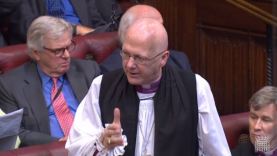 On the 21st July 2016 Lord Greaves asked Her Majesty’s Government “what progress they are making in encouraging the development of brownfield sites.” Rt Revd Alan Smith, Bishop of St Albans, asked a follow up question:
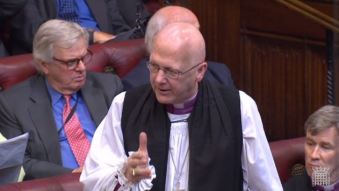 On the 21st July 2016 Baroness McIntosh of Pickering held a debate about “the impact on British farmers of the decision to leave the European Union.” Rt Revd Dr Alan Smith, Bishop of St Albans asked the Government to help to cultivate a culture of appreciation among the British public towards British farming. Lord Gardiner of Kimble responded for the Government and his comments can be found below.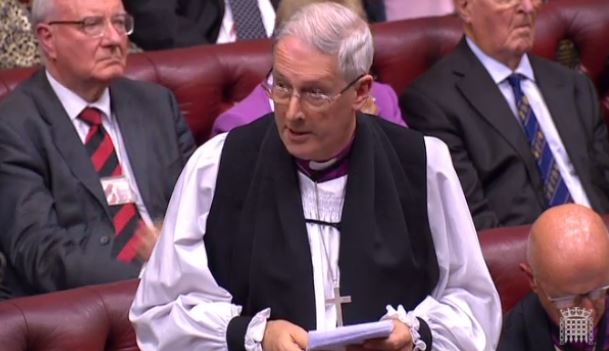


You must be logged in to post a comment.