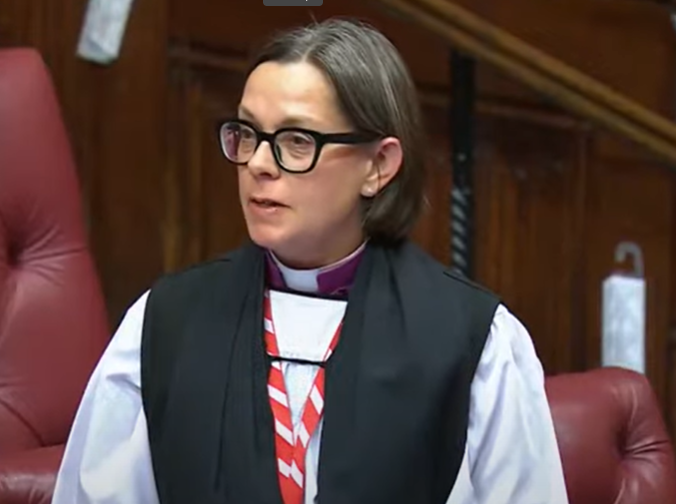
Border Security, Asylum and Immigration Bill: Bishop of London supports amendments on freedom of religion and modern slavery

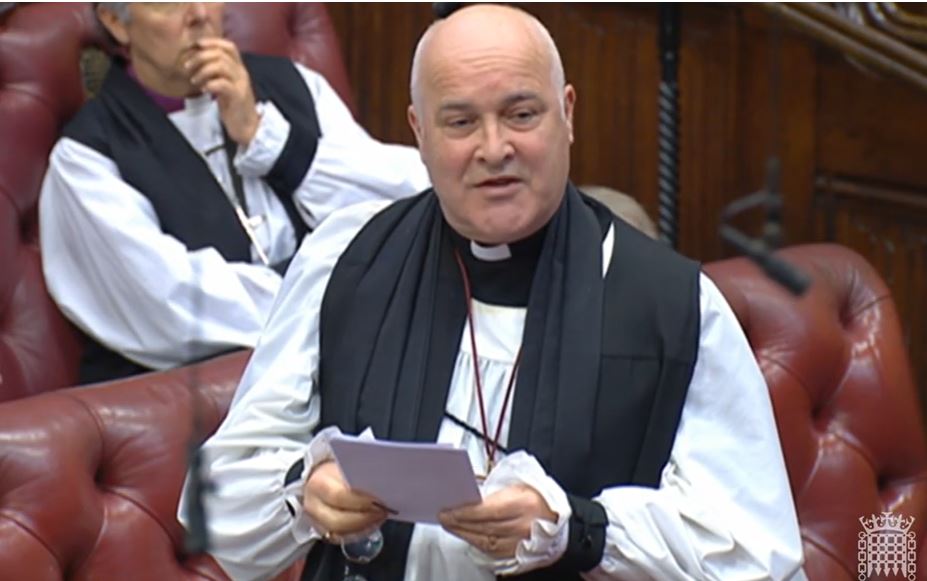
During a debate on the Border Security, Asylum and Immigration Bill on 11th November 2025, the Bishop of London spoke in opposition to two amendments aimed at potentially restricting claims of asylum for reasons of freedom of religion and modern slavery, pointing out the lack of evidence of any abuse of the baptism process by asylum seekers and the need to protect the safety of those under threat from religious discrimination:

The Lord Bishop of London: My Lords, I resist Amendment 79D. This amendment and Amendment 79E in the next group are both motivated by reports that asylum seekers are choosing to convert to Christianity upon arrival in the UK in order to support their claim for asylum on the grounds of religious persecution. Amendment 79E is of deep concern. I will address this in the next group.

Continue reading “Border Security, Asylum and Immigration Bill: Bishop of London supports amendments on freedom of religion and modern slavery”

Votes: Border Security, Asylum and Immigration Bill

On 11th November, the House of Lords debated the Border Security, Asylum and Immigration Bill. Votes were held on amendments to the bill, in which bishops took part:

Continue reading “Votes: Border Security, Asylum and Immigration Bill”

Border Security, Immigration and Asylum Bill: Bishop of Chelmsford tables amendment on ‘good character’ requirement

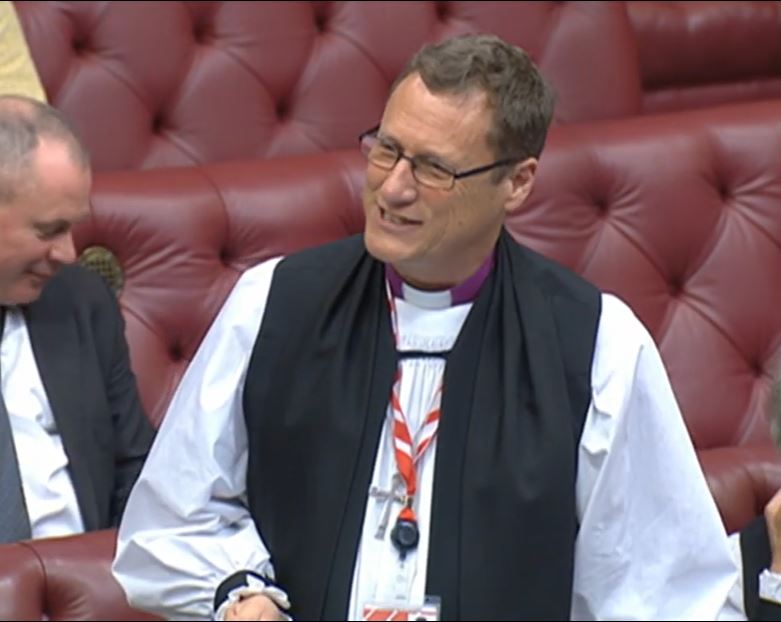
On 11th November 2025, the Bishop of Chelmsford The Bishop of Chelmsford tabled her amendment to the Border Security, Immigration and Asylum Bill which would “ensure the good character requirement is not applied contrary to the UK’s international legal obligations across a number of instruments. It also ensures that an assessment of good character may not take into account a person’s irregular entry or arrival to the UK if they were a child, and it may only be taken into account to the extent specified in guidance published and in force at the time of an adult’s irregular entry or arrival.”

The Lord Bishop of Chelmsford: My Lords, I declare my interests as per the register. I am grateful to the noble Lord, Lord German, and the noble Baroness, Lady Lister, for their support as signatories and for their guidance, especially as this is the first amendment that I have sponsored to a piece of legislation. My thanks go also to the noble Baroness, Lady Lister, for rightly explaining in my absence in Committee that I have tabled this amendment because I am passionate about the issues it raises: namely, how best to include, not preclude, those with a legal right to be here—those friends, neighbours and colleagues whom we live, work and worship alongside.

The Government’s change to the good character guidance, enacted through secondary legislation with retrospective implementation, in effect makes the “how” of a person’s travel to the UK a determining factor in their character assessment, not the “why” of the reason behind their travel in pursuit of sanctuary. This is a fundamental cultural shift and introduces a factor that bears no correlation to someone’s moral character, their worth and value or the contribution they might make to British society.

Continue reading “Border Security, Immigration and Asylum Bill: Bishop of Chelmsford tables amendment on ‘good character’ requirement”

Bishop of London asks about role and importance of churches in providing religious education

The Bishop of London asked a question on the importance of religious education following a government statement on the curriculum and assessment review on 10th November 2025: 

The Lord Bishop of London: My Lords, we are living in an increasingly complex world, and the study of religious education is critical in helping young people to navigate it. The need for understanding and dialogue across different faith groups and worldviews is increasingly obvious. The Church of England has welcomed the scrapping of the EBacc, because it has positive implications for religious education. At present, schools with a religious character provide the most comprehensive RE in the country. Will the Government commit to ensuring that these new proposals do not undermine this or the historic role that churches have in providing education in England?

Continue reading “Bishop of London asks about role and importance of churches in providing religious education”

Bishop of Leeds asks about government response to Leveson recommendations

The Bishop of Leeds asked a question on the government response to the Leveson recommendations on delays between charges and trials in the courts on 10th November 2025:

The Lord Bishop of Leeds: My Lords, the Minister has said a couple of times that the response to the Leveson recommendations will be delivered in due course. Can she possibly tell us what “in due course” looks like, because it has been quite a long time already?

Continue reading “Bishop of Leeds asks about government response to Leveson recommendations”

Votes: Border Security, Asylum and Immigration Bill

On 5th November 2025, the House of Lords debated the Border Security, Asylum and Immigration Bill. Votes were held on amendments to the bill, in which Bishops took part.

Continue reading “Votes: Border Security, Asylum and Immigration Bill”

Border Security, Asylum and Immigration Bill: Bishop of Manchester supports amendments on right to work

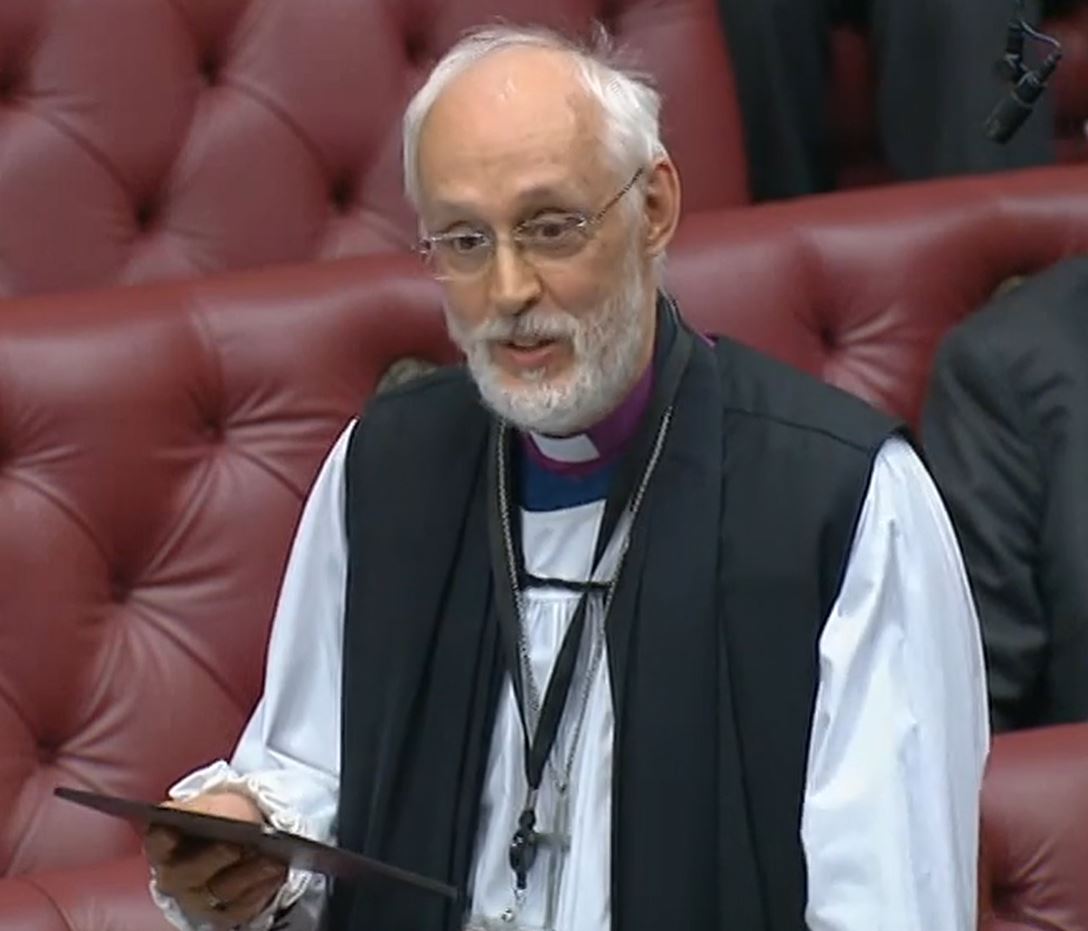
On 5th November 2025, the Bishop of Manchester spoke in a debate on the Border Security, Asylum and Immigration Bill, supporting amendments on removing the restrictions on work for asylum seekers:

The Lord Bishop of Manchester: My Lords, as well as Amendment 45 in my name, and that of the noble Lords, Lord Alton of Liverpool and Lord Watson of Invergowrie, I also strongly support the other amendments in this group, to which the noble Lord, Lord German, has just spoken. In fact, I have added my name to two of them.

The current lengthy ban on asylum seekers working wastes talent. Lifting it would let an incredibly talented, resilient group of people—as those are the qualities they needed to even get themselves here—support themselves and their families. It would allow them to rebuild their lives with dignity and independence, at the same time as they would be filling vital UK labour shortages.

Continue reading “Border Security, Asylum and Immigration Bill: Bishop of Manchester supports amendments on right to work”

Bishop of Manchester asks about new EHRC Chair

The Bishop of Manchester asked a question on the appointment of a new chair of the Equality and Human Rights Commission on 5th November 2025:

The Lord Bishop of Manchester: Like many, I am grateful that the interim advice that was issued and caused such widespread alarm was withdrawn, albeit belatedly. As the Minister has just said, we need to get this right rather than done quick. With that in mind, can the Minister assure us that the forthcoming appointment of the new chair of the EHRC will be taken as an opportunity to reset an organisation that has, of late, lost the confidence of many?

Continue reading “Bishop of Manchester asks about new EHRC Chair”

Bishop of Manchester responds to statement on Huntingdon Train Attack

The Bishop of Manchester spoke in response to a government statement on the Huntingdon Train Attack on 4th November 2025, asking about bias in surveillance technology and methods of deterrence for knife crime:

The Lord Bishop of Manchester: My Lords, these Benches pay tribute to the train crew and others who responded so heroically. Our thoughts and prayers remain with all those who have been impacted. The traumatic effects of being involved in an incident like that, in an enclosed space, do not just go away after a short period of time. I declare my unpaid role as co-chair of the national police ethics committee. I am grateful that information about the perpetrator was got out early, and not just the fact that it was not terrorism. Since Southport last year, we have known that releasing other information is vital to calming some of the public’s fears. That is something that my ethics committee has been discussing at length in recent times.

Like many noble Lords—I am looking at the noble Lord, Lord Goddard, who may want to intervene shortly—I travel a lot on trains that do not stop for quite a long distance and which have many carriages. I could have made some of the points that have already been made about this. It is about having enough first responders, who are equipped to respond effectively, on those trains throughout the journey.

My trains have CCTV in every carriage—it usually works. That helps. I think facial recognition technology has been referred to. That needs to be managed very carefully. Many of the models that I have seen still have an in-built ethnic bias, inherited from the fact that the original training of their algorithms is often based on the faces of white men such as me. These models sometimes struggle to distinguish people from other groups within society, leading to too many false positives and causing people who are entirely innocent to have their lives interrupted by being stopped and accused of an offence. If we are to increase stop and search, there is no problem with that as long as we ensure that the officers involved are trained in unconscious bias so that they are not carrying it out in a way that is unfair.

Finally, does the Minister agree that deterrence for knife crime and other crime is driven much more by fear of detection and arrest than by the theoretical length of a maximum sentence?

Continue reading “Bishop of Manchester responds to statement on Huntingdon Train Attack”

Bishop of Manchester asks about education and forced marriage

The Bishop of Manchester asked a question on preventing forced marriage and pregnancy as barriers to women’s education during a discussion on official development assistance on 4th November 2025:

The Lord Bishop of Manchester: My Lords, while we are on the theme of supporting women, as I travel around I find that one of the greatest impairments to young girls completing their education is that they are forced into pregnancy—sometimes by their families—at a very young age, pre leaving school. What can His Majesty’s Government do to help prevent young girls being made pregnant, usually by older men and in very difficult circumstances?

Continue reading “Bishop of Manchester asks about education and forced marriage”