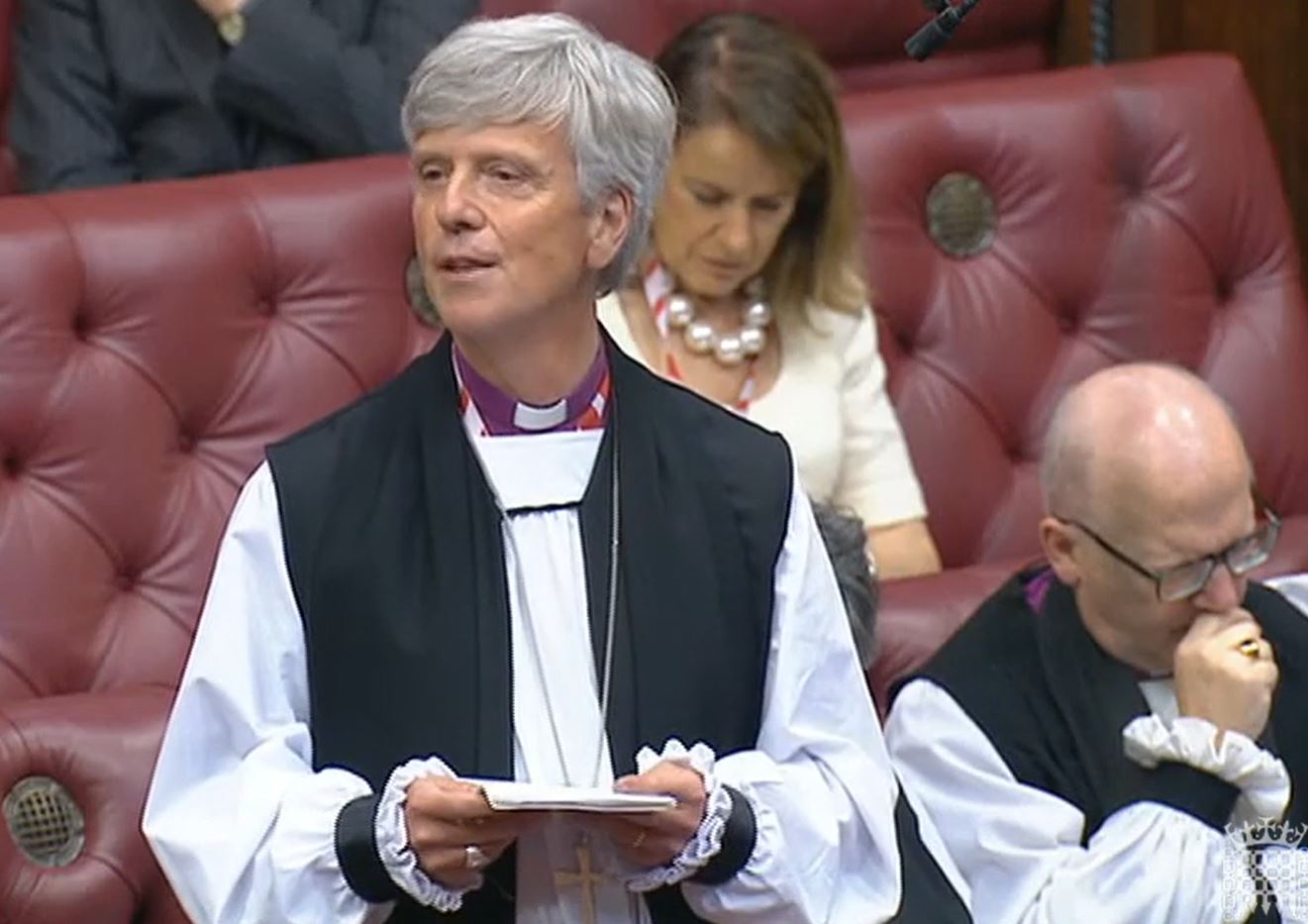
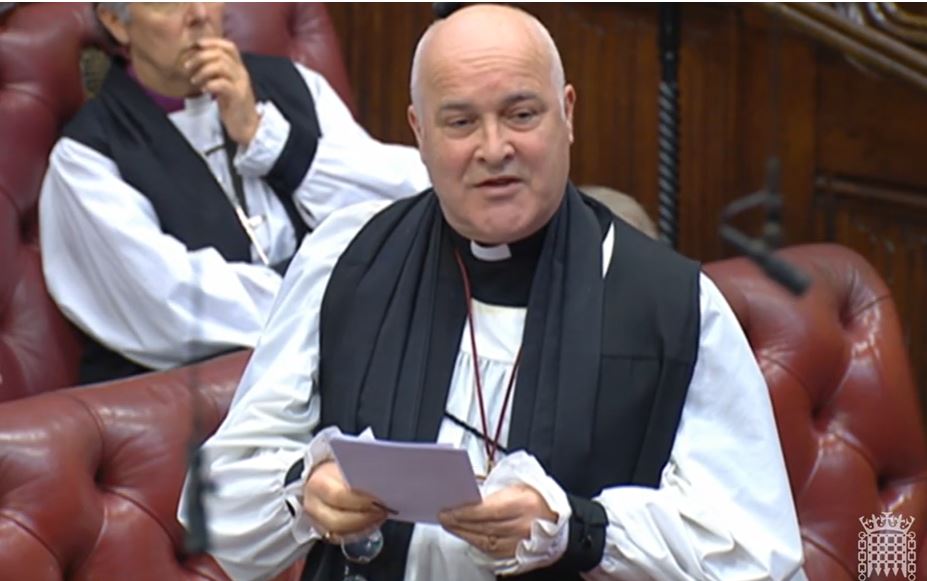
Bishop of Leeds asks about teaching levels in arts and creative education

The Bishop of Leeds asked a question on low numbers of teachers in the arts and humanities on 15th January 2025, during a discussion on the value of a creative education in state schools:

The Lord Bishop of Leeds: My Lords, schools feed in to universities, and the number of arts and humanities departments in universities has been in decline. I learned recently—and I speak as a linguist—that if all the students currently training in modern languages at university were to go into teaching, we would still only fund 70% of the language-teaching posts. This is a systemic problem in the arts and humanities. Trying to get PhD funding for arts and humanities is increasingly difficult. Will the Government commit to looking at the whole stream of the educational system in this respect, and not just schools?

Continue reading “Bishop of Leeds asks about teaching levels in arts and creative education”

Bishop of Leeds asks about support for arts and creative industries

The Bishop of Leeds asked a question on facilitation of touring in Europe for young people involved in creative industries and the arts on 10th December 2024:

The Lord Bishop of Leeds: My Lords, I know many people in the creative sector who are worried about the generational impact of this issue. We have already heard the phrase “plan for change”, but this generation is losing the vital experience not only of performing abroad or doing whatever they do but of the business of getting there in the first place. We are hearing that the Government are working hard and that it is a priority, but is there a timeline? For many of those people, that matters.

Continue reading “Bishop of Leeds asks about support for arts and creative industries”

Bishop of St Albans asks about arts provision

The Bishop of St Albans received the following written answers on 2nd December 2024:

The Lord Bishop of St Albans asked His Majesty’s Government what assessment they have made of introducing an arts premium to allow for schools to pay for arts opportunities such as music lessons, as recommended in the report by the Sutton Trust, A class Act: Social mobility and the creative industries, published on 13 November.

Continue reading “Bishop of St Albans asks about arts provision”

Bishop of St Albans raises impact of budget on listed places of worship and cathedral choir schools

The Bishop of St Albans spoke in a debate on the impact of the recent Budget on arts, culture, and heritage on 14th November 2024, raising the issue of the Listed Places of Worship Grants scheme and the impact of increased VAT on choir schools:

The Lord Bishop of St Albans: My Lords, I too thank the noble Baroness, Lady Sater, for securing this debate.

A number of elements of the recent Budget are to be welcomed, such as the continuation of Museums and Galleries Exhibition Tax Relief and the cultural infrastructure funding. However, many of us were disappointed that there was no update on the Listed Places of Worship Grants Scheme, which is such a lifeline for so many of our historic buildings. The Church of England and other churches are trustees of some of the most important buildings in this country. We have to raise, voluntarily, tens of millions of pounds, and we really need to find ways to help very many pressurised local communities. These buildings are not used just for worship; many of them are the local concert venue. They have all sorts of music-making going on and they are places where music lessons are given. Many of our schools come into the churches, and they are used for all sorts of reasons beyond Sunday and midweek worship. I hope that DCMS will make a decision on this in the coming weeks, and I urge the Minister to ensure its future.

Continue reading “Bishop of St Albans raises impact of budget on listed places of worship and cathedral choir schools”

Bishop of Guildford asks about tax relief for choirs

The Bishop of Guildford asked a question on the potential of offering tax relief for choir groups on 15th October 2024, during a discussion on the future of tax relief for the arts:

The Lord Bishop of Guildford: My Lords, the current relief offered to instrumental groups of 12 or more players does not extend to choirs, a situation that is logically indefensible, especially given the growing popularity of choirs across the nation. Can the Minister say whether the Government have formed a view on extending the relief to choirs, as requested by musical organisations all around the country, not least given the recent questions over the future of the BBC Singers?

Continue reading “Bishop of Guildford asks about tax relief for choirs”

Bishop of St Albans asks about gambling data and arts & culture spending

The Bishop of St Albans received the following written answers on 7th October 2024:

The Lord Bishop of St Albans asked His Majesty’s Government what steps they will take to support children growing up in households where an adult is experiencing problem gambling.

Continue reading “Bishop of St Albans asks about gambling data and arts & culture spending”

Bishop of St Albans calls for wider access to arts and culture

The Bishop of St Albans spoke in a debate on the contribution of the arts to the economy and society on 1st February 2024, calling upon the government to both fund the arts and ensure access to arts and culture for wider groups of people:

The Lord Bishop of St Albans: My Lords, I too am grateful to the noble Lord, Lord Bragg, for securing this debate, and I am particularly glad we are debating the contribution of the arts not just to finance and the economy but to society. The arts are fundamental to human flourishing, to expanding our imaginations, to deepening our sympathies and to touching all aspects of our lives that, so often, the merely financial fails to engage with.

Of course, the arts do make a significant contribution to the wealth of this nation, and we are fortunate to be home to some of the world’s leading orchestras, musicians, playwrights, theatres, artists and galleries. In my own diocese in Hertfordshire there is a rapid expansion of studios that are attracting filmmakers from around the world, which is important. But the danger is that we do not give enough time and attention to thinking, “Where are these musicians and artists going to come from, and where are they first going to get the experience of the arts? Where are the ordinary people, in their homes and families, engaging with the sheer delight of creativity?” That is why I find it deeply sad that many young people do not have the access to artistic expression or musical education in their communities, homes, or, sadly sometimes, even in their schools.

Continue reading “Bishop of St Albans calls for wider access to arts and culture”

Archbishop of York asks about access to arts education

The Lord Archbishop of York: My question is about the variability of access. I think we all recognise that the statistics quoted are going the wrong way. What we observe particularly is that it is far worse in some parts of the country than others. That is something I particularly observe in the north, where I serve. The DCMS Committee’s report last year spoke about how the creative industries themselves are saying that there is a shortage of the skills that we need. What is being done about this and, particularly, how do we know about the situation? In about 2014, Ofsted changed the way its inspections investigated the arts. For instance, dance was looked at as part of PE. Does the Minister think that this lack of joined-up thinking has had an impact on where we are now and, in particular, on the way that some parts of the country are suffering much more than others?

Continue reading “Archbishop of York asks about access to arts education”

Bishop of St Albans speaks in support of the UK performing arts sector

The Bishop of St Albans spoke in a debate on support for the performing arts sector in the UK on 30th March 2023, advocating for a long term settlement of grants to support the arts and emphasising the cultural and social value of the arts sector:

The Lord Bishop of St Albans: My Lords, I too am grateful to the noble Baroness, Lady Featherstone, for securing this debate and share the concerns of many other noble Lords about the challenges facing BBC musicians and the need to support small venues and touring programmes. The case has been made eloquently.

I am also grateful for the Library briefing, but I note that it begins—as has already been quoted—

“In 2022 music, performance and visual arts contributed an estimated £11.5bn to the UK economy.”

Have we really reached the point where we primarily describe the arts by the financial contribution that they make? Can we not imagine a world where the House of Lords Library produces briefings which say that, in the past year, 39,000 people had their minds opened and changed because of the plays they saw at the National Theatre; scores of people entered into the grim reality of migrants because they went to something at the National Theatre and then came back and signed up to some campaigning organisation to support them; and 40,000 people felt that they touched eternity in that breathtaking silence at the end of the Rachmaninoff “Vespers”? Can we not somehow talk about enriching the human soul? That is surely what it is about. We cannot and must not measure the performing arts primarily in financial terms but in the way that they expand our imaginations, unlock our sympathies and confront us with alternative realities that take us out of our comfort zones and demand that we engage with them.

Continue reading “Bishop of St Albans speaks in support of the UK performing arts sector”

Bishop of Worcester asks about arts education

The Bishop of Worcester asked a question about government commitment to arts education during a debate on data, digital, and financial literacy in schools on 14th March 2023:

The Lord Bishop of Worcester: My Lords, recently I had the privilege of serving on your Lordships’ Communications Committee. What came through consistently in our inquiry into the effects of technology on the creative industries was the need for creative and artistic literacy as well as digital literacy—we need STEAM, not just STEM. I speak as a former scientist deeply committed to science and technology. Does the Minister agree and, if so, what can the Government do to enable that, given their reluctance to review the national curriculum and prioritise arts more?

Continue reading “Bishop of Worcester asks about arts education”