
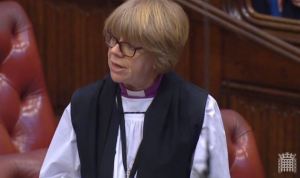
 On 17th January 2019 the Earl of Clancarty asked the Government “what steps they are taking to encourage the teaching of art and design in schools”. The Bishop of London, Rt Revd Sarah Mullally, asked a follow-up question:
The Lord Bishop of London: My Lords, high-quality arts education as part of a broad curriculum has been shown not just to support our creative industries but to improve academic achievement and enable children to look at problems in different ways. In the light of Ofsted’s consultation on its new framework, which looks at quality, intent and impact in the curriculum, will the Minister say how this Government will ensure that there is no reduction in pupil funding in real terms? Good art education requires good teachers. Continue reading “Bishop of London asks Government about funding for high-quality arts education”
 The Lord Bishop of Chichester: My Lords, I too am grateful to the noble Lord, Lord Moynihan, for introducing the debate and for his magnificent speech, which covered so many areas which indicate how transformative sport can be—in ways that I think the arts can mirror.
 The Lord Bishop of Chichester (Maiden Speech): My Lords, I begin by recording my thanks for the welcome and encouragement that I have received both today and on so many occasions since being introduced into your Lordships’ House.
  On 2nd March 2017 the Second Church Estates Commissioner, Dame Caroline Spelman MP, answered oral and written questions in the House of Commons, covering wi-fi in churches, art exhibitions in churches, the Anglican Church in South Sudan, the House of Bishops’ Report on Human Sexuality, and church building repairs. A full transcript follows:
 The Lord Bishop of Derby: My Lords, I, too, thank the noble Lord, Lord Hanningfield, for his introduction to the debate, especially for linking education with vocation for people in prison. As the noble Lord, Lord Addington, said, it is a very complex territory with very deep needs. A lot of research shows that the prison population represents people with multiple needs. Therefore, the task of education and vocation will be challenging. I see the importance of formal education for literacy and numeracy to help people to get jobs. I am all in favour of that, but I want to look behind that at the informal fashioning of vocation and the development of character and confidence, which allows people to enter formal learning. I will draw on my own experience of going into prisons.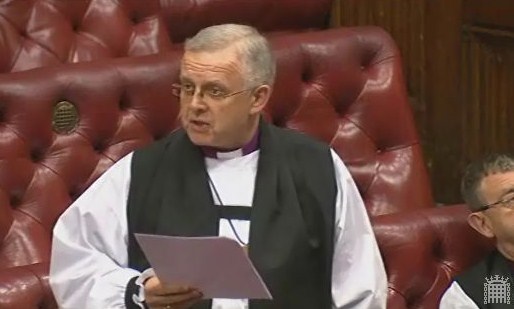


You must be logged in to post a comment.