Assisted Dying Bill – speech by Caroline Spelman

On the 11th September 2015 the House of Commons considered the Assisted Dying Bill, a private member’s bill tabled by Rob Marris MP. Caroline Spelman MP, the Second Church Estates Commissioner, spoke during the debate.

MPs rejected the Bill in the subsequent vote by 330 to 118 votes. 

Spelman CCQs June 2015 1Mrs Caroline Spelman (Meriden) (Con): I respect the sincerely held views of the hon. Member for Wolverhampton South West (Rob Marris). The whole nation will be looking at our debate on this issue today and it is right that we show respect for the strongly held views on all sides, but I beg to differ with him.

Historically, our society has abhorred suicide and based that view on the principle of the sanctity of life, but that argument is becoming harder to make in an increasingly secular society. The view that life is a gift from God with all that it entails, including pain and suffering, and that it is not for us to bring it to an end, is perceived to be at odds with the prevailing view of our rights, including a perceived right to end our own life. Continue reading “Assisted Dying Bill – speech by Caroline Spelman”

Divisions – Assisted Dying Bill

On 16th January 2015, a number of bishops took part in divisions in the House of Lords, during the Committee Stage of Lord Falconer of Thoroton’s Assisted Dying Bill.

House of Lords Division Lobby

Continue reading “Divisions – Assisted Dying Bill”

Bishops take part in Committee Stage of Assisted Dying Bill

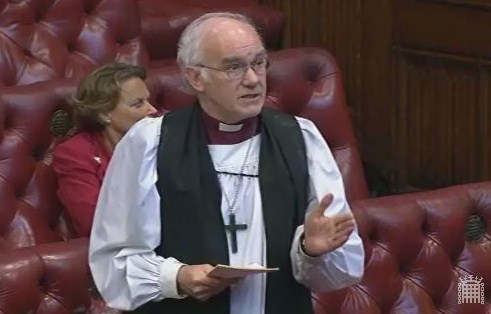
On 16th January 2015, the Bishop of Carlisle, the Rt Revd James Newcome, and the Bishop of Chester, the Rt Revd Peter Forster, spoke during the Committee Stage of Lord Falconer of Thoroton’s Assisted Dying Bill. Subjects debated included the terminology used in the text and title of the Bill, and clarifications of the relationship between patients and the medical practitioners required to treat them. The debate on the Bill was suspended at the end of the day. The Bill is unlikely to make further progress during the current Parliament. There were also two divisions on the Bill, and more details can be found here.

Continue reading “Bishops take part in Committee Stage of Assisted Dying Bill”

Bishop of Bristol takes part in debate on Assisted Dying Bill

On 7th November 2014, the House of Lords held the Committee Stage of Lord Falconer of Thoroton’s Assisted Dying Bill. The Bishop of Bristol, the Rt Revd Mike Hill, spoke to two amendments that he sponsored and co-sponsored. The amendments sought to strengthen the decision-making process surrounding the application and ingestion of the drugs that would be used to enable someone to commit suicide. Following a short debate on the amendments, Lord Falconer agreed to bring back amendments at Report Stage dealing with the period of time between application and ingestion. However, he did not agree to make further changes to his Bill, as he claimed that the Bishop’s concerns were dealt with elsewhere in the Bill.The Bishop did not press his amendments to a vote.

14.03 Bishop of BristolThe Lord Bishop of Bristol: My Lords, I may not be the only one who is a bit confused about what is happening. I stand to speak in support of Amendment 12 tabled by my noble friend Lord McColl, but I would like to address noble Lords’ attention to Amendment 77, which stands in my name. I rather hoped it might have been grouped with Amendment 85, but they stand separately grouped now. I would like to reserve the right to come back to Amendment 85 at a later occasion and I hope a later occasion will occur for that to happen.

Amendment 77 deals with something slightly different. Quite rightly, most of our debate today has focused on the decision to apply for assisted suicide and to sign the declaration. However, it is fair to say that the request for assistance with suicide involves two different and discrete decisions: first, there is the decision to apply for it, and then there is the decision to ingest fatal drugs. The Bill makes it clear that there has to be a minimum of 14 days between the application and the actual ingestion of the drugs, except in the case of somebody who is given a prognosis of a month or less and then the time lag reduces to six days. Continue reading “Bishop of Bristol takes part in debate on Assisted Dying Bill”

Bishop of Carlisle speaks against Assisted Dying Bill – new legislation would destroy balance of current law

“By going down this track we would be sending a clear message to society, and especially its most vulnerable members, about individual lives having a different value according to their circumstances.”

On 18th July 2014, the Bishop of Carlisle, the Rt Revd James Newcome, spoke during the Second Reading of the Assisted Dying Bill. The Bishop spoke against the Bill, raising concerns that the proposed Bill would destroy the balance currently provided by legislation, and highlighting the risks associated with the Bill in relation to the welfare of vulnerable individuals. 

14.06.09 Bishop of CarlisleThe Lord Bishop of Carlisle: My Lords, a word that is frequently used in your Lordships’ House is “balance”. It has already been used several times in this debate—in particular, by my noble and learned friend Lady Butler-Sloss, the noble Lord, Lord Condon, the noble Baroness, Lady Kennedy, and the noble Lords, Lord Kerr of Kinlochard and Lord Wills, and probably many others whom I may have missed. We constantly look for balance in our legislation and in the way that the legislation is applied. Continue reading “Bishop of Carlisle speaks against Assisted Dying Bill – new legislation would destroy balance of current law”

Bishop of Bristol speaks against Assisted Dying Bill: raises concerns about ‘unintended consequences’

“Many of us who are opposed to the Bill are greatly concerned by the unintended consequences that it will inevitably bring into play. It is simply not good enough for those who support the Bill to dismiss out of hand this genuine concern. It is for them to give us consistent evidence that our fears are unfounded. Sadly, the available evidence appears to raise, rather than allay, anxiety.”

On 18th July 2014, the Bishop of Bristol, the Rt Revd Mike Hill, took part in the Second Reading debate of the Assisted Dying Bill. The Bishop spoke against the Bill, focusing on the unintended consequences that the Bill would present, if passed.

14.03 Bishop of Bristol

The Lord Bishop of Bristol: My Lords, many of us will speak today in the name of compassion, but, as is clear, we shall take very different views in terms of what compassion looks like in relation to those who are suffering unbearably and, in particular, as to whether my noble and learned friend Lord Falconer’s Bill is fit for the purposes he and his supporters pursue with such vigour. Continue reading “Bishop of Bristol speaks against Assisted Dying Bill: raises concerns about ‘unintended consequences’”

Assisted Dying Bill – Archbishop of York speaks against

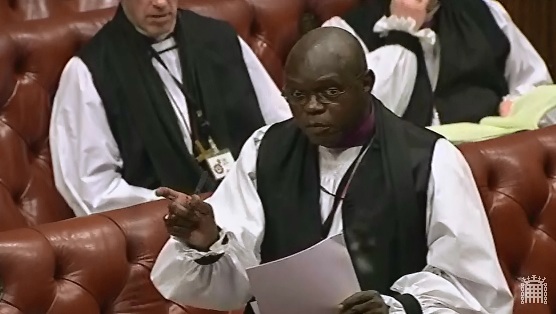
The Archbishop of York, Most Rev John Sentamu, spoke on 18th July 2014 in the Second Reading of the Assisted Dying Bill in the House of Lords.  His speech follows in full:

Archbishop of York

My Lords, let me state at the outset that the ‘official’ Church of England position was made very clear on 9th July 2005, when the General Synod voted on a motion referring to the joint submission of the C of E House of Bishops and the Roman Catholic Bishops’ Conference to your Lordships’ House Select Committee [1].  The motion argued strongly against making assisted suicide or euthanasia lawful. The vote was carried by 297 votes to 1.

This position was reaffirmed in a General Synod motion in 2012 [2].

My Lords, this present Bill is not about relieving pain or suffering. It makes that quite clear in its definition of a terminally ill patient to include those whose progressive illness can be relieved but not reversed.   This bill is about asserting a philosophy, which not only Christians, but also other thoughtful people of goodwill who have had experience in care for the dying must find incredible: that is, the ancient Stoic philosophy that ending one’s life in circumstances of distress is an assertion of human freedom.   That it cannot be.   Human freedom is won only by becoming reconciled with the need to die, and by affirming the human relations we have with other people.    Accepting the approach of death is not the attitude of passivity that we may think it to be.   Dying well is the positive achievement of a task that belongs with our humanity.   It is unlike all other tasks given to us in life, but it expresses the value we set on life as no other approach to death can do.    Continue reading “Assisted Dying Bill – Archbishop of York speaks against”

Assisted Suicide Debate – Bishop of Bristol Warns Against Change in the Law

The Bishop of Bristol, the Rt Revd Mike Hill spoke during Baroness Jay’s question for short debate assessing the Director of Public Prosecutions Guidelines for prosecution for assisted suicide. The Bishop highlighted number of cases which have been inspected by the DPP and the need to prevent the original intention of legislation gradually slipping into a very different definition and drew attention to the case of Belgium where the law to allow assisted suicide has been recently extended to include terminally ill children. Lord Faulks responded to the debate for the Government and made no new legislativee commitments.

Baroness Jay of Paddington: To ask Her Majesty’s Government whether they continue to be satisfied with the Director of Public Prosecutions’ Guidelines on prosecution for assisted suicide.

14.03 Bishop of BristolThe Lord Bishop of Bristol: My Lords, I add my own voice of gratitude to the noble Baroness, Lady Jay, for introducing the debate tonight. The DPP’s guidelines rightly give a central place to compassion in this vexed area. After more than 150 cases have been actively inspected by the DPP, it should now be clear to all that where a suffering patient wishes freely and without coercion to end their life, their family or friends who, motivated wholly by compassion, assist him or her to do so will not be prosecuted. There are many reasons for not moving beyond that legal position as some other countries have, but I shall refer to just one. Continue reading “Assisted Suicide Debate – Bishop of Bristol Warns Against Change in the Law”

Bishop of Lichfield calls for greater support of vulnerable young people in preventing suicide

The Bishop of Lichfield spoke during Lord Eames’ debate on reducing the levels of suicide among young people in the United Kingdom. He focused his remarks on the relationship between low levels of self-worth amongst young people as a factor that contributes to suicidal thoughts. He also raised particular concerns about the risks of bullying or coercion that young people with disabilities face, specifically as debates about assisted suicide become more widespread, and the need to support children who are refugees or asylum seekers and particularly vulnerable due to a lack of adequate mental health care.

The Lord Bishop of Lichfield: My Lords, I, too, thank the noble and right reverend Lord, Lord Eames, for initiating this debate.

The Association for Young People’s Health recently published its key data on adolescence. At present, the statistics show that the levels of self-harm are relatively stable, although for such a sensitive topic there is likely to be low reporting. It is clear that girls are at least three times more likely to self-harm than boys; on the other hand, suicide is much more prevalent among young males, particularly those aged between 20 and 24. This coincides with the evidence from ChildLine. Numbers have fallen fractionally in more recent years but the report questions whether this will continue.

How this correlates with child well-being needs careful consideration. We all remember the United Nations report about the unhappiness of children in this country. ChildLine reports that the number of children contacting it about suicidal feelings has risen for the third year running, including a rise of 33% in the last year. Overall, child well-being in the UK, according to the United Nations, has improved from 21st out of 21 to 16th out of 29 countries. Economic reasons have been stated and there is much correlation with the commentary from the Association for Young People’s Health. Continue reading “Bishop of Lichfield calls for greater support of vulnerable young people in preventing suicide”

Bishop of Chester cautions against changes to law on assisted suicide

“The risks inherent in legalising assisted suicide still outweigh the benefits that might accrue” – Bishop of Chester

On 12th December 2013, the Bishop of Chester spoke in Lord Dubs’ debate on patient choice at the end of life, calling on the Government to resist changing the law to legalise assisted suicide. The Bishop of Sheffield also made his maiden speech in the debate, which can be read here.

14.03 Bishop of ChesterThe Lord Bishop of Chester: My Lords, I join other Members of the House in welcoming the reinforcements to the Bishops’ Benches. I will make three brief points in my contribution, the first of which does not have a direct connection with assisted suicide. We typically have long waiting lists today for transplantation surgery in this country, due to an absence of an adequate supply of donated organs. I hope that we will do as much as we can, and more, to encourage people to carry organ donation consent cards and to engender a culture in society in which transplantation and donation of organs are encouraged, especially for those whose death comes in an untimely and unchosen way. This is a matter of choice at the point of death, as are the things that we are discussing in the main part of this debate.

Continue reading “Bishop of Chester cautions against changes to law on assisted suicide”