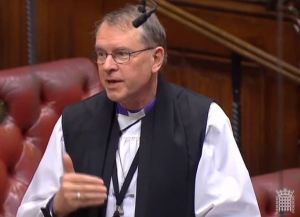
Bishop of Leicester asks about evaluation of the two-child benefit cap

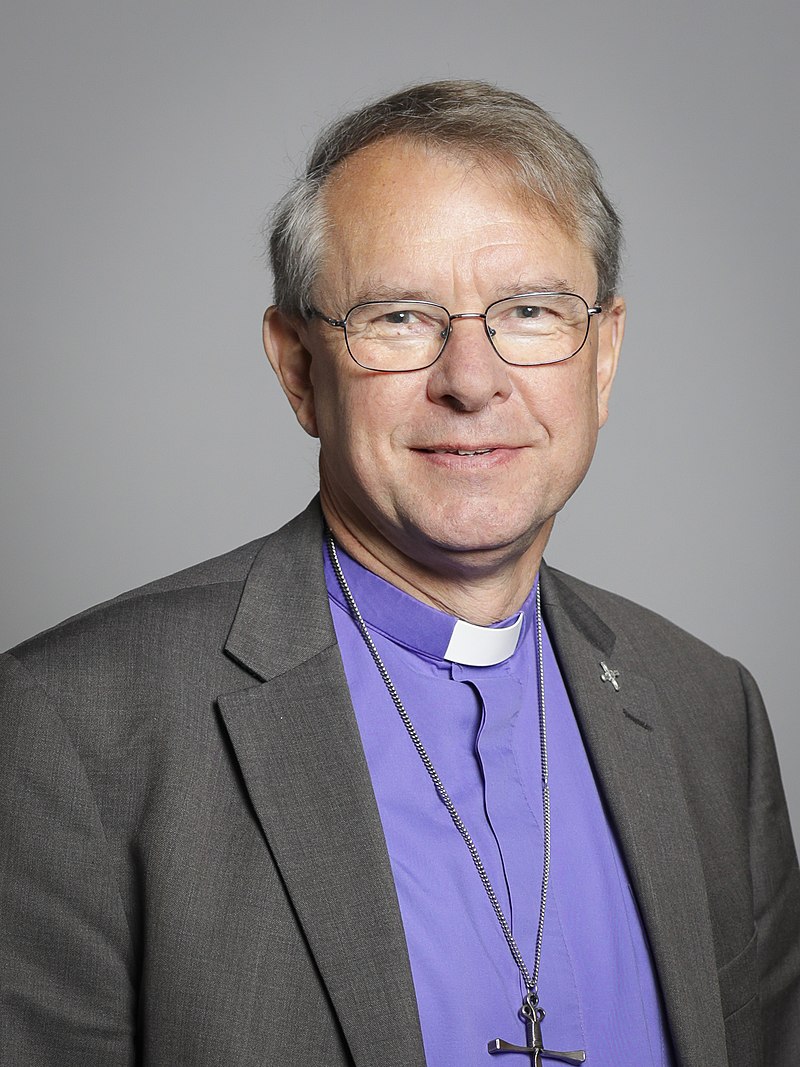
The Bishop of Leicester received the following written answer on 10th May 2024:

The Lord Bishop of Leicester asked His Majesty’s Government, further to the Written Answer by Viscount Younger of Leckie on 24 April (HL3765), what plans they have to collect data to evaluate the success of the two-child benefit cap, especially in relation to the statements in the 2015 Impact Assessment which suggest the two-child limit would (1) encourage parents to consider their readiness to support an additional child, (2) help people move into sustained employment, and (3) provide incentives to have fewer children.

Continue reading “Bishop of Leicester asks about evaluation of the two-child benefit cap”

Bishop of Durham asks about effect of benefit caps on children and ethnic minority groups

The Bishop of Durham received the following written answers on 19th June 2023:

The Lord Bishop of Durham asked His Majesty’s Government what assessment they have made of the number of children who would no longer be in poverty if the benefit cap were (1) abolished, and (2) returned to its original levels.

Viscount Younger of Leckie (Con): No assessment has been made.

Continue reading “Bishop of Durham asks about effect of benefit caps on children and ethnic minority groups”

Bishop of Durham asks about cap on social security benefits

The Bishop of Durham received the following written answers on 16th June 2023:

The Lord Bishop of Durham asked His Majesty’s Government, whether they intend to abolish the benefit cap following their research which found that only five per cent of affected households moved into work as a result of it.

Viscount Younger of Leckie (Con): The benefit cap continues to provide a work incentive and fairness for hard-working taxpaying households, whilst providing a reasonable safety net of support for the most vulnerable. The Government firmly believes that where possible it is in the best interests of children to be in working households and the benefit cap provides a clear incentive to move into work.

Continue reading “Bishop of Durham asks about cap on social security benefits”

Bishop of Leeds asks about two child benefit cap

The Bishop of Leeds asked a question on the purpose of the two child benefit cap on 18th April 2023, during a debate on universal credit reform:

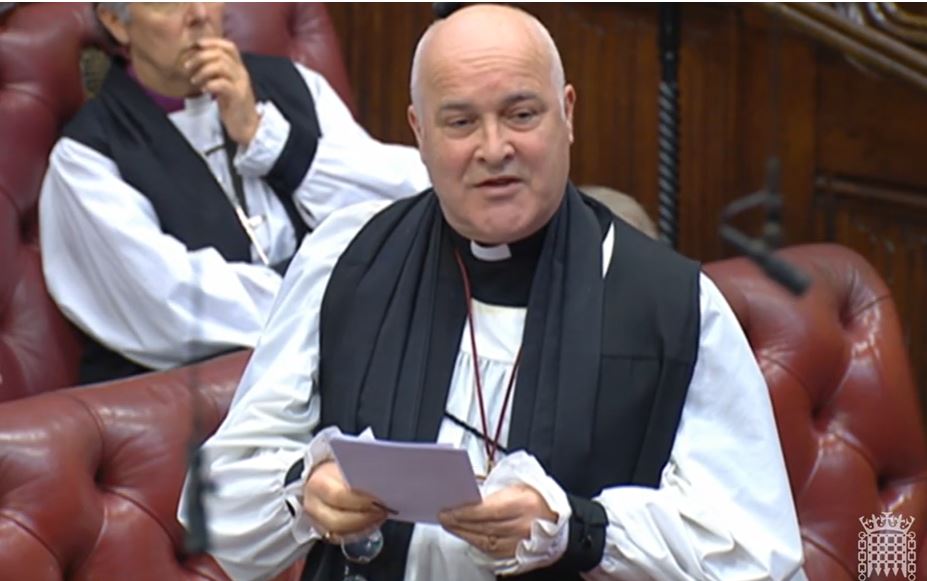
The Lord Bishop of Leeds: My Lords, could the Minister remind the House what the point of the two-child limit is and what its impact is on the provision of essentials?

Viscount Younger of Leckie (Con): The House will be very aware of this subject, which does keep cropping up. The House will be aware that, since 6 April 2017, families have been able to claim support for up to two children and there may be further entitlement for other children if they were born before 6 April 2017 or if an exception applies. As the right reverend Prelate will know, there are a number of exceptions, including any child in a household who is adopted, any child living long-term with friends or family or who would otherwise be at risk of entering the care system.

Hansard

Archbishop of York asks about effects of benefit cap and two child limit

The Archbishop of York asked a question on the effects of the benefit cap and two child limit on vulnerable families on 24th January 2023:

The Lord Archbishop of York: My Lords, it is encouraging to see that the Government are keeping a check on the numbers of people being affected by these policies, but I was not quite sure whether I heard that work is being done to measure the impact of the policies on families. I can say, and it gives me no joy to say it, that from where I serve in the north of England—I am thinking particularly of Middlesbrough and Hull—I see the disturbing impact of an increase in poverty, child poverty and families in very difficult situations, not least with the cost of living crisis on top of all this. My simple, genuine and heartfelt question is: how would you explain this to a mum expecting her third child, or a family with three or four children who have been pushed into benefits over the past couple of years? They do not understand why this is happening but they are suffering as a consequence of it. How do we explain to them the rightness of this policy?

Continue reading “Archbishop of York asks about effects of benefit cap and two child limit”

Bishop of Durham tables question on child poverty and the two-child benefit cap

On 19th October 2021, the Bishop of Durham asked a question on the findings of the Nuffield Foundation Review on Child Poverty, and links between child poverty and the government’s two-child limit on welfare benefits:

The Lord Bishop of Durham: To ask Her Majesty’s Government what assessment they have made of the Nuffield Foundation’s review Changing patterns of poverty in early childhood, published on 14 September; and what steps they intend to take as a result, including in relation to the two-child limit for welfare benefits.

Continue reading “Bishop of Durham tables question on child poverty and the two-child benefit cap”

Domestic Abuse Bill: Bishop of Manchester supports amendments on universal credit rules for victims of domestic violence

The Bishop of Manchester spoke during a debate on the Domestic Abuse Bill on 27th January 2021, supporting an amendment which would aim to disapply the benefit cap for those fleeing domestic abuse:

The Lord Bishop of Manchester [V]: My Lords, I am very grateful to the noble Baroness, Lady Lister, for proposing Amendment 152, which it is my privilege to co-sponsor, and, indeed, for her excellent speech in opening the debate on this group of amendments. I also look forward to the speech from the noble Lord, Lord Best, who knows more about housing matters than anyone it has ever been my pleasure to work with.

This amendment concerns the application of universal credit, so perhaps I need to say at the outset that the notion of a unified benefits system is one that I and, I suspect, my right reverend and most reverend friends on these Benches will heartily endorse. The mix and mess of the separate systems that it replaced was well overdue for retirement. There are, of course, proper questions about the level of such benefits and what caps, if any, should generally apply if we are to maintain a proper incentive to find work. However, as the noble Baroness, Lady Lister, indicated, those are for another day.

The amendment is simply about how far rules designed for the general context can safely be applied to the very specific circumstances of victims of domestic abuse and their dependants without those rules themselves becoming abusive. As a priest and, for two decades, a bishop in the established Church and as chair of numerous housing associations and housing charities over many years, I have seen all too often the enormous obstacles that lie ahead for anyone, especially a woman with children, fleeing domestic abuse. Too many too often give up and return to a place of damage and danger. Too many who escape face long periods in temporary and unsuitable accommodation, often beyond the point when they need the particular support services offered there. Sadly, too many die at the hands of their abuser.

Continue reading “Domestic Abuse Bill: Bishop of Manchester supports amendments on universal credit rules for victims of domestic violence”

Bishop of Rochester asks Government to address needs of most disadvantaged in Coronavirus response strategy

On 28th July Baroness Neville-Rolfe asked Her Majesty’s Government “further to the paper by Professor David Miles, Mike Stead and Dr Adrian Heald Living with COVID-19: balancing costs against benefits in the face of the virus, published on 26 June, what plans they have to ensure that in the future fuller account is taken of the economic costs of any measures adopted to address the COVID-19 pandemic such as lockdowns.” The Rt Revd James Langstaff, Bishop of Rochester, asked a follow up question, focusing on those affected by the benefit cap and those housed in the private rented sector.

The Lord Bishop of Rochester: My Lords, this is a complex matter, because economic, social and other community matters often go hand in hand. It is clear that many who have in these circumstances been bearing economic burdens are among those who are also the most socially disadvantaged. Bearing in mind the context of the forthcoming spending review, can the Minister give an assurance that the Government will take care to address the needs of such groups, including, for example, those affected by the benefit cap and those housed in the private rented sector, where repossession cases come before the courts again from later in August?

Continue reading “Bishop of Rochester asks Government to address needs of most disadvantaged in Coronavirus response strategy”

Bishop of Durham: Covid-19 crisis has amplified child poverty, we should suspend benefit cap and two-child limit

On 30th April 2020 in a virtual sitting the House of Lords debated a Motion in the name of Baroness Bennett of Manor Castle, “To ask Her Majesty’s Government what assessment they have made of the number of people who will be (1) living in poverty, or (2) unable to meet their basic needs, as a result of COVID-19; and what steps they are taking to support such people.” The Bishop of Durham, Rt Revd Paul Butler, spoke in the debate:


The Lord Bishop of Durham:  My Lords, the Covid-19 crisis has amplified child poverty. The welcome measures that raised UC and increased LHA show that radical government action is possible, but they have highlighted two policies as unfair. The first is the two-child limit. Recent events demonstrate life’s unpredictability. It exposes the flawed view of how the two-child limit policy was set up. Children should not be penalised for changing circumstances. Up to 60,000 families may find themselves affected in the coming weeks. Next week, the Church of England and CPAG will publish a report exploring the policy’s impact on these families. Continue reading “Bishop of Durham: Covid-19 crisis has amplified child poverty, we should suspend benefit cap and two-child limit”

Bishop of Durham asks Government about benefit cap policy

Durham040219On 2nd, 3rd & 4th April 2019 the Bishop of Durham, Rt Revd Paul Butler, received answers to three written questions on the benefit cap policy.

The Lord Bishop of Durham: To ask Her Majesty’s Government what was the sample size used to inform the design of the benefit cap policy

Continue reading “Bishop of Durham asks Government about benefit cap policy”