Bishop of St Albans asks Government about support for young carers

Bishop of Gloucester highlights needs of vulnerable young people moving into adulthood

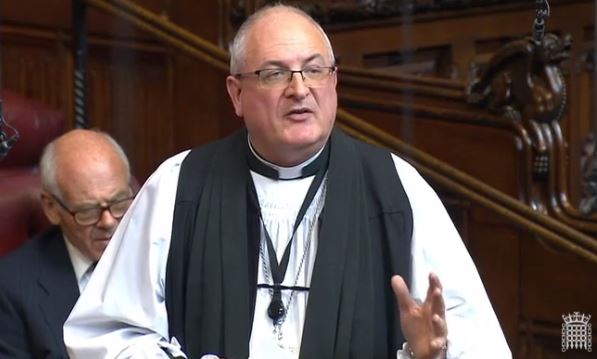
On 29th June 2017 the Bishop of Gloucester, Rt Revd Rachel Treweek, spoke during the final day’s debate on the Queen’s Speech. She highlighted the situation of vulnerable young people moving into adulthood, as care leavers, carers, refugees, those with disabilities and those in prison.

The Lord Bishop of Gloucester: My Lords, I will highlight something that I believe needs careful consideration as we think about education, health and welfare. It is the matter of vulnerable young people making the transition to adulthood. I am grateful for the aspirations I have heard to support families and give children the best start in life. As we strive for the fairness and flourishing of all, I am concerned that we have yet to see any emphasis on our most vulnerable young people as they move into adulthood. I would particularly like to draw the Government’s attention to five specific groups who need help as they transition to adult life: young people leaving care; young people who are carers themselves; young people with severe disability; young people who are refugees and asylum seekers; and young women at risk of offending and being imprisoned. Continue reading “Bishop of Gloucester highlights needs of vulnerable young people moving into adulthood”

Bishop of St Albans asks Government about nursing and caring staffing

stalbans190117On the 6th February 2017, Baroness McIntosh of Pickering asked the Government “what estimate they have made of the number of residential care home beds that were available in (1) 2005, and (2) 2015.” The Bishop of St Albans, the Rt Revd Alan Smith, asked a follow-up question. Continue reading “Bishop of St Albans asks Government about nursing and caring staffing”
Bishop of Ely calls on Government to “make care work a recognised and valued profession.”

On 24th November 2016 the House of Lords debated a motion from Baroness Finlay of Llandaff “To move that this House takes note of the implications for the health and social care workforce of the result of the referendum on the United Kingdom’s membership of the European Union.” The Bishop of Ely, Rt Revd Stephen Conway, spoke in the debate:

ElyThe Lord Bishop of Ely: My Lords, I am grateful to the noble Baroness, Lady Finlay, for bringing this important matter before the House today. The right reverend Prelate the Bishop of Carlisle, our lead bishop on health and social care, cannot be in his place today, but I am glad to contribute from these Benches on his behalf.

The debate brings to mind two principles central to Christian faith and practice: justice for the stranger in our midst and care for the vulnerable. Mosaic law enjoins us not to withhold justice from the outsider. Only yesterday, in conversation, the Secretary of State for Communities and Local Government sought to check that I had heard the words of Jesus, “Love thy neighbour as thyself”. I am grateful to him. This reminds us that the words of Jesus tell us that every care and service given to others is a service given to God. Continue reading “Bishop of Ely calls on Government to “make care work a recognised and valued profession.””

Children and Social Work Bill 2016: Bishop of Durham queries arrangements for personal advisers

Bp Durham June 2015 bOn 6th July 2016 the House of Lords continued to consider the Government’s Children and Social Work Bill in Committee. The Bishop of Durham, Rt Revd Paul Butler, spoke during debate on an amendment from Labour’s Lord Warner on personal advisers. The amendment was withdrawn following debate. The Bishop said:

The Lord Bishop of Durham: My Lords, I rise to express not dissimilar concerns to the noble Baroness, Lady Howarth. I firmly support the tenor of what is proposed, but at the same time I go back to Second Reading when the noble Baroness, Lady Hughes, raised the question of foster carers. Some foster carers will rail against the professionalisation of advice. If we believe that there needs to be flexibility in the range of personal advisers, we need to beware of the Bill being so constraining that we lose that flexibility. Continue reading “Children and Social Work Bill 2016: Bishop of Durham queries arrangements for personal advisers”

Children and Social Work Bill: Bishop of Durham supports amendment on young parents leaving care

On 4th July 2016 the House of Lords considered the Government’s Children and Social Work Bill in Committee. The Bishop of Durham, Rt Revd Paul Butler, spoke in support of an amendment from Labour Peer Baroness Armstrong of Hill Top on young parents who are care leavers. The amendment was withdrawn following debate. The Bishop said:

Bp Durham June 2015 bThe Lord Bishop of Durham: My Lords, I feel that I could already write the Minister’s response by saying that of course these needs are already met in Clause 3(5)(a) or (b), as the subsection refers to meeting “his or her needs”. However, when, year after year, report after report notes that these needs are not dealt with, surely we reach the point where they need to be specified—hence I support the noble Baroness’s amendments. The needs of these young parents have so consistently not been adequately met that we now need to specify them so that they are. Continue reading “Children and Social Work Bill: Bishop of Durham supports amendment on young parents leaving care”

Children and Social Work Bill 2016: Bishop of Durham supports amendment on corporate parenting

On 4th July 2016 the House of Lords considered the Government’s Children and Social Work Bill in Committee. The Bishop of Durham, Rt Revd Paul Butler, spoke in support of an amendment from Labour Peer Lord Warner on corporate parenting. The amendment was withdrawn following debate. The Bishop said:

Bp Durham June 2015 bThe Lord Bishop of Durham: My Lords, I also support this amendment. I apologise for not being here for day one* but at Second Reading I explained that I would not be able to be present last week. At Second Reading, there were a number of clauses—this is one of them—where I was concerned that the work of independent fostering agencies, adoption agencies and the voluntary sector as a whole, which provides increasing support to children in care and leaving care, was hardly noticed. Continue reading “Children and Social Work Bill 2016: Bishop of Durham supports amendment on corporate parenting”

Queen’s Speech 2016: Bishop of Durham responds on welfare, children and life chances

On 19th May 2016 the Bishop of Durham, Rt Revd Paul Butler, spoke in the first day of debate on the Queen’s Speech. He focused his response on the Government’s life chances agenda, including poverty, children and welfare reform.

Bp Durham June 2015 bThe Lord Bishop of Durham: My Lords, the gracious Speech makes several commitments to improving life chances for the most disadvantaged. There is also a renewed commitment,

“to support the development of a Northern Powerhouse”.

It is in welcoming these that I shall make most of my remarks.

Children need the best possible start in life. They need to be loved and cared for above all else. Where this is best found in an adoptive family, seeing this established as well and as quickly as possible is important, so I welcome the proposed measures here and look forward to the details. For some, care ends up as the best loving option. We need to ensure that life chances for those in residential or foster care are as good as for all other children. When the time comes to leave care, it is often traumatic. A move to provide care leavers with a personal adviser until they are 25 is therefore a very welcome proposal. Continue reading “Queen’s Speech 2016: Bishop of Durham responds on welfare, children and life chances”

Immigration Bill: Bishop of Norwich supports amendment on supporting care leavers

14.06.12 Bishop of NorwichOn 21st March the House of Lords considered the Government’s Immigration Bill at Report Stage. The Bishop of Norwich, Rt Revd Graham James co-sponsored and spoke in support of a series of amendments on care leaving support for young people in the immigration system. Introducing the amendments the Earl of Listowel said:

“These amendments ensure that young people leaving care are able to continue to access leaving-care support from their local authorities in circumstances where their departure from the UK is not envisaged. This includes young people with pending applications to remain in the UK whose long-term future may be in the UK, and young people who cannot leave the UK because there is a genuine obstacle to their removal.”

The amendments were not put to a vote. The Bishops’ speech and the Minister’s response are below.

The Lord Bishop of Norwich: My Lords, the situation of most young adults in this country reveals why this group of amendments is needed. I am glad to add my name to it and pay tribute to the noble Earl for his introduction. In 2015, half of all young people aged 21 in this country and 40% of all 24 year-olds were still living with their parents. As many Members of your Lordships’ House will know from personal experience, even adult children who have left home often return when need arises. Indeed, my own personal experience of adult children is that territorial control of bedrooms continues even when they have got married or have their flats elsewhere—I am thinking of introducing a bedroom tax in Bishop’s House in Norwich. Continue reading “Immigration Bill: Bishop of Norwich supports amendment on supporting care leavers”

Welfare Reform Bill: Bishop of Portsmouth proposes exceptions to the two child limit

BishPortsspeechtaxcreditsOn 27th January 2016 the Bishop of Portsmouth, the Rt Revd Christopher Foster opened the second day of Report Stage on the Government’s Welfare Reform and Work Bill with an amendment in his name. The amendment, supported by Labour, Liberal Democrat and Crossbench Peers, proposed exemptions from the two-child limit for new claimants of tax credit and universal credit for kinship carers, bereaved parents, those fleeing domestic violence and disabled children. During his response to the amendment the Minister Lord Freud offered a number of concessions, most notably on kinship carers, and as a result the Bishop did not press the amendment to a vote. A full transcript of the Bishop’s opening and closing remarks, the Minister’s response and an intervention from the Bishop of Durham, are below.

Continue reading “Welfare Reform Bill: Bishop of Portsmouth proposes exceptions to the two child limit”