
On 27th January 2016 the Bishop of Portsmouth, the Rt Revd Christopher Foster, proposed an amendment at Report Stage to the Government’s Welfare Reform and Work Bill. The amendment, supported by Labour, Liberal Democrat and Crossbench Peers, set out exemptions from the two-child limit for new claimants of tax credit and universal credit for kinship carers, bereaved parents, those fleeing domestic violence and disabled children. The Bishop of Durham supported the amendment and his speech is below. During his response to the amendment the Minister Lord Freud offered a number of concessions, most notably on kinship carers, and as a result the amendment was not put to a vote.
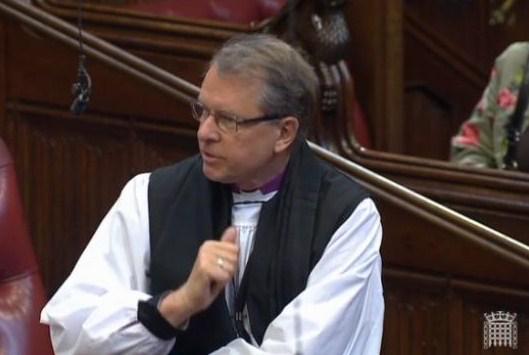 The Lord Bishop of Durham: My Lords, I would like to tell two stories that illustrate why I believe two of these exemptions are important. A good friend of mine and his wife were unable to have children, and they put themselves forward as adoptive parents. They went through the rigorous process—this was a few years ago—and with great pride entered a room with several of us who had our own children and presented a piece of paper that said, “I have been authorised to become a parent in a way that none of you ever have”. Continue reading “Welfare Reform Bill: Bishop of Durham supports 2 child limit exemptions”
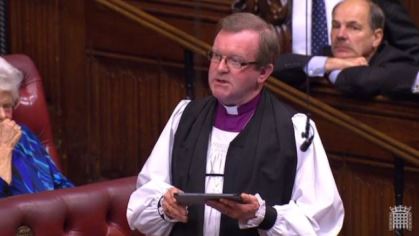 On 27th January 2016 the Bishop of Portsmouth, the Rt Revd Christopher Foster opened the second day of Report Stage on the Government’s
  Mrs Caroline Spelman (Meriden) (Con): Like, I am sure, many others present, I have had to go through the process of a Criminal Records Bureau check, which is now a Disclosure and Barring Service check. Does my hon. Friend agree that it is an important butonerous process? Sometimes, one has to be checked more than once, because it does not transfer to another activity that one might undertake with children if one is foolish enough to do a full weekend with the Sunday school. It is a very rigorous process, and if it was applied to the people who teach children Islam in all teaching environments, it would be a very good tool to deal with any excess problem that there might be.
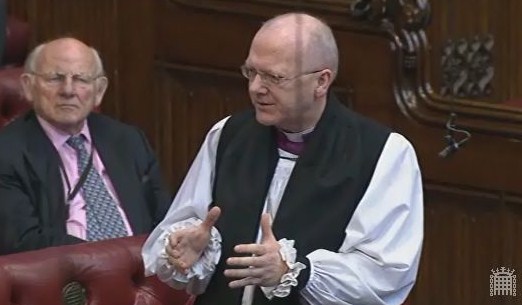
 The Lord Bishop of Portsmouth: My Lords, I tabled Amendment 21 to highlight the impact of this measure on different faith communities who share our concerns with this part of the Bill in particular. Noble Lords who attended the special briefing we organised two weeks ago will have heard Chaya Spitz, chief executive of the Interlink Foundation, speak passionately about the implications for the Orthodox Jewish community that she represents and is a member of. For her community, larger families are the norm and the central pivot around which everything else revolves. There is a positive, faith-based imperative to have children, to create the next generation in service of God. There is also a commonly held conscientious objection to the use of artificial contraception, except in prescribed circumstances, and to abortion, except in rare circumstances. By limiting financial support to the first two children, this policy is making a judgment that touches on deeply personal and strongly held religious and cultural beliefs about the family, and that threatens the viability of whole faith communities.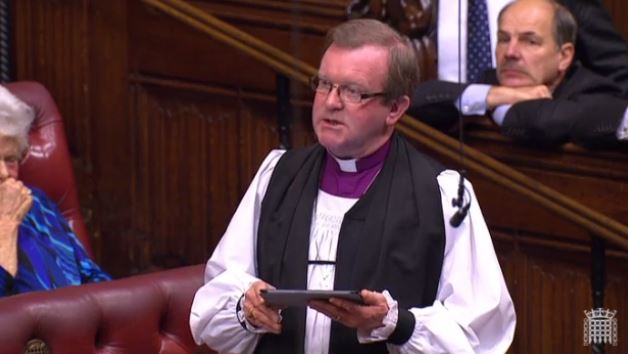


You must be logged in to post a comment.