Church and the Marriage (Same Sex Couples) Act – Lords questions

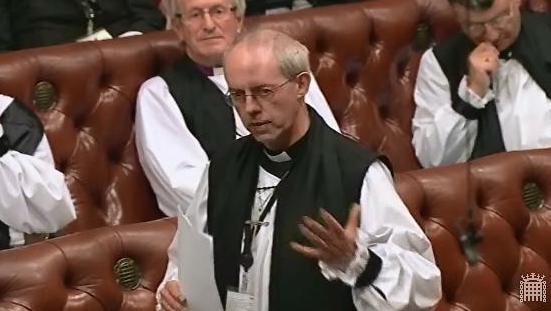
Red BenchesOn 30th July 2014, Conservative Peer Lord Fowler asked Her Majesty’s Government “whether they are satisfied with the enactment and operation of the Marriage (Same Sex Couples) Act 2013.”

In his follow up question, Lord Fowler raised the situation of clergy who are married to someone of the same sex. A number of other Peers also asked questions relating to the situation in the Church of England.

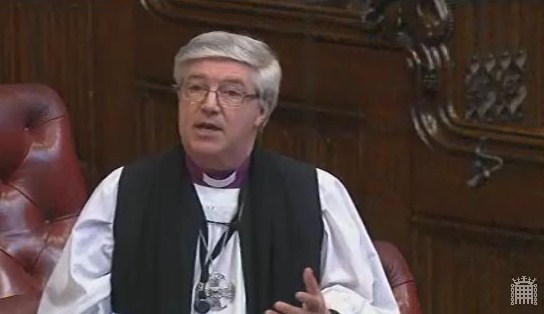
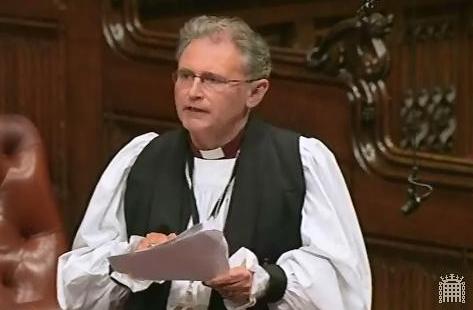
The Bishop of Sheffield, the Rt Rev Steven Croft, set out the Church of England’s position in his own supplementary question and the full transcript of all the exchanges is reproduced below: Continue reading “Church and the Marriage (Same Sex Couples) Act – Lords questions”

Bishop of Derby speaks of unique contribution of the voluntary sector to society

“We do not look just to our neighbours but to strangers. We are not just interested in economic viability but in what is morally right. That is where the energy of the charity sector comes from, and why there is that great British tradition we have heard of—not because it is economically efficient but because it is morally right” – Bishop of Derby, 26.6.14

On 26th June 2014, the Bishop of Derby, the Rt Revd Alastair Redfern, took part in Baroness Scott of Needham Market’s take note debate on the role played by the voluntary and charitable sectors. He spoke of the distinctive nature of the voluntary and charitable sectors, how they can learn from the world of business but must not simply become businesses, and how they must be afforded the freedom and flexibility to deliver their own unique contribution to communities.

Bishop of Derby

The Lord Bishop of Derby: My Lords, I, too, thank the noble Baroness and her party for securing this debate. We talk in a context in which certainly many of the charities and voluntary and faith groups that I am involved with are in crisis, with rising demand and costs and reduced funding. That context is the ending of the welfare state. I remind the House that when the welfare state was conceived, Sidney and Beatrice Webb saw it as having three charity and voluntary work purposes: to meet basic needs, to bring people into association with each other, and to create partnership and participation. Of course, the welfare state became totally focused on meeting basic needs rather than on the richer political ecology of dignifying people, associating with them and bringing them into partnership. Many of us in the charitable and voluntary sector have got drawn into that game of meeting basic needs through projects. Continue reading “Bishop of Derby speaks of unique contribution of the voluntary sector to society”

First World War: Bishop of London highlights role of cathedrals and parish churches in ‘active commemoration’

“It is obvious that we cannot change the past, but we are responsible for how we remember it. Memory—and its more active form, commemoration—is certainly more than just lifting down a file and recalling a past event: it is a creative and responsible art which involves highlighting certain features and identifying significant resonances” – Bishop of London, 25/6/14

On 25th June 2014, Lord Gardiner of Kimble led a debate in the House of Lords to take note of the programme to commemorate the centenary of the First World War. The Bishop of London the Rt Rev. & Rt Hon Richard Chartres, took part in the debate, speaking of the importance of collective memory and ‘active commemoration’ of the First World War. He made reference to the significant role of citizens of the Commonwealth who served in the War, the ‘proper protest’ of those compelled to take a pacifist position, and set out some of the plans being made by churches and cathedrals across the country to commemorate the First World War.

London

The Lord Bishop of London: My Lords, I, too, am grateful to the Minister for the comprehensive and measured way in which he introduced this important debate and laid out the Government’s plans for this commemoration. I also very much echo the words of the noble Baroness, Lady Williams, about the emphasis being placed on the Commonwealth dimension. I have had the privilege of participating in the annual observances at the memorial gates since their inception. Remembering the sacrifices that were made by so many of those from Commonwealth countries who served provides us with an extremely important opportunity to weave that strand into the national tapestry and our national identity. Continue reading “First World War: Bishop of London highlights role of cathedrals and parish churches in ‘active commemoration’”

Second Church Estates Commissioner praises role of Church in fostering tolerance and mutual respect

14.03.20 WH debateOn 25th June 2014, the Second Church Estates Commissioner, the Rt Hon Sir Tony Baldry MP, took part in a Westminster Hall debate on the teaching of British values. Taking inspiration from a speech made by Her Majesty the Queen at an event at Lambeth Palace, he spoke of the significant role played by the Church of England in creating and sustaining a space in society for the flourishing of those of all religions and those with no religious beliefs. He reflected on the Judeo-Christian values underpinning British society and the importance of tolerance and mutual respect in fostering good relations in communities and throughout society. 

The Second Church Estates Commissioner (Sir Tony Baldry): We are grateful to the right hon. Member for Southampton, Itchen (Mr Denham) for introducing this debate. I do not think we agree with his analysis. Continue reading “Second Church Estates Commissioner praises role of Church in fostering tolerance and mutual respect”

Bishop of Birmingham takes part in debate on autonomy and accountability of educational institutions

01.04.14 Bishop of BirminghamOn 24th June 2014, Baroness Perry of Southwark led a short debate to ask Her Majesty’s Government what assessment they have made of the appropriate balance between the autonomy and the accountability of educational institutions. The Bishop of Birmingham, the Rt Revd David Urquhart, took part in the debate and spoke of his involvement in the investigation of allegations of mis-management in schools in Birmingham. The Bishop told the House how autonomy and accountability have been reconciled in Birmingham through setting up a diocesan board of education trust which has published an academies accountability framework. The Bishop argued for local and trusted arrangements to be developed, which are trusted by pupils, staff and parents, by the whole community and the Secretary of State.


The Lord Bishop of Birmingham: My Lords, I welcome the opportunity to address the topic of autonomy and accountability in our educational institutions, particularly in our schools. As noble Lords can imagine, coming from Birmingham, this is a very pertinent topic. We are experiencing a perfect storm of anonymous allegations. Birmingham City Council is conducting various investigations, of which I am a part, into those allegations. Continue reading “Bishop of Birmingham takes part in debate on autonomy and accountability of educational institutions”

Second Church Estates Commissioner urges Government to resist liberalisation of Sunday trading rules

On 19th June 2014, the Second Church Estates Commissioners, the Rt Hon Sir Tony Baldry MP, spoke during the weekly debate on the Business of the House. In his brief remarks, he called on the Government to resist amendments to the Deregulation Bill (debated 23rd June) that would deregulate Sunday trading. The Leader of the House of Commons gave assurances that the Government does not support a change in the Sunday trading rules.

14.01 CCQ BaldrySir Tony Baldry (Banbury): Next Monday, the House will debate the Report stage and Third Reading of the Deregulation Bill. My right hon. Friend will have noted that our hon. Friends the Members for Shipley (Philip Davies) and for Bury North (Mr Nuttall) have tabled a number of new clauses which, if passed, would completely deregulate Sunday trading. I must tell my right hon. Friend that any such move by the House would be seen by the Church of England—and, I am sure, by many other faith groups—as an act of bad faith on the part of Parliament. The present Sunday trading arrangements arose from a series of compromises that were agreed in the mid-1990s to strike a balance between keeping Sunday special and enabling more stores and shops to open on Sundays. I should welcome my right hon. Friend’s reassurance that if you, Mr Speaker, select any of the new clauses for debate, they will be resisted by the Government.

Continue reading “Second Church Estates Commissioner urges Government to resist liberalisation of Sunday trading rules”

House of Lords debates ‘the importance of the English Parish Church’

“No other country in Europe has less financial support from the taxpayer for ecclesiastical heritage than England—which, ironically, has an established church” – Bishop of Norwich, 12/6/14

On 12th June Lord Cormack led a debate in the House of Lords on the subject ‘That this House takes note of the importance of the English parish church.’ The Bishop of Norwich spoke in the debate, about the community and financial value of parish churches, their heritage importance and current financial pressures. Lord Ahmad responded for the Government. Their speeches are reproduced in full below. The Bishop’s speech can also be viewed at ParliamentLive.TV and a useful summary of the debate can be found on the Law & Religion UK website, here.

14.06.12 Bishop of Norwich

The Lord Bishop of Norwich: My Lords, we are meant to declare our interests in this House, but I think that standing here dressed like this is probably a visual declaration. Noble Lords will not be surprised to learn that I believe that the Motion tabled by the noble Lord, Lord Cormack, to take note of the importance of our parish churches, is one that I am happy to endorse. It applies in Wales and Scotland as well, of course, although I need to be a bit careful of the Presbyterian conscience and not presume any authority north of the border. Continue reading “House of Lords debates ‘the importance of the English Parish Church’”

Church of England (Miscellaneous Provisions) Measure passes in Lords – debate

11.12.15 Bishop of OxfordOn 13th May 2014 the Church of England (Miscellaneous Provisions) Measure was passed by the House of Lords. A transcript of the short debate, led by the Rt Revd John Pritchard, Bishop of Oxford, is below. More information about the measure can be found here.


Lord Newby: My Lords, I have it in command from Her Majesty the Queen and His Royal Highness the Prince of Wales to acquaint the House that they, having been informed of the purport of the Church of England (Miscellaneous Provisions) Measure, have consented to place their prerogative and interest, so far as they are affected by the Measure, at the disposal of Parliament for the purposes of the Measure.

Continue reading “Church of England (Miscellaneous Provisions) Measure passes in Lords – debate”

Church of England (Miscellaneous Provisions) Measure passes in Commons – debate

14.05.12 DLC 1On 12th May 2014 the Church of England (Miscellaneous Provisions) Measure was passed by the House of Commons, after being scrutinised by MPs in a delegated legislation committee. A transcript of the debate, led by the Second Church Estates Commissioner Rt Hon Sir Tony Baldry MP, is below. A video of the session can also be viewed on the UK Parliament website, here.

Continue reading “Church of England (Miscellaneous Provisions) Measure passes in Commons – debate”

Church and State: Living in an Old Country

“The relationship between Church and State is not a matter of special privileges granted by an all-powerful State to one particular faith. It is a relationship that has been at the heart of our forms of government for many centuries, and which has weathered enormous changes – even a civil war.”

Rev Dr Malcolm Brown on how the relationship between Church and State reflects a deeply embedded Anglican Christian identity. Continue reading “Church and State: Living in an Old Country”