
On 10th November 2014, the Bishop of Chester, the Rt Revd Peter Forster, took part in the Report Stage of the Government’s Infrastructure Bill. He asked the Minister a number of questions regarding the UK’s carbon reduction commitment, carbon capture by power stations, and the UK’s strategy for oil and gas extraction. The amendments that the Bishop spoke to were withdrawn following the brief debate.
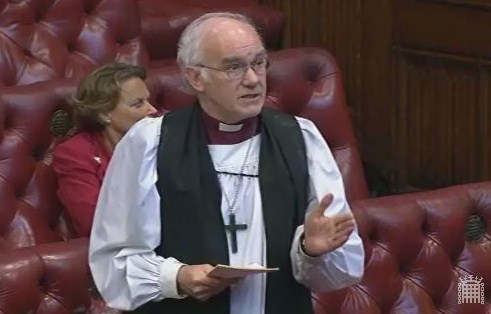 The Lord Bishop of Chester: My Lords, can I ask the Minister when she responds to comment on two points? First, if we are now to be committed in this legally strengthened way to the maximum economic exploration of our oil and gas reserves, how do the Government see that to be compatible with the commitment under the Climate Change Act to reduce our emissions to only 20% of the 1990 level by 2050 without also having a strategy for carbon capture and storage, which I think lies behind the amendment?
Secondly, the amendment refers to the economic extraction of our hydrocarbons—I have never yet heard any reliable estimate of what the additional cost will be of having carbon capture and storage on a typical power station, be it a coal station or a gas station. What level of increase per kilowatt hour—in a unit that can be easily understood—is anticipated if carbon capture and storage is required on such stations? That impacts on what is economically recoverable. Continue reading “Bishop of Chester presses Government on carbon capture during Infrastructure Bill debate”


 The Church of England in Parliament
You must be logged in to post a comment.