
On 20th October 2020 the House of Lords heard the repeat of a Government statement on Covid-19, and also considered the Government’s Health Protection (Coronavirus, Restrictions) (No. 2) (England) (Amendment) (No. 5) Regulations 2020. The Bishop of London spoke in response to both:
In response to the Motion to approve the Regulations, she said:
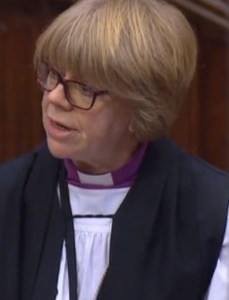 The Lord Bishop of London: My Lords, I am grateful to the Minister for the work that he and others are doing to make decisions at this very challenging time. The regulations we are debating relate to health protection restrictions and fines. However, I wonder whether our approach to public health protection and restrictions during the pandemic needs to pay more attention to a bottom-up approach of wisdom, rather than simply relying on top-down pragmatism and the push and pull of financial incentives. Last week, the right reverend Prelate the Bishop of Manchester highlighted how policies, such as fines, are out of touch with many. It has led to frustration and resentment nationwide. Continue reading “Bishop of London – need to invest in local public health responses to coronavirus and offer right financial support for most restricted areas”
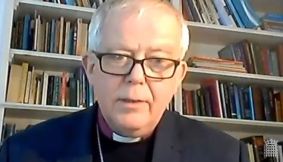 The Lord Bishop of Salisbury [V]: My Lords, the report from the IEA focuses on the impact of the pandemic on macro energy generation and distribution, and it emphasises the vulnerability of the national grid. The pandemic has emphasised the importance of the local, so how does the Minister see the Government’s role in encouraging the rapid development of local micro energy generation?
 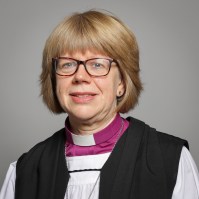 The Lord Bishop of London: To ask Her Majesty’s Government what assessment they have made of the impact of visiting restrictions at care homes on the wellbeing of residents; and what plans they have to review their policy on visiting arrangement at care homes during the COVID-19 pandemic. [HL8737]

 The Lord Bishop of Blackburn: My Lords, I am very exercised, as I imagine we all are, with the challenge of not just restrictions but possible shutdown and closure of different industries. Hospitality is but one: there are also entertainment and cinema, theatre, concerts and opera, aviation and travel, to name but a few. Those closures and threat of closures and the way they have been communicated are bringing grief, anxiety, debt and mental health issues to many lives and families, especially, I would say, in the north.
 The Lord Bishop of Blackburn: My Lords, a recent report by the Church of England and the Child Poverty Action Group highlighted the “disproportionate impact” of the pandemic on low-income families with children, saying that:
 The Lord Bishop of Rochester: My Lords, like others, I tend to think that carrots are more effective than sticks. It is, therefore, vital, if people are to behave as the Government might wish, that they understand and assent to the reasons for particular restrictions.
 The Lord Bishop of Oxford [V]: My Lords, I thank the Minister for her Answer and for what the Government have already done. Before the pandemic, 23% of children in socioeconomic groups D and E lacked home broadband and access to laptops, et cetera. Does the Minister agree that we now need to measure data poverty and its effects more carefully? Will the Government commit to legislating for household digital access to be treated as a utility on an equal footing with the right to access for water and heat—a change supported by the general public?
  The Church of England in Parliament
You must be logged in to post a comment.