Bishop of Gloucester asks about offences resulting from experiences of domestic abuse

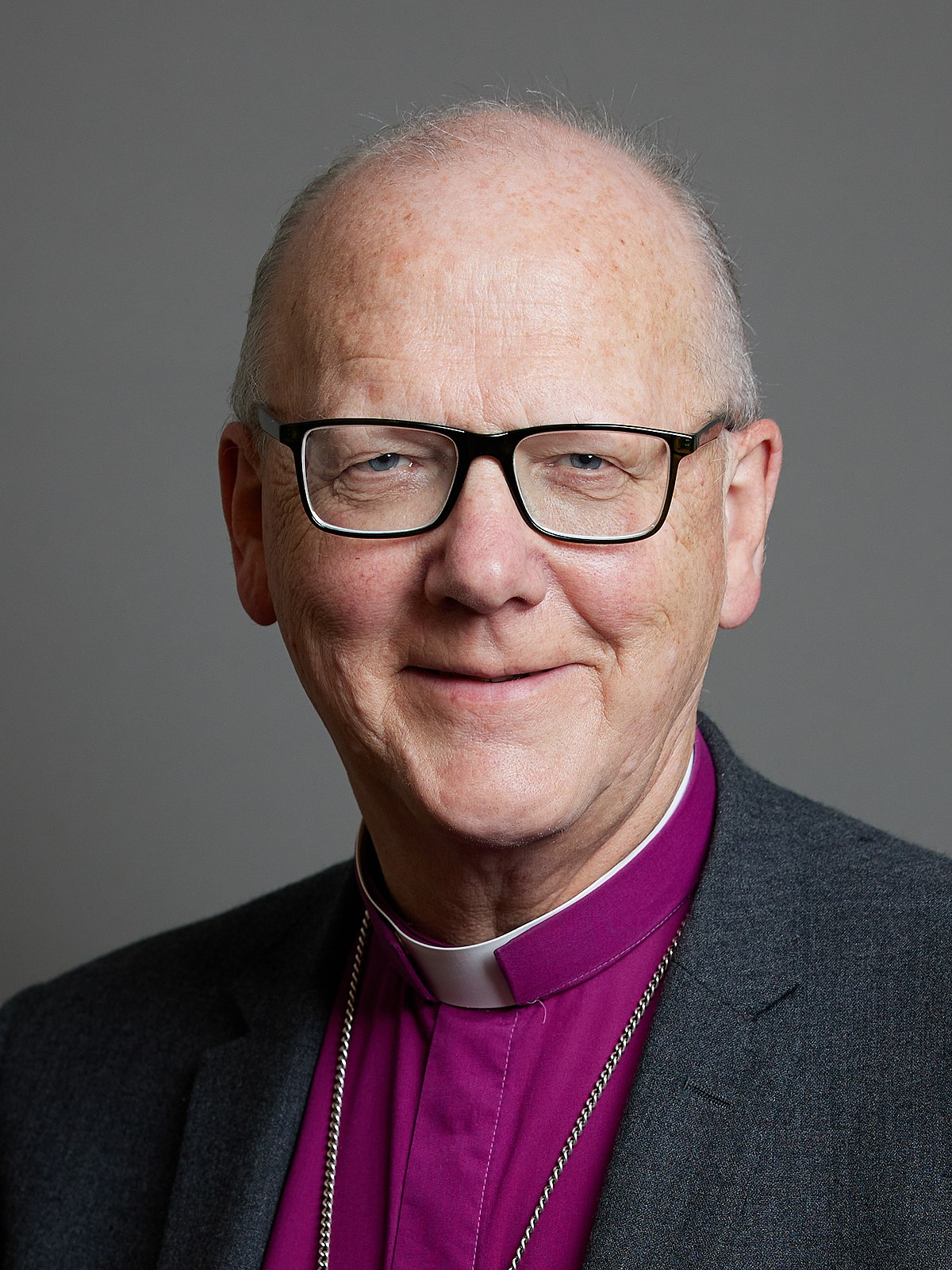
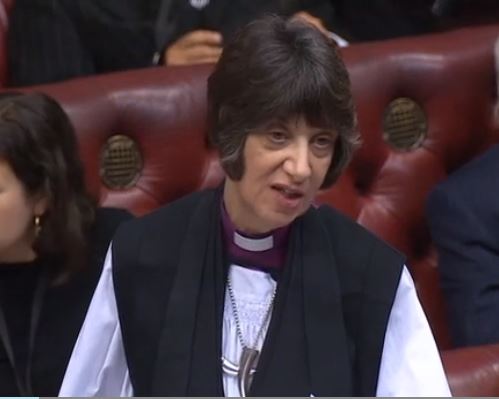
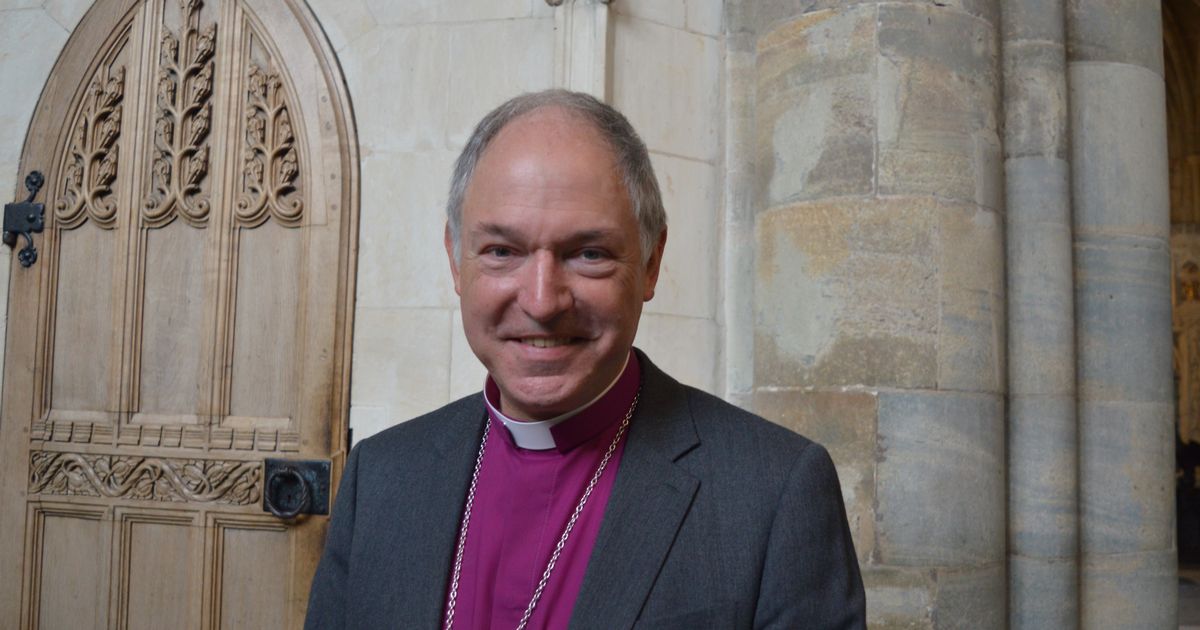
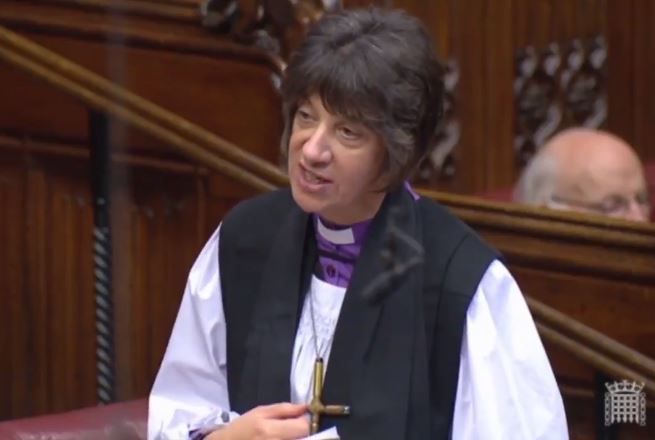
The Bishop of Gloucester asked a question on defence for victims of abuse who commit an offence on 21st February 2023:

The Lord Bishop of Gloucester: To ask His Majesty’s Government, further to the commitment by Lord Wolfson of Tredegar on 3 February 2021 (HL Deb col 2286) to “regularly reassess the effectiveness of any law and associated practices in protecting victims”, what recent assessment they have made of the need to review the existing defences for individuals whose offending or alleged offending results from their experience of domestic abuse.

Continue reading “Bishop of Gloucester asks about offences resulting from experiences of domestic abuse”

Bishop of Gloucester asks about issues with statistics on violent crime

The Bishop of Gloucester received the following written answer on 20th February 2023:

The Lord Bishop of Gloucester asked His Majesty’s Government, further to the Written Answer by the Minister of State for the Ministry of Justice on 18 October 2022 (59996), what issue resulted in undercounting convictions for offences under the Assaults on Emergency Workers Act 2018; and whether it was rectified for data published in and after November 2022.

Lord Bellamy (Con): While improving our data processing in 2022, a data mapping issue was discovered in the Courts Proceedings Database production. As detailed in the Criminal Justice System statistics December 2021 publication, an estimated 3,220 convictions for the offence under the Assaults on Emergency Workers Act 2018 were not correctly mapped to the offence of Assault on Emergency Worker between 2019 and 2021 meaning an undercount for that offence in those years. This issue was reflected in the known issues tabs of our published data tools and tables. Convictions in 2018 were not affected.

Continue reading “Bishop of Gloucester asks about issues with statistics on violent crime”

Public Order Bill: Bishop of Manchester speaks in support of amendments on stop and search regulations

On 7th February 2023, the House of Lords debated the Public Order Bill in the second day of the report stage. The Bishop of Manchester spoke in favour of amendments to remove clauses 10 and 11 of the Bill, which would have extended the police’s stop and search powers:

The Lord Bishop of Manchester: I too speak in support of the amendments to remove Clauses 10 and 11, to which I have added my name. I declare my registered interests as the co-chair of the national police ethics committee and the chair of the Greater Manchester Police ethics advisory committee.

Stop and search can be an extremely useful tool in the police kit box, but, like many tools, it works far less well if it is overused or used for the wrong task. Eventually, it loses its efficacy entirely. I have several broken screwdrivers at home that bear witness to my own excesses in that regard, as well as to my very limited DIY skills. That is the danger we run when we extend stop and search powers in what, at times, feels like a knee-jerk reaction. They are simply the most obvious tool at the top of the box, whether they are appropriate or not. As the noble Baroness, Lady Chakrabarti, indicated, stop and search becomes, as it has in the past, so discredited that it reaches a point where, like my screwdrivers, it is counterproductive to use it, even in circumstances where it would be right and appropriate to do so.

Continue reading “Public Order Bill: Bishop of Manchester speaks in support of amendments on stop and search regulations”

Bishop of Manchester asks about facial recognition technology

The Bishop of Manchester asked a question on facial recognition technology during a debate on the impacts and use of CCTV in the UK on 2nd February 2023:

The Lord Bishop of Manchester: My Lords, I declare my interest as chair of the Greater Manchester Police independent ethics committee. Can the Minister tell us what the Government’s assessment is of the use of CCTV in conjunction with live facial recognition technology by police across the UK, and what legal safeguards are in place to ensure that fundamental rights are upheld?

Continue reading “Bishop of Manchester asks about facial recognition technology”

Bishop of Manchester asks about changes needed to address criminality within the police

The Bishop of Manchester asked a question on how the government plan to realise the turnaround priorities set out by the new police commissioner, during a debate on criminality within the Metropolitan Police on 1st February 2023:

The Lord Bishop of Manchester: My Lords, this is more than a series of bad apples; I am sure that there is something rotten in the culture and structures in policing that comprehensively and immediately needs to be addressed. We have the nine turnaround priorities that the new police commissioner has set out. Can the Minister set out how the Government will assist with and ensure those priorities are realised as a matter of urgency?

Continue reading “Bishop of Manchester asks about changes needed to address criminality within the police”

Bishop of St Albans asks about costs of gambling-driven crime

The Bishop of St Albans received the following written answer on 24th January 2023:

The Lord Bishop of St Albans asked His Majesty’s Government what estimates they have made of the cost to the state of gambling-driven crime.

Lord Sharpe of Epsom (Con): The Home Office does not hold the information which you have requested on the estimates for state costs arising from gambling- driven crime.

Continue reading “Bishop of St Albans asks about costs of gambling-driven crime”

Bishop of Exeter asks about crime prevention in rural areas

The Bishop of Exeter received the following written answers on 29th November 2022:

The Lord Bishop of Exeter asked His Majesty’s Government:

  • what assessment they have made of the rising levels of crime and low conviction rates in rural areas.
  • what consideration they have given to setting up rural crime units.
  • what steps they are taking to increase the conviction rate for rural crime.
  •  what guidance they plan to issue to farmers to protect themselves from violent crime.

Lord Benyon (Con): The Statistical Digest of Rural England, published in August 2022 by DEFRA, states “average crime rates (police recorded crime) are lower in rural areas than urban areas”. However, we recognise that some crimes are unique and specific to rural areas.

Continue reading “Bishop of Exeter asks about crime prevention in rural areas”

Bishop of Gloucester speaks in a debate on crime and rehabilitation

The Bishop of Gloucester spoke in a debate on crime, reoffending and rehabilitation on 30th June 2022:

The Lord Bishop of Gloucester: My Lords, I am very grateful to the noble Lord, Lord Farmer, for introducing this debate. His work is inspiring; I want to say “yes” to all that he has said and am sorry that I have only six minutes. I too welcome the noble and learned Lord, Lord Bellamy, and look forward to his maiden speech. I refer to my interests stated in the register as Anglican Bishop to Prisons and president of the Nelson Trust. Last week, I visited HMP Wakefield. In reflecting with the governor on long sentences, he said that he had asked a group of prisoners whether, if they had known the tariff for their crime, it would have been a deterrent. For all but one, the answer was no. Most crimes are rarely planned in a calculated way.

Earlier this month, the Independent Commission into the Experience of Victims and Long-Term Prisoners published a report with a comprehensive set of recommendations, holding together for the first time the perspectives of the offender and the victim. The report highlighted that the number of people in England and Wales given a prison sentence of more than 10 years has more than doubled in a decade, at an ever greater cost. Where is the evidence that greater severity equates to greater deterrence, or a safer society? We need to curb the unhelpful and inaccurate rhetoric about keeping the public safer through longer, tougher sentencing. What matters more than longer and longer sentences is how people are spending their time while in prison, in terms of not only education and purposeful work but meaningful interventions which prevent reoffending and someone else becoming another victim. Holding together justice and restoration is central to Christian theology; I believe it is vital for us to rediscover how those two dwell side by side.

Continue reading “Bishop of Gloucester speaks in a debate on crime and rehabilitation”

Votes: Police, Crime, Sentencing and Courts Bill

On 31st March 2022, the House of Lords debated Commons Amendments to the Police, Crime, Sentencing and Courts Bill. There were votes on several amendments, in which Bishops took part.

Continue reading “Votes: Police, Crime, Sentencing and Courts Bill”

Votes: Police, Crime, Sentencing and Courts Bill

On 22nd March 2022, the House of Lords considered Commons amendments to the Police, Crime, Sentencing and Courts Bill. Votes were held on further amendments to the bill, in which Bishops took part.

Continue reading “Votes: Police, Crime, Sentencing and Courts Bill”