
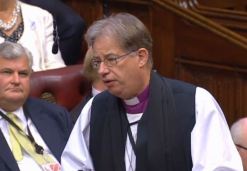
 On 26th June 2019 Lord Bird asked the Government, “by what means, if at all, they require public bodies to act, and to demonstrate how they act, in a manner which seeks to ensure that the needs of the present generation are met without compromising the ability of future generations to meet their own needs.” The Bishop of Oxford, Rt Revd Steven Croft, asked a follow-up question:
The Lord Bishop of Oxford: My Lords, it has been a real privilege today—as the noble Lord, Lord Bird, mentioned—to spend time with some of the 16,000 people, many of them young, representing all faiths and none, who have come to say to Parliament that the time is now on climate change. I very much support the proposal from the noble Lord, Lord Bird. Does the Minister agree that the issues of climate change, both in the material sense and the perceived sense—public opinion—are absolutely the pressing priority for the future generation? Following the commendable adoption of the net zero by 2050 target, will the Minister share with the House what the Government’s next three priorities are in combating climate change?
Continue reading “Bishop of Oxford asks Government for its climate change priorities”

 On 22nd May 2019 Baroness McIntosh of Pickering asked the Government “when they expect the Office for Environmental Protection to be operational; what its remit will be; and in the interim, which body will ensure compliance with environmental protection legislation and regulations.” The Bishop of Winchester, Rt Revd Tim Dakin, asked a follow up question:
  On 7th May 2019 Lord Dubs asked the Government “what their latest proposals are to reduce the use of plastics.”. The Bishop of St Albans, Rt Revd Alan Smith and the Bishop of Southwark, Rt Revd Christopher Chessun, asked follow up questions:
  The Lord Bishop of Salisbury: My Lords, the context of this debate has changed radically over the past few months. Whatever you think of the tactics of Extinction Rebellion, what has been created by its disruption has put the environment on the agenda in a new way and with greater urgency. The debate in the other place yesterday on a climate emergency was Parliament catching up with more than 40 councils in the UK that have decided to act in response to this climate emergency, including Wiltshire declaring that it will be carbon neutral by 2030. Two-thirds of Britons are now said to agree that the planet is in a climate emergency.
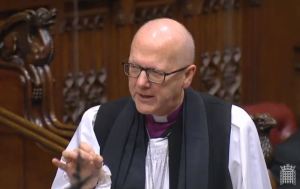 The Lord Bishop of St Albans:
 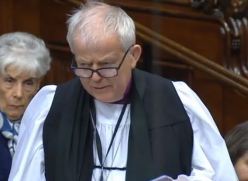 On 10th April 2019 the Bishop of Salisbury, Rt Revd Nicholas Holtam, received written answers to three questions on the environment: on clean growth targets, gas and coal:
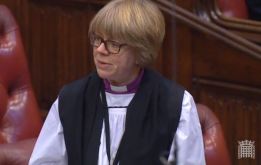 The Lord Bishop of London: My Lords, I thank the noble Baroness for her answers so far. Can I pick up the issue of children? As the Bishop of London, I am very grateful for the ultra-low emission zone being implemented today. Can the Minister reassure us that money is going to be put into research to ensure that we know the long-term effects on the health of those children who have already incurred high emissions?
 The Church of England in Parliament
You must be logged in to post a comment.