Bishop of Oxford speaks in a debate on the Schools Bill

On 23rd May 2022, the House of Lords debated the Schools Bill (2022) in its second reading. The Bishop of Oxford spoke in the debate in regards to faith schools and rural schools. The Bill was read through and committed to a committee of the whole house:
The Lord Bishop of Oxford: My Lords, there is much to welcome in the new Bill, as my colleague the right reverend Prelate the Bishop of Durham and other noble Lords have indicated. In particular, it is good to know the Government’s direction of travel on academisation and the continued emphasis on raising standards. I support the comments made by other noble Lords on the need properly to resource our schools, particularly in the aftermath of the pandemic, to safeguard the morale of heads, governors and teachers and to pay much greater attention to mental health provision.

It is vital as well to continue to build on secure partnerships across the statutory, voluntary, church and faiths sector. The education of our children has never been the sole responsibility of central government—it is the responsibility of all. These vital partnerships have flourished for many decades to the mutual benefit of all and the common good. It is very good to note the Government’s intention to safeguard those partnerships into the future through the Bill and the process of academisation which will follow. One of the tests of the Bill will be the strengthening of social capital and intermediate institutions.

Continue reading “Bishop of Oxford speaks in a debate on the Schools Bill”
Education (Assemblies) Bill: Bishop of Oxford urges against removal of collective worship in schools

On 10th September 2021, the House of Lords debated the Education (Assemblies) Bill at its second reading. The Bishop of Oxford spoke in response to the bill, welcoming the debate on the topic, but opposing the proposed removal of the requirement for collective worship in schools:

The Lord Bishop of Oxford: My Lords, I warmly welcome this debate. As others have said, it is very timely that it is raised. I thank the noble Baroness, Lady Burt, for her careful introduction, and other noble Lords and noble Baronesses who have spoken, particularly my distinguished predecessor but one, the noble and right reverend Lord, Lord Harries, with whom I think I am about to disagree.

Worship and spirituality are a vital part of what it means to be human, and it is absolutely right, for all the reasons that have been given, that it be carefully reviewed and, possibly, that some changes should be introduced. But my reason for in conscience finding this Bill difficult goes back to my experience of leading assemblies as a local parish priest many years ago in Halifax. I put a great deal of time and energy into rehearsing the parable of the good Samaritan and the stories of Joseph and Moses, only for the otherwise extremely good and gifted head teacher of the school to reinterpret my assembly with the phrase, “Of course, what the vicar really means is don’t run in the corridors, and pick up the litter in the playground.” It is the reduction, without a serious faith tradition, of the fantastic values that are being articulated, to simple practical motifs which I fear is the danger of a Bill like this.

Continue reading “Education (Assemblies) Bill: Bishop of Oxford urges against removal of collective worship in schools”

Church Commissioner Questions: LGBT+ equality, civil partnerships, church buildings, church schools and universities, HS2, Christians in Nigeria

On 6th February 2020 the Second Church Estates Commissioner, Andrew Selous MP, answered  questions from MPs in the House of Commons, on behalf of the Church Commissioners.
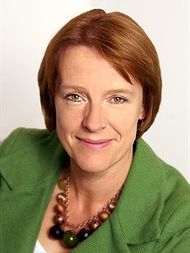
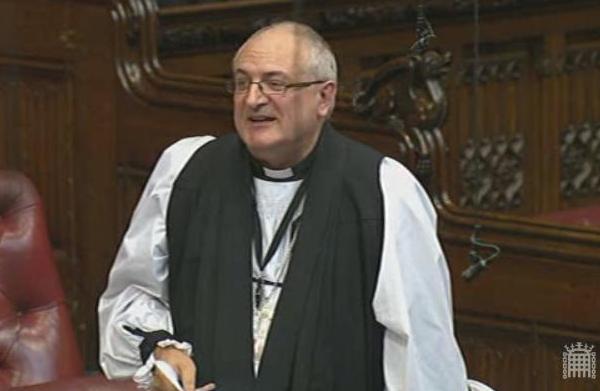
Questions were asked about LGBT+ equality, civil partnerships, church buildings, church schools and universities, HS2, and Christians in Nigeria.

Continue reading “Church Commissioner Questions: LGBT+ equality, civil partnerships, church buildings, church schools and universities, HS2, Christians in Nigeria”

Caroline Spelman MP highlights the role of church schools in promoting excellence and social integration

On 8th November 2016 the House of Commons debated a motion from Labour’s Lisa Nandy MP “That this House notes recent proposals by the Government to expand the role of grammar and faith schools; and calls on the Government to conduct a full assessment of the evidence relating to the effect of grammar schools and faith schools on children’s learning.” The Second Church Estates Commissioner, Rt Hon Dame Caroline Spelman MP, spoke in the debate about the important role of Church of England schools:

Caroline SpelmanThe Second Church Estates Commissioner (Dame Caroline Spelman): I rise to speak on behalf of the Church of England in this important Back-Bench debate. The Church has a long and successful history of educating children in our country. It provided education before the state did. In fact, it is still the largest provider of education besides the state. It has 4,700 schools, most of which are primaries, with 200 secondary schools. Some 84% of its primary and 74% of its secondary schools are good or outstanding.

Many of the remaining schools are in remote rural locations, although I should point out that there are some excellent rural schools. The challenge of trying to sustain a class for each year group in a remote rural area and the difficulty in attracting teachers there make it hard to achieve higher standards in those schools. The Church is committed to raising standards, and with the help of digital means and remote learning methods, it is possible to bring the best teaching to such schools. The Church has fought to sustain these schools for the sake of social cohesion, where other institutions might by now have given up. I am sure that hon. Members with rural constituencies will immediately identify with the importance of the village school, which, with the parish church, may be the only institutional hub for such communities. That underlines the importance of keeping them sustainable.

I want to scotch the myth that Church schools are forces for segregation. That could not be further from the truth. Continue reading “Caroline Spelman MP highlights the role of church schools in promoting excellence and social integration”

Queen’s Speech 2016: Bishop of Ely responds on academies, RE, universities and skills

Research done already on the implications of what has been said by Ministers is that academisation will proceed very fully. The think tank CentreForum suggests that only about 3,000 free-standing schools might be left that are not academised in the future. I am concerned that we do not end up with thousands of outstanding schools going it alone. We need to ensure that all strong schools, in MATs or otherwise, support schools that are struggling. There is no way of flourishing that does not take in support for others.

Continue reading “Queen’s Speech 2016: Bishop of Ely responds on academies, RE, universities and skills”

Bishop of Durham raises targeting of faith-based schools by campaign groups

On 9th March 2016 Lord Watson of Invergowrie asked Her Majesty’s Government “why they are proposing to prevent some parents and organisations from objecting to violations of the School Admissions Code”. The Bishop of Durham, Rt Revd Paul Butler, asked a follow up question.

Bp Durham June 2015 b

The Lord Bishop of Durham: My Lords, we know that some campaign groups are actually targeting faith-based schools as part of a broader agenda. How many of the upheld objections were unrelated to religious selection criteria, and how many were upheld on minor administrative infringements? Are the significant time and resources used to respond to such objections justified in the light of those numbers? Continue reading “Bishop of Durham raises targeting of faith-based schools by campaign groups”

Education Minister praises Church school record on inclusion and community cohesion

On 28th January, Baroness Massey of Darwen asked Her Majesty’s Government what are the conditions which must be met before a new state-funded faith school or free school is allowed to be established; who sets and agrees the conditions; and how the conditions must guarantee a broad and balanced curriculum for pupils. The Bishop of Leicester, the Rt Revd Tim Stevens, asked a supplementary question:

14.04.01 Bishop of LeicesterThe Lord Bishop of Leicester: My Lords, does the Minister agree that “faith school” covers a variety of different kinds of institution? Church of England schools are not faith schools in the narrow sense of providing an education for people of just one faith. In places such as Leicester they provide a rounded education for the whole community, including many of other faiths who value highly what they have to offer.

Lord Nash: I agree entirely with the right reverend Prelate. Many church schools are highly inclusive. A study by the University of York undertaken in 2009 praised the record of church schools on community cohesion.

(via Parliament.uk)

Bishop of Derby responds to Government Statement on Al-Madinah Free School

On 17th October 2013, a Government Statement was repeated in the House of Lords by the Parliamentary Under-Secretary State for Schools, Lord Nash, on the Al-Madinah Free School in Derby. The Bishop of Derby, the Rt Revd Alastair Redfern, responded to the statement during the subsequent question and answer session.

DerbyThe Lord Bishop of Derby: My Lords, I declare an interest as the Bishop of Derby and congratulate the Minister and his colleagues on the monitoring and firm action that is being taken. As I understand it, this is a very local initiative. What lessons can be learnt because if we do not have the local authority playing a key role, how are we providing the right kind of framework and guidance for local initiatives so that the right kind of standards, structures and expectations are put in place and met? What are we learning and how are we going to deal with that?

The Parliamentary Under-Secretary of State for Schools (Lord Nash): I am grateful to the right reverend Prelate for his question. This is a local initiative, it is quite a complicated situation and I do not have time to go into all the details now, but I can assure the House that we are all over this and will not allow this situation to continue.

(via Parliament.uk)

Bishop of Birmingham highlights quality of education provided by Church of England schools

On 22nd July 2013, Baroness Bakewell asked Her Majesty’s Government whether they have plans to encourage religiously selective schools to adopt more open admission policies. The Bishop of Birmingham, the Rt Revd David Urquhart, asked a supplementary question:

01.04.14 Bishop of BirminghamThe Lord Bishop of Birmingham: Does the Minister agree with the Secretary of State that Church of England schools are most often found in very challenging areas in our communities and provide excellent education? Would he encourage the expansion of religious schools of that kind in oversubscribed areas?

Lord Nash: Where we have areas of basic need, we are keen to encourage all comers to help us. I entirely agree with the right reverend Prelate about the performance of Church of England schools. Again, in respect of achieving five A* to C grades, including in English and maths, they score 62% versus 58%, and at level 4 of key stage 2 they score 82% as opposed to 78%. We would welcome expansion of these schools as they provide an excellent education.

(via Parliament.uk)