
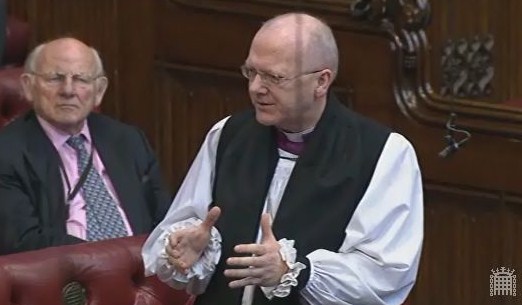
On 14th January 2016 the House of Lords debated a motion from Baroness Andrews “to ask Her Majesty’s Government what is their plan for ratifying the Hague Convention for the Protection of Cultural Property in the Event of Armed Conflict”. The Bishop of Portsmouth, Rt Revd Christopher Foster, spoke in the debate:
 The Lord Bishop of Portsmouth: My Lords, I add my thanks to the noble Baroness, Lady Andrews, for this debate and for the very important Question that she asks of the Government Front Bench. In June 2015, the Ministry of Defence answered a Written Question, as we have heard, on the timetable for ratifying the Hague convention. A Minister stated:
“The Government believes that protection of cultural property in the event of armed conflict is a priority and remains committed to that task”.
She confirmed the,
“plan to introduce legislation to ratify the Convention”,
as we know,
“as soon as Parliamentary time allows”.
The Answer continued with a reassurance:
“Respect for cultural property is already upheld across the Armed Forces and they currently act within the spirit of the 1954 Convention. This respect is incorporated into military law”.
I wholeheartedly welcome that commitment and ask the Minister if she can recognise both the embarrassment of the present and lengthy delay in ratification, which successive Governments since 2008 have pledged to end, and the compelling practical, cultural and humanitarian reasons for speedy rectification of this inordinate delay. Continue reading “Bishop of Portsmouth calls on UK Government to ratify Hague Convention for Protection of Cultural Property in Armed Conflict”

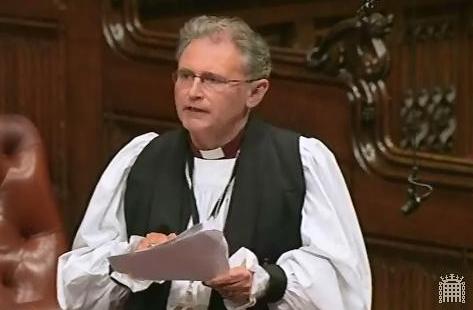
 The Lord Bishop of Coventry: To ask Her Majesty’s Government what has been the financial cost to date of UK air strikes against Daesh in Iraq.
 The Lord Bishop of Coventry: My Lords, coming from Coventry, a city bound in solidarity of suffering with bombed cities in Europe, I am kept in daily remembrance of the costs of military action, especially to civilians. Against such costs, the benefits must be clear and the chances of success especially high. We all agree that the evil of Daesh needs to be stopped, but will extending strikes from Iraq into Syria do it?
 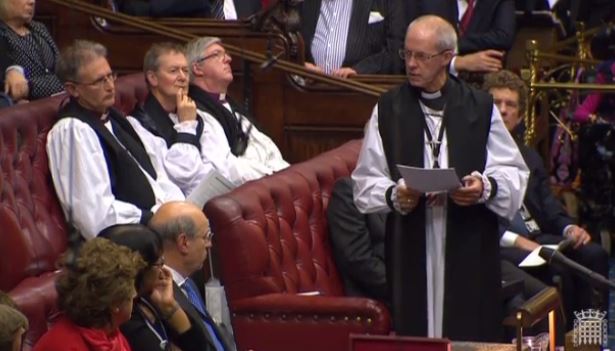 The Archbishop of Canterbury: My Lords, I add to the welcomes given to the noble Lord, Lord Hague of Richmond, and note his perfect timing in bringing his immeasurable wisdom and experience to our debates. I look forward very much to his contribution.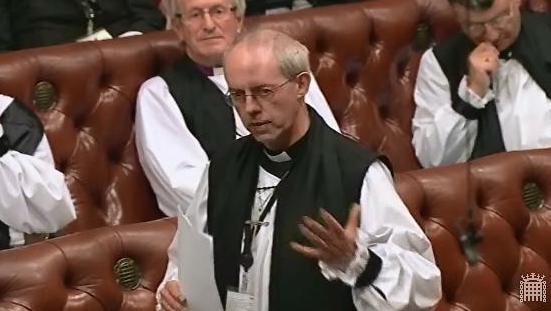
 The Lord Bishop of Leeds: My Lords, would the Minister agree with me that some of the language we are using in this debate reflects an assumption that the world is binary and divided into allies and enemies? The reality is that allies become enemies, and enemies become allies. In any strategic approach to the future, could we be assured that that possibility will be taken into account? I worked on elements to do with Iraq in the 1980s, and we can see what happened in the 2000s.
 The Lord Bishop of Birmingham: My Lords, I am grateful to the Minister for her repeating of the Statement and, from these Benches, join your Lordships in offering our sympathy for the tragic loss of life and the injuries that occurred in Paris—and, as the noble and learned Lord, Lord Wallace, said, in other parts of the region, in recent weeks.
 The Church of England in Parliament
You must be logged in to post a comment.