Bishop of Oxford calls for action on sexual violence in Syria

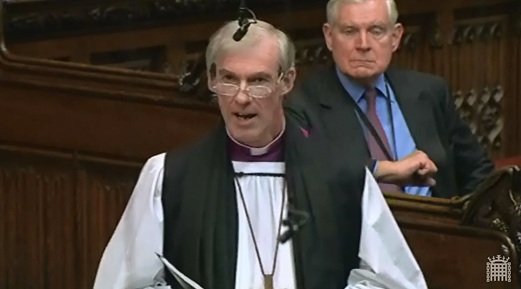
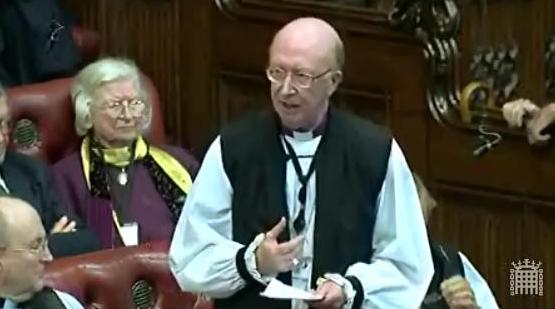
On 2nd July 2014, Conservative Peer Baroness Jenkin of Kennington asked Her Majesty’s Government for their assessment of the alleged sexual violence crimes committed against Syrian civilians in Syria.The Bishop of Oxford, the Rt Revd John Pritchard, asked a supplementary question.

11.12.15 Bishop of OxfordThe Lord Bishop of Oxford: My Lords, given that discussion of sexual violence is always a very sensitive subject in any culture, will the Minister give assurance that the Preventing Sexual Violence Initiative team that is working in Syria will draw in responsible, enlightened religious leaders to combat the stigma that is so often associated with these awful crimes? This can prevent the kind of recriminations and rejection by communities and families that can result from them.

Baroness Warsi: The right reverend Prelate makes an incredibly important point. Faith as part of the solution to dealing with sexual violence was an important element of the summit, and we hosted two very successful fringe events. One involved a coalition mainly of church leaders, called We Will Speak Out. The other was at ministerial level where we hosted Sheikh Bin Bayyah, the Archbishop of Canterbury and the Archbishop of Westminster, Cardinal Vincent Nichols, and discussed the way in which we can get faith communities to be the first point of support in both providing protection and changing the culture that perpetuates the culture of impunity.

(via Parliament.uk)

Bishop of Derby urges caution over response to recent violence in Middle East

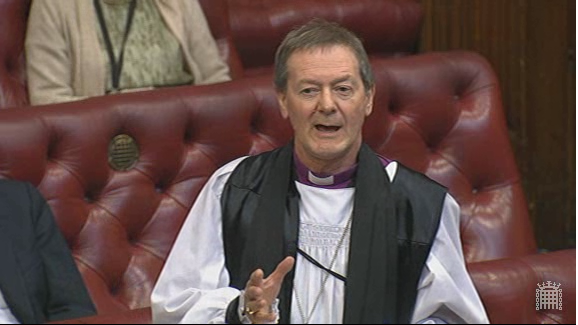
On 1st July 2014, the Baroness Warsi made a statement on the Middle East Peace Process. The Bishop of Derby, the Rt Revd Alastair Redfern, asked a question about what the government is doing to promote a measured response to the recent events in the Holy Land.

DerbyThe Lord Bishop of Derby: On behalf of these Benches, we associate ourselves with the condolences to the families and the widespread grief on all sides. We welcome the statement by the unity Government but an inevitable reaction to grief, especially with the death of the young, is anger. Yet grief is something that is never handled by anger; it requires time for reflection, engagement and a deeper kind of approach to the issue at stake. Can the Minister assure us that, in our work to seek peace, we will do everything we can to mitigate the knee-jerk reaction of anger and invite people to think more deeply about the human content of grief and how to deal with it?

Baroness Warsi: We will of course do that. The right reverend Prelate makes important points, but I think he would also say—and on a very personal basis, I acknowledge this as a mother—that it must be incredibly difficult to reach that second phase when you have just lost your children.

(via Parliament.uk)

Bishop of Coventry leads House of Lords debate on the human rights situation in Egypt

“Instances of violence and physical intimidation against Coptic Christians remain disturbingly high. Police investigations are haphazard and prosecutions rare. In addition to the targeted attacks against Christians, we are, sadly, witnessing a predictable return to the subtler, pernicious problems of the Sadat-Mubarak era” – Bishop of Coventry, 26.6.14

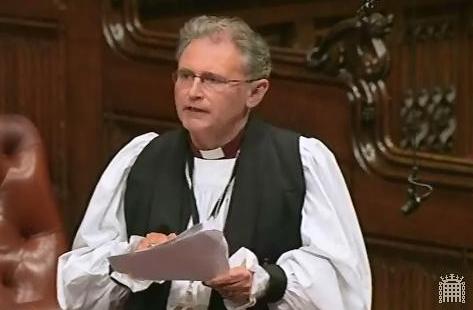
On 26th June 2014, the Bishop of Coventry, the Rt Revd Christopher Cocksworth, led a short debate to ask Her Majesty’s Government what is their assessment of the human rights situation in Egypt. In his opening speech, the spoke of the need for the Government to assist Egypt to significantly improve its human rights record, and how the current situation in Egypt has left the liberties of its people severely restricted. He cautioned against a focus of diplomatic efforts on political stability to the detriment of issues of human rights and dignity and the freedom of religious expression.

13.10 Bishop of CoventryThe Lord Bishop of Coventry: My Lords, the recent presidential election in Egypt and the subsequent inauguration of former Field Marshal Sisi as president make this a very timely debate. This week’s visit of the United States Secretary of State to Cairo, as well as the conviction of the three Al-Jazeera journalists, casts a spotlight on the human rights situation in Egypt. The return of the strongman to Egypt once again brings to centre stage the classic dilemma of how we navigate between interests and values in our foreign policy. Continue reading “Bishop of Coventry leads House of Lords debate on the human rights situation in Egypt”

First World War: Bishop of London highlights role of cathedrals and parish churches in ‘active commemoration’

“It is obvious that we cannot change the past, but we are responsible for how we remember it. Memory—and its more active form, commemoration—is certainly more than just lifting down a file and recalling a past event: it is a creative and responsible art which involves highlighting certain features and identifying significant resonances” – Bishop of London, 25/6/14

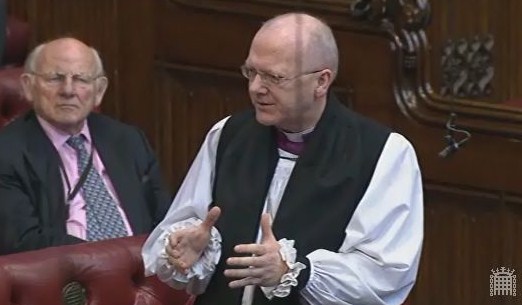
On 25th June 2014, Lord Gardiner of Kimble led a debate in the House of Lords to take note of the programme to commemorate the centenary of the First World War. The Bishop of London the Rt Rev. & Rt Hon Richard Chartres, took part in the debate, speaking of the importance of collective memory and ‘active commemoration’ of the First World War. He made reference to the significant role of citizens of the Commonwealth who served in the War, the ‘proper protest’ of those compelled to take a pacifist position, and set out some of the plans being made by churches and cathedrals across the country to commemorate the First World War.

London

The Lord Bishop of London: My Lords, I, too, am grateful to the Minister for the comprehensive and measured way in which he introduced this important debate and laid out the Government’s plans for this commemoration. I also very much echo the words of the noble Baroness, Lady Williams, about the emphasis being placed on the Commonwealth dimension. I have had the privilege of participating in the annual observances at the memorial gates since their inception. Remembering the sacrifices that were made by so many of those from Commonwealth countries who served provides us with an extremely important opportunity to weave that strand into the national tapestry and our national identity. Continue reading “First World War: Bishop of London highlights role of cathedrals and parish churches in ‘active commemoration’”

Bishop of St Albans asks questions on Apprentices and Iran

On the 25th June 2014 the Lord Bishop of St Albans received three written answers, on apprenticeship data and on the events in Evin Prison, Iran.

 Apprentices

Bishop of St AlbansThe Lord Bishop of St Albans: To ask Her Majesty’s Government whether their commitment to making better apprenticeship data available will involve publishing the retention rate of apprentices as employees by company and by occupational sector. Continue reading “Bishop of St Albans asks questions on Apprentices and Iran”

Bishop of Derby promotes community-based strategy to tackle radicalisation

“I tell noble Lords from my own experience that if we are too heavy-handed we risk further radicalising families and communities at the grass roots, if some of their young are treated without any notion of a trial or evidence—all those British things that we try to stand for. We must handle this matter very carefully” – Bishop of Derby, 19/6/14

On 19th June 2014, Lord Dykes led a debate to ask Her Majesty’s Government what is their assessment of the threat from the spread of militant aggressive jihadism in the Middle East. The Bishop of Derby, the Rt Revd Alastair Redfern, took part in the debate, speaking of the challenges associated with tackling transnational groups, and the need for close international co-operation in dealing with them. He also spoke of the need for strong community-based work in the UK, to help tackle and reduce instances of British citizens fighting in the Middle East. He endorsed the strong heritage of European Islam and of the need to engage its voice in a sophisticated debate.

DerbyThe Lord Bishop of Derby: My Lords, I, too, congratulate the noble Lord, Lord Dykes, on securing this timely debate. I want to look at the Motion as it is set out. It concerns,

“the assessment of the threat from the spread of militant aggressive jihadism in the Middle East”.

Continue reading “Bishop of Derby promotes community-based strategy to tackle radicalisation”

Sudan and Meriam Ibrahim: Bishop of Norwich asks Government about action at European level

On 10th June 2014 Lord Alton put a question in the House of Lords “to ask Her Majesty’s Government what actions they have taken to secure the release of Meriam Ibrahim, sentenced to death for apostasy in Sudan, and to promote the terms of Article 18 of the Universal Declaration of Human Rights.” The Bishop of Norwich, Rt Rev Graham James, asked a supplementary question:

The Lord Bishop of Norwich: My Lords, can the Minister inform the House what conversations Her Majesty’s Government have had with Mr Barroso and Mr Van Rompuy, who are meeting international faith leaders in Brussels tomorrow to press for united action in this case?

Baroness Northover: I will have to write to the right reverend Prelate in this regard to fill him in on that. However, I can tell him that we are keeping this case under close review and working with a number of different people.

(via Parliament.uk)

Nigerian kidnapping – Bishop of Oxford asks Government about dialogue with Boko Haram

In the House of Lords on 14th May 2014 Lord Bach asked Her Majesty’s Government “what action they have taken to assist the Government of Nigeria to rescue the schoolgirls abducted by Boko Haram.” The Bishop of Oxford, Rt Rev John Pritchard, asked a supplementary question:

11.12.15 Bishop of Oxford

The Lord Bishop of Oxford: My Lords, would the Minister agree with the comments made by the most reverend Primate the Archbishop of Canterbury last weekend to the effect that, however abhorrent we may feel the organisation to be, it is necessary to engage in some way with Boko Haram and to do that at different levels? If that is the case, would the Minister give some indication of what kind of support or encouragement the Government are giving to that dialogue between Boko Haram and the Government of Nigeria?

Baroness Warsi: The most reverend Primate’s comments about negotiations or discussions with Boko Haram are quite right and, as the right reverend Prelate says, they are certainly something which the Nigerian Government have to take forward. I know that he has a considerable history of dealing with this kind of situation in Nigeria and, indeed, of being involved in mediation processes. However, the message that HMG have been strongly sending out, along with our international partners, is that this is an abhorrent crime, that the girls must be returned unconditionally and that this is not something we need to feel that Boko Haram has negotiating power over. There is a longer-term challenge in relation to tackling Boko Haram but I am not sure that that needs to be done over the lives of these young girls.

(via parliament.uk)

Displacement in Syria – Written Answer

Written answer, received on 14th May 2014

13.10 Bishop of CoventryThe Lord Bishop of Coventry: To ask Her Majesty’s Government what assessment they have made of the displacement of people from the Syrian town of Kessab.[HL6832]

Baroness Northover (LD): According to UN sources, approximately 1,500 to 1,600 families have been displaced from the city of Kessab.

(via Parliament.uk)

Bishop of Worcester raises concerns about use of sexual violence in Central African Republic (Written Questions)

On 6th May 2014, the Rt Revd John Inge, Bishop of Worcester, recieved answers to two written questions on the Central African Republic.

WorcesterThe Lord Bishop of Worcester: To ask Her Majesty’s Government what assessment they have made of the extent to which sexual violence has been used by all parties to the conflict in the Central African Republic.

Lord Wallace of Saltaire: Reports suggest that sexual violence in conflict is widespread in the Central African Republic (CAR). UN Security Council Resolution 2149 on CAR authorises a UN Peacekeeping Operation which will, as part of its mandate, be required to help to prevent sexual violence, and contribute to efforts to identify and prosecute perpetrators. The UK is also looking to provide funding to the African Union (AU)’s response to the urgent needs of CAR’s victims of sexual violence, and to track and report on specific occurrences of sexual violence. We encourage CAR to endorse the Declaration of Commitment to End Sexual Violence in Conflict and to attend the Global Summit to End Sexual Violence in Conflict, in London in June 2014.


Continue reading “Bishop of Worcester raises concerns about use of sexual violence in Central African Republic (Written Questions)”