On 19th March 2026, the House of Lords debated the Pension Schemes Bill. Votes were held on amendments to the bill, in which Bishops took part:

On 19th March 2026, the House of Lords debated the Pension Schemes Bill. Votes were held on amendments to the bill, in which Bishops took part:
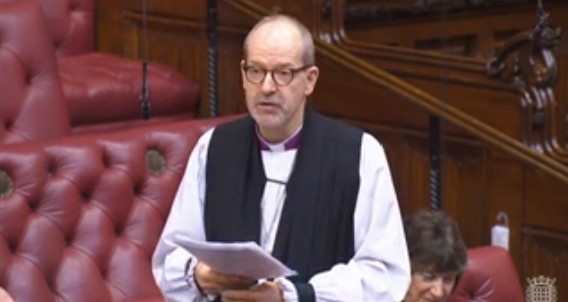
On 19th March 2026, the Bishop of Hereford spoke in support of an amendment to the Pension Schemes Bill tabled by Baroness Noakes on allowing Master Trusts which deliver good investment performance to be excluded from the scale requirements of the bill, raising the example of faith-based funds:
The Lord Bishop of Hereford: My Lords, I speak in favour of Amendment 55, in the name of the noble Baroness, Lady Noakes. There is a questionable theory of change in the Bill—that bigger pension schemes are necessarily better, suggesting the minimum scale of £25 billion. While scale certainly creates advantages, Australian experience suggests that funds can be run at less than this size and still provide value and good outcomes for members. However, concentrating the market into a few megafunds introduces a new system of risk, of schemes that become too big to fail and so are effectively the state’s problem.
Continue reading “Pension Schemes Bill: Bishop of Hereford supports amendments on trust management”On 18th March 2026, the House of Lords debated the Crime and Policing Bill, including amendments on protest, terrorism, and abortion. Bishops took part on votes on several amendments:
The Bishop of Hereford asked a question on promoting dialogue with religious communities to encourage ethical slaughter methods, during a discussion on animal welfare on 12th February 2026:
The Lord Bishop of Hereford: My Lords, we would all like to see the minimising of pain and distress to animals prior to slaughter, yet currently a substantial number of animals are slaughtered without prior stunning due to a derogation within domestic legislation, even though, as I understand it from speaking to a large halal slaughter house in my diocese, such stunning is acceptable within Islam. Will His Majesty’s Government work actively with our Jewish and Muslim friends to understand their religious needs and support the development of acceptable stunning methods and improve their uptake within those communities?
Continue reading “Bishop of Hereford asks about improving animal welfare in livestock slaughter”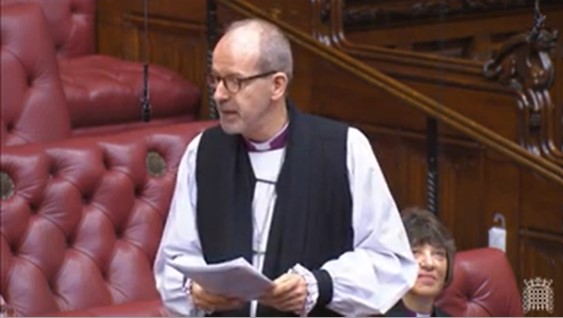
The Bishop of Hereford spoke during a committee debate on the Terminally Ill Adults (End of Life) Bill on 30th January 2026, pointing out a distinction between AI tools and artificial intelligence generally in regards to an amendment proposed by Baroness Coffey, which would stipulate that “(4) Artificial intelligence must not be used to carry out any functions in any section or schedule of this Act.”
The Lord Bishop of Hereford: I thank the noble Baroness, Lady Coffey, for raising a very important issue in this amendment. However, I am concerned that, as it stands, as the noble Baroness said, this amendment is too blunt an instrument. It is important that we distinguish between AI tools and the more dangerous artificial general intelligence, or superintelligence. The use of AI in medical diagnostics in patient care is already commonplace. AI tools are currently used to read scans and X-rays and will frequently perform as well as, if not better than, clinicians. To exclude the use of AI altogether might deprive patients who are considering assisted dying of valuable diagnostic assistance and care at a very vulnerable time.
Continue reading “Terminally Ill Adults (End of Life) Bill: Bishop of Hereford highlights importance of nuanced understanding of artificial intelligence”The Bishop of Hereford spoke in a debate on proposals for an international moratorium on the development of superintelligent AI on 29th January 2026, highlighting the importance of tempering “intelligence” with love and human collaboration, and urging the government to support a moratorium:
The Lord Bishop of Hereford: My Lords, it is appropriate that this debate happens the day after the Church celebrated the life and work of the great divine Thomas Aquinas, one of the founding intellectual fathers of western thought, because this debate cuts to the very heart of how we understand ourselves.
Our debate is about the regulation of superintelligence. We know that intelligence is simply
“the ability to learn, understand and think in a logical way about things; the ability to do this well”.
Continue reading “Bishop of Hereford speaks in debate on establishing moratorium on super-intelligent AI”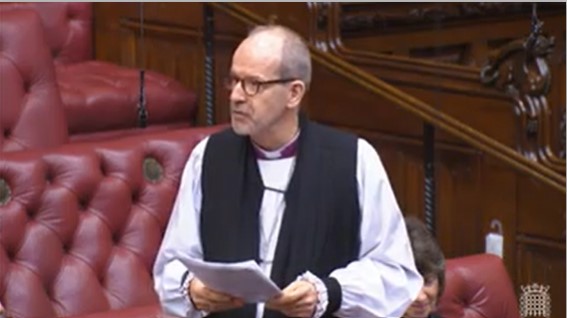
The Bishop of Hereford asked a question on the role of churches as music and performance venues, during a discussion on the impact of the 2025 budget on grassroots music venues on 26th January 2026:
The Lord Bishop of Hereford: My Lords, I thank the Minister for his answers. Across the country, churches provide the largest network of performance spaces available to professional and amateur groups for music making and other artistic endeavours, so I thank him for the recent announcement regarding the new places of worship renewal fund. But I am sure he will be aware that there are thousands of churches and other faith communities across the country waiting to know how that scheme will operate. Will the Minister let us know when the details of the scheme will be published and whether the Government will work with us to ensure the scheme is workable, consistent and fair, especially in the levying of VAT?
Lord Livermore (Lab, Treasury): I am grateful for the support that the right reverend Prelate set out in his question. I assure him that that will be responded to very shortly.
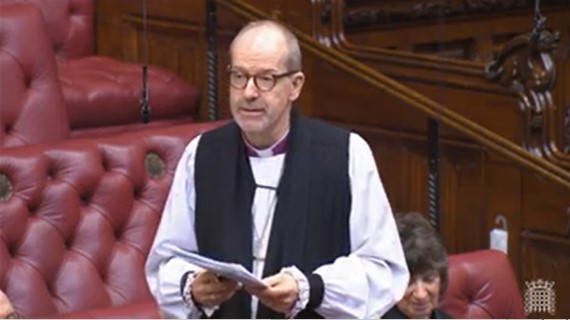
The Bishop of Hereford asked a question on ensuring digital connectivity in rural areas during a discussion on online communications in healthcare on 2nd December 2025:
The Lord Bishop of Hereford: My Lords, the passion displayed in this House for digital inclusion is extraordinarily commendable, but these difficulties are compounded in rural areas by very poor connectivity. Many areas endure significant restrictions in broadband and mobile connectivity, which compounds the problems. What steps are the Government taking to ensure that good connectivity is rolled out across the whole country?
Continue reading “Bishop of Hereford asks about digital connectivity in rural areas”The Bishop of Hereford tabled a question on ensuring that agricultural policies improve the profitability and long-term viability of small farming enterprises on 1st December 2025:
The Lord Bishop of Hereford: To ask His Majesty’s Government what steps they are taking to ensure that agricultural policies improve the profitability and long-term viability of small farming enterprises.
Continue reading “Bishop of Hereford tables question on effects of agricultural policy on small farms”The Bishop of Hereford asked a question on the viability of safe and legal routes for asylum seekers to come to the UK on 20th November 2025, during a discussion on the government’s asylum policy:
The Lord Bishop of Hereford: My Lords, I declare an interest as a participant in the Homes for Ukraine scheme. Three and a half years on, we have a delightful Ukrainian family still living in our house. In the section of the report on safe and legal routes, the options in the policy document include a route to safety for students and skilled workers. Such schemes may be a useful adjunct to sufficient open safe and legal routes, but does the Minister share my concern that, in a world where safe and legal routes are limited, we may send a message that young, healthy, skilled people are more deserving of sanctuary than others?
Continue reading “Bishop of Hereford asks about impact of new immigration regulations on refugees” The Church of England in Parliament
You must be logged in to post a comment.