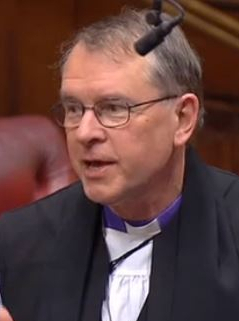
Skills and Post-16 Education Bill: Bishop of Durham tables amendment to specify long term funding plans for further education

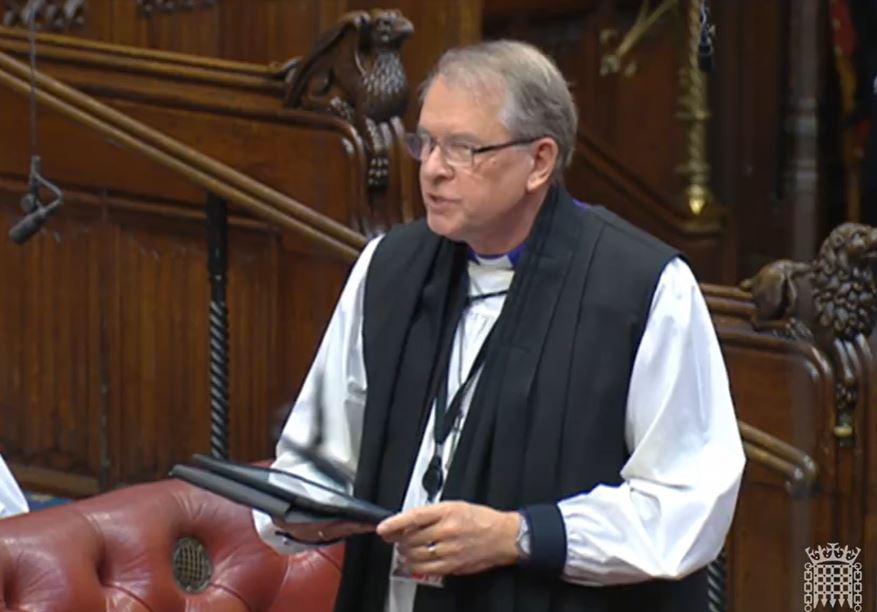
On 21st July 2021, the Bishop of Durham tabled a probing amendment to the Skills and Post-16 Education Bill which would require the government to set out a long term funding plan for further education:

The Lord Bishop of Durham:

90B: After Clause 25, insert the following new Clause—

“Long-term funding review

(1) The Secretary of State must commission a panel of experts to review of the long-term funding for skills and post-16 education.(2) The panel must consider and make recommendations about—(a) resources available for different types of technical training, further education and higher education; (b) support for disadvantaged students and those with special education needs;(c) the impact of this Act on the long-term funding for skills and post-16 education.(3) The panel must conclude their review and make a report to the Secretary of State with their findings and recommendations.(4) Within the period of one year beginning with the day on which this Act is passed, the Secretary of State must lay the panel’s report before Parliament.”Member’s explanatory statement

This is a probing amendment, intended to draw out the Government’s plans to introduce a longer-term funding settlement for FE, as called for by the Education Select Committee, prefigured in the White Paper and signalled, as the direction of travel by recent increases in core FE funding, capital funding allocations and the longer term Lifelong Learning Entitlement.

Continue reading “Skills and Post-16 Education Bill: Bishop of Durham tables amendment to specify long term funding plans for further education”

Skills and Post-16 Education Bill: Bishop of Durham tables amendment removing restriction on claiming universal credit for those in education

On 21st July 2021, the House of Lords debated the Skills and Post-16 Education Bill in the fourth day of the committee stage. The Bishop of Durham tabled a probing amendment to the bill which would remove restrictions on claiming universal credit from those receiving education:

The Lord Bishop of Durham:

90A: After Clause 25, insert the following new Clause—

“Universal credit conditions: receiving education

(1) In section 4 of the Welfare Reform Act 2012—(a) in subsection (1) omit paragraph (d), and(b) omit subsection (6).(2) The Secretary of State may by regulations made by statutory instrument make consequential provision.(3) A statutory instrument containing regulations under this section is subject to annulment in pursuance of a resolution of either House of Parliament.”Member’s explanatory statement

This amendment would remove the restriction that those “receiving education” cannot claim Universal Credit, which at present may impede some of the most disadvantaged from benefitting from learning opportunities. It is intended to probe how the Government plans to incentivise take-up of training programmes, and to elicit how cross-departmental working can be made more effective in transforming learning and skills.

Continue reading “Skills and Post-16 Education Bill: Bishop of Durham tables amendment removing restriction on claiming universal credit for those in education”

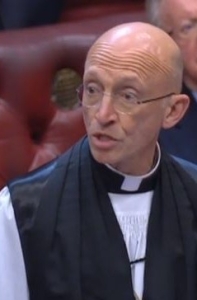
Bishop of Chichester asks about impact of student loans on recruitment and retention in key public services

On 23rd July 2020 Lord Bassam of Brighton asked the Government “what assessment they have made of the presentation of debt by the Student Loans Company on its online student loan repayment system.” The Bishop of Chichester, Rt Revd Martin Warner, asked a follow-up question:

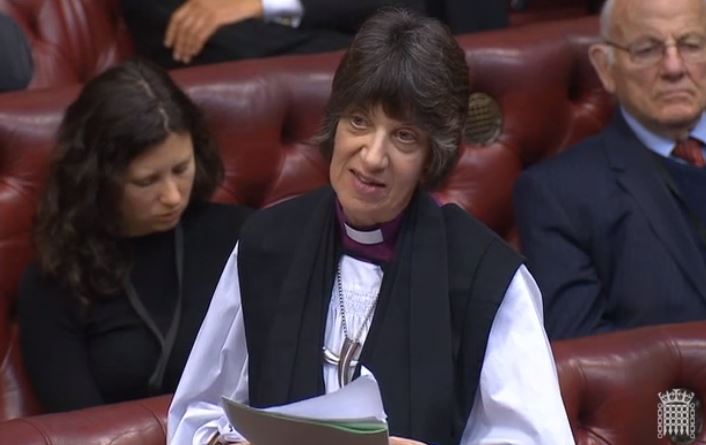
The Lord Bishop of Chichester: My Lords, the noble Lord, Lord Bassam, has made a trenchant point about the presentation of these financial statements. The University of Chichester plans to reopen its school of nursing and to recruit locally—to pick up a point made by the noble Lord, Lord Clark, on an earlier Question. For mature and part-time students whom the university seeks to attract, the level of loan debt is as important as the clarity of the information about their loan repayments—perhaps more so. Will the Minister look again at the impact of student loans on recruitment and retention in key public services in the light of their significance to our recovery from the pandemic? Continue reading “Bishop of Chichester asks about impact of student loans on recruitment and retention in key public services”

Bishop of Winchester asks Government about widening access to university

On 30th June Baroness Randerson asked Her Majesty’s Government “what support they are providing to universities to assist them in dealing with the impact of the COVID-19 pandemic”. The Rt Revd Tim Dakin, Bishop of Winchester, asked a follow up question focusing on students preparing to enter into key public service roles.

The Lord Bishop of Winchester: My Lords, universities make a significant contribution to their local communities and economies, particularly smaller institutions that attract a larger proportion of students from disadvantaged backgrounds. These make a significant contribution to their local context, particularly in this pandemic. In particular, several Cathedrals Group universities during the 2018-19 academic year had 20% undergraduate students from low-participation—POLAR4—backgrounds. How will the Government work with higher education institutions to maintain the widening of access and retention of students, especially those preparing for key public service roles that have been so important during this pandemic crisis?

Continue reading “Bishop of Winchester asks Government about widening access to university”

Bishop of Winchester asks Government about of students enrolling on public service focused courses

On 20th May 2020 the Bishop of Winchester, Rt Revd Tim Dakin, received a written answer to a question on students enrolling on courses with a public service focus.

The Bishop of Winchester: HL3912 To ask Her Majesty’s Government what plans they have, if any, to increase the number of students enrolling on courses with a public service focus, in the light of the COVID-19 pandemic.

Continue reading “Bishop of Winchester asks Government about of students enrolling on public service focused courses”

Bishop of Winchester asks Government about Covid-19 financial support package for universities

On 13th May, the Rt Revd Tim Dakin, Bishop of Winchester, received a written answer from Lord Callanan on university finance.

800px-Official_portrait_of_The_Lord_Bishop_of_Winchester_(cropped)The Lord Bishop of Winchester: HL4052 To ask Her Majesty’s Government, further to the announcement on 4 May of the support package for higher education providers as a result of the impact of COVID-19, what criteria they will use to provide research funding for universities; and how they will ensure (1) accessibility of the funding to a wide range of universities, and (2) diversity of institutional provision.

Continue reading “Bishop of Winchester asks Government about Covid-19 financial support package for universities”

Bishop of Winchester raises concern about response of universities to student complaints of assault and harassment

On 5th March 2020 Baroness Gale asked the Government “what assessment they have made of the effectiveness of the Crown Prosecution Service in prosecuting cases of rape.” The Bishop of Winchester, Rt Revd Tim Dakin, asked a follow-up question:

The Lord Bishop of Winchester: My Lords, a recent study highlighted that only 25% of university students who had experienced rape went on to report it to their university or to the police. It is therefore of concern that, since 2016, 300 non-disclosure agreements have been issued by universities in response to student complaints, including assault and harassment reports. The Office for Students and Universities UK are working to improve the handling of harassment and misconduct by universities, but can the Minister advise the House when the Government plan to legislate against the misuse of NDAs by higher education institutions to ensure that students are not discouraged from reporting these assaults? Continue reading “Bishop of Winchester raises concern about response of universities to student complaints of assault and harassment”

Bishop of Winchester responds to Augar review of post-18 education, proposes public service covenant for vocational graduates

winchester171116On 2nd July 2019 the House of Lords debated a motion “that this House should take note of the Review of Post-18 Education and Funding led by Philip Augar”. The Bishop of Winchester, Rt Revd Tim Dakin, spoke in the debate:

The Lord Bishop of Winchester: My Lords, I thank the Minister for bringing this debate. Similarly, I thank Philip Augar and the independent panel members for the thorough review that they have undertaken. I welcome the publication of this report and the issues it raises. I declare my interests as the lead bishop for further and higher education, and as a governor of the University of Winchester.

I shall comment on three areas. My first point is about ensuring a genuinely rich ecology of higher education providers, and especially the contribution made by smaller and specialist institutions. A local example is the University of Winchester, a member of the Cathedrals Group association of universities, some of which are among the country’s smaller higher education institutions in terms of student numbers. One of the headline recommendations of the review is to lower tuition fees, which will reduce the funding institutions receive unless it is provided from other sources, such as grants for teaching. To enhance a diverse range of universities and secure the quality of provision, it is imperative to have a funding system that enables these institutions to flourish, and not simply larger universities which are generally more able to withstand funding turbulence.

Continue reading “Bishop of Winchester responds to Augar review of post-18 education, proposes public service covenant for vocational graduates”

Bishop of Chichester asks Government to consider impact on smaller institutions and effect on local areas, of higher education funding changes

The Lord Bishop of Chichester: My Lords, any reduction in higher education funding is likely to have a particular impact not merely on teaching and student contact time but on the very future of smaller institutions, such as the Cathedrals Group universities. Does the Minister agree that, as the Government consider reforms, they need to take into account, first, the effect of those reforms on the diversity of the sector and, secondly, their impact on particular localities? Chichester, for example, is the only university in West Sussex. A threat to its funding would seriously damage its contribution to the regeneration of the disadvantaged coastal areas that it serves.

Continue reading “Bishop of Chichester asks Government to consider impact on smaller institutions and effect on local areas, of higher education funding changes”

Bishop of Winchester on importance of education, religion and voluntary agencies in UK foreign policy

On 21st May 2019 the House of Lords debated a Motion from Lord Howell of Guildford ,”That this House takes note of the Report from the International Relations Committee UK foreign policy in a shifting world order (5th Report, HL Paper 250).” The Bishop of Winchester, Rt Revd Tim Dakin, spoke in the debate:

Continue reading “Bishop of Winchester on importance of education, religion and voluntary agencies in UK foreign policy”