
On 5th April, a vote took place on a Regret Motion tabled by Labour’s Lord Stevenson of Balmacara to two Regulations changing student loan terms and amounts. The Bishop of Peterborough took part. Continue reading “Votes: Higher Education Regulations 2016”
Tag: higher education
Higher Education and Research Bill: Bishop of Durham supports amendment on Archbishop of Canterbury’s historic role in conferring degrees
On the 23rd January 2017, the Bishop of Durham, the Rt. Revd. Paul Butler, spoke to an amendment to the Higher Education and Research Bill, which would protect the Archbishop of Canterbury’s historic right to confer degrees. The amendment was tabled by the Bishop of Portsmouth, the Rt. Revd. Christopher Foster, who was unable to attend the debate. Viscount Younger of Leckie responded on behalf of the Government:
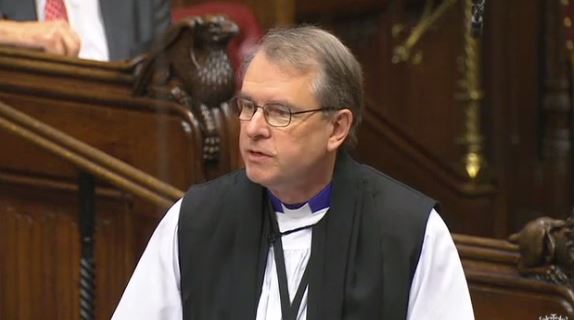
The Lord Bishop of Durham: My Lords, my friend the right reverend prelate the Bishop of Portsmouth is unable to be in his place this evening, but in his place I bring before your Lordships Amendment 268A. I endorse all the general comments made by the noble Lord, Lord Murphy of Torfaen, about the Cathedrals Group of universities. While I am not armed with the expertise, his amendments appear to make sense for the particular purpose.
I am sure that almost all noble Lords in the Committee are aware that the Archbishop of Canterbury has possessed the power to confer degrees since the Ecclesiastical Licences Act 1533. Certainly the landscape of higher education has changed in the almost 500 years since then, when the only other English degree-awarding institutions were Oxford and Cambridge. The Higher Education and Research Bill that we are rightly considering so carefully is very welcome in recognising that changing landscape and legislating to ensure that the sector continues to evolve as successfully as it has done so far. Continue reading “Higher Education and Research Bill: Bishop of Durham supports amendment on Archbishop of Canterbury’s historic role in conferring degrees”
Higher Education and Research Bill: Bishop of Birmingham on cathedrals group of universities
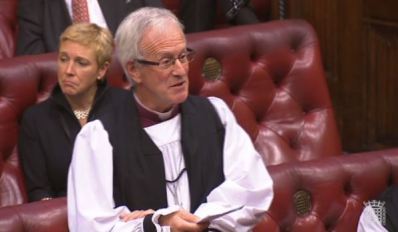 On 11th January 2017 the House of Lords considered the Government’s Higher Education and Research Bill in Committee. The Bishop of Birmingham, Rt Revd David Urquhart, introduced an amendment in the name of the Bishop of Portsmouth, on the need “to have a variety of institution types with distinctive characteristics.” The amendment was withdrawn after the debate, following assurances from the Minister that the issue would be looked at afresh. Below is his speech in full, and a section of the Minister’s reply:
The Lord the Bishop of Birmingham: My Lords, I regret that my friend the Bishop of Portsmouth is not in his place tonight, having been exhausted, I suppose, by leading the debate on the Armed Forces covenant on Monday. He has asked me to bring before your Lordships Amendment 58 which relates to the general duties of the Office for Students. This is in the context of warmly welcoming the Bill’s commitment to greater diversity and improved choices for students, both in the wider choice of the number of institutions and in course and subject. However, we believe it is vital also to have a variety of institution types with distinctive characteristics.
Bishop of Winchester asks about overseas student numbers and effect on the economy
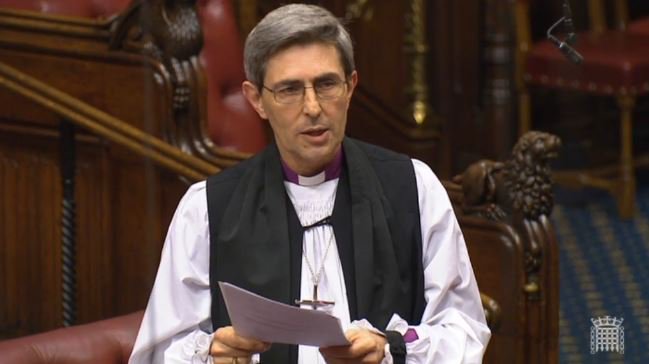 On 13th and 14th December 2016 the Bishop of Winchester, Rt Rev’d Tim Dakin, received responses from the Department for Education and Treasury to three written questions about overseas student numbers and their effect on the economy:
The Lord Bishop of Winchester To ask Her Majesty’s Government what estimate they have made of the number of overseas students, excluding EU students, coming to study in the UK over the next five years. Continue reading “Bishop of Winchester asks about overseas student numbers and effect on the economy”
Higher Education and Research Bill: Bishop of Winchester on universities, providing “a public good for the common good”
On 6th December 2016, the Government’s Higher Education and Research Bill had its Second Reading in the House of Lords. The Bishop of Winchester and lead Church of England bishop for HE, the Rt Revd Tim Dakin, spoke during the debate on the Bill.
The Lord Bishop of Winchester My Lords, I declare my interests as a visitor to five Oxford colleges and the governor of Winchester University. I thank both the Minister for Universities and Science and the noble Viscount, Lord Younger, for meeting me to discuss some of the core issues concerning the Bill. I say, too, that I look forward to hearing the maiden speech of the noble Baroness, Lady Sugg.
The positive aim of this Bill is clear: to enhance our world-class higher education system. In particular, I welcome the potential of proposed changes: putting students at the heart of the system through the Office for Students; emphasising the importance of good teaching; encouraging new providers and innovation; and a more interdisciplinary approach to research. It is also encouraging to hear that the Government are listening to concerns and are willing to amend the regulatory framework to take account of points raised. Continue reading “Higher Education and Research Bill: Bishop of Winchester on universities, providing “a public good for the common good””
Bishop of Winchester highlights positives for UK of international students
On 17th November 2016 the House of Lords debated a motion from Conservative Peer Lord Lucas, “that this House takes note of the application of immigration policy to overseas students at United Kingdom universities and colleges.” The Bishop of Winchester, Rt Revd Tim Dakin, spoke in the debate:
The Lord Bishop of Winchester: My Lords, I too thank the noble Lord, Lord Lucas, for securing the time to have this important debate. I begin by declaring several interests: as a governor of Winchester University and as visitor to the Oxford colleges of New College, Magdalene, Corpus Christi, Trinity and St John’s.
Universities have always been centres of wisdom and learning: places filled with global-minded people, where political, cultural and geographical boundaries are transcended for the common good. The value of studying abroad is unquestionable. How would scholarship look today if St Augustine had been unable to complete his studies due to visa complications? Would we have heard of Thomas Aquinas if he had been turned back at the French border? Finally, would,
“the world is everything that is the case”,
still be the case if Ludwig Wittgenstein had been asked to produce a study permit on arriving in Britain?
Continue reading “Bishop of Winchester highlights positives for UK of international students”
Bishop of Portsmouth highlights uncertainties for Higher Education of EU withdrawal
On 3rd November 2016 the House of Lords debated a motion from Labour Peer Lord Soley “that this House takes note of the potential impact of the United Kingdom’s withdrawal from the European Union on funding for universities and scientific research.” The Bishop of Portsmouth, Rt Revd Christopher Foster, spoke in the debate:
 The Lord Bishop of Portsmouth: My Lords, the range of risks faced by the HE sector covers student recruitment, staff recruitment, research funding and course portfolios, as we have already heard. The potential impact—positive from some perspectives, albeit limited and very provisional at this stage, and the range of likely negative impacts—varies between universities.
My background covers different sorts of universities: Hertfordshire and Portsmouth, Oxford and Cambridge, and Durham and Manchester. I studied in three, taught economics in two, was a chaplain in another and have been a governor in two. I draw your Lordships’ attention to my entries in the register of interests.
In such very varied universities, the present excruciating uncertainty following the Brexit vote is having a significant impact in a range of areas.
Bishop of Winchester calls for universities to confront and combat anti-Semitism
On 27th October 2016 the House of Lords held a short debate on a question from Baroness Deech, “to ask Her Majesty’s Government what steps they propose to take to combat anti-Semitism, in particular in universities.” The Bishop of Winchester, Rt Revd Tim Dakin, spoke in the debate:
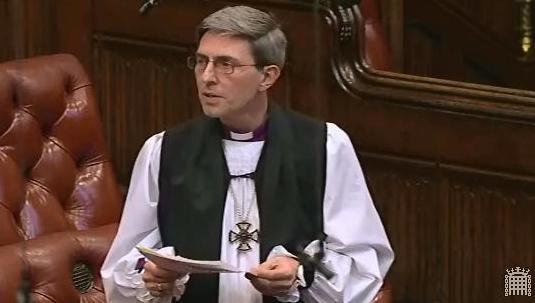 The Lord Bishop of Winchester: My Lords, I also thank the noble Baroness, Lady Deech, for initiating this debate.
Despite there being Jewish societies in over 60 universities, a study in 2011 found that half of all Jewish students in the UK attend only eight universities. Safety in numbers seems to be key, as Nottingham, Leeds, Birmingham and Manchester all boast Jewish societies with over 1,000 members. None the less, we know that Jewish staff and students experience anti-Semitism in a significant number of higher education institutions today. As the recent Universities UK task force report on hate crime makes clear, anti-Semitism is a practice for which there is no place in universities, nor in the Church or society at large. Continue reading “Bishop of Winchester calls for universities to confront and combat anti-Semitism”
Bishop of Ely asks Government about future of university research after UK withdrawal from EU
 On 7th July 2016 Baroness Sharp of Guildford asked Her Majesty’s Government “what assessment they have made of the impact of the outcome of the referendum on the United Kingdom’s membership of the European Union on the short-term and long-term participation of UK universities in Horizon 2020 research collaborations and the Erasmus Programme”. The Bishop of Ely, Rt Revd Stephen Conway, asked a follow up question:
The Lord Bishop of Ely: My Lords, I declare an interest as a visitor to a number of colleges in Cambridge. In my conversations with the vice-chancellors of both Cambridge University and Anglia Ruskin University, which is in Cambridge, not only were they very concerned that there was a risk of losing £500 million of research funding for Cambridge and for the Russell group universities but—rather than the money—they were much more concerned about soft diplomacy and the free movement of scholars, which may be affected in the future. Continue reading “Bishop of Ely asks Government about future of university research after UK withdrawal from EU”
Bishop of Ely on the challenges for the UK following the EU referendum
On 5th July 2016 the House of Lords debated a motion to take note of the result of the referendum on the UK’s membership of the European Union. The Bishop of Ely, Rt Revd Stephen Conway, spoke in the debate, focusing on leadership, common values, education and the rural workforce.
The Lord Bishop of Ely: My Lords, I cannot match that passion, but I join other noble Lords in saying how much I appreciated the speech earlier of our boss—I mean of my friend, the most reverend Primate the Archbishop of Canterbury. He and I have both worked in the north-east and been welcomed by the people of that area, many of whom voted to leave, just as people in fenland in my current diocese and people in east Kent, beloved of the most reverend Primate, did. These people were not, it seems to me, voting against the European Union but were making a great cry—a lament—about not having been heard for several generations by us, the political class. This was their opportunity to make us listen, after feeling excluded for so long. Continue reading “Bishop of Ely on the challenges for the UK following the EU referendum”
 The Church of England in Parliament
You must be logged in to post a comment.