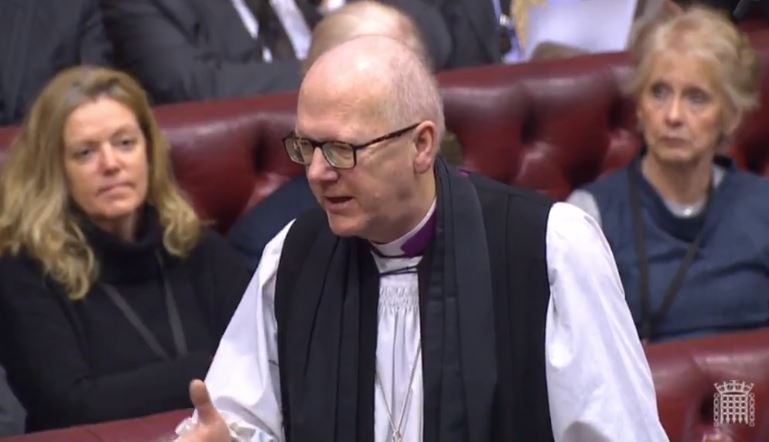
 On 17th December 2018 Lord Balfe led a debate in the House of Lords on the question, “To ask Her Majesty’s Government what steps, if any, they will take to prevent workers being dismissed from their jobs following diagnosis of a terminal illness.” The Bishop of Chichester, Rt Revd Martin Warner, spoke in the debate that followed:
The Lord Bishop of Chichester: My Lords, I greatly welcome this debate, and thank the noble Lord, Lord Balfe, for bring this important matter to our attention. I also welcome the TUC’s support of the courageous work of Jacci Woodcock in highlighting the issue, on the basis of her own experience.
As a trustee of the diocese of Chichester, I share responsibility for employing nearly 100 staff but also for the care of some 400 clergy. These clergy are office-holders, not employees, and many live in accommodation they occupy by virtue of their office. A terminal illness for one of those clergy, as for anybody else, carries the prospect of multiple concerns, but especially for those dependent on them. The loss of income and a home are primary concerns, alongside the personal challenges of failing health and dependence on others—often difficult for those more familiar with caring for others. The potential loss of their home goes right to the heart of the fear of death and the implications for a family—particularly if there are issues such as schooling and the future of children—that a terminal illness brings. When a family is most challenged, networks of social relationships are immensely sensitive. Continue reading “Bishop of Chichester on care and support for those in the workplace with a terminal illness”





 The Lord Bishop of St Albans: To ask Her Majesty’s Government what plans they have to provide funding to charitable hospice care providers who have lost community funding during the COVID-19 pandemic. [HL10989]
 The Lord Bishop of Newcastle: My Lords, it is not just care homes facing these very serious challenges; I have learned that it is also hospices and sheltered accommodation, among other places. Managers responsible for those organisations are under enormous pressure trying to ensure safe staffing levels and the safety of their staff. I hope that sufficient PPE will soon be secured and distributed. Although I recognise the enormous challenge and the efforts that are being made towards that, in the immediate context where we do not have that, can the Minister tell us how the Government aim to advise and support those responsible for running our care homes, sheltered accommodation and hospices, who are having to make such difficult decisions now and many of whom feel abandoned and rather lonely in that responsibility?
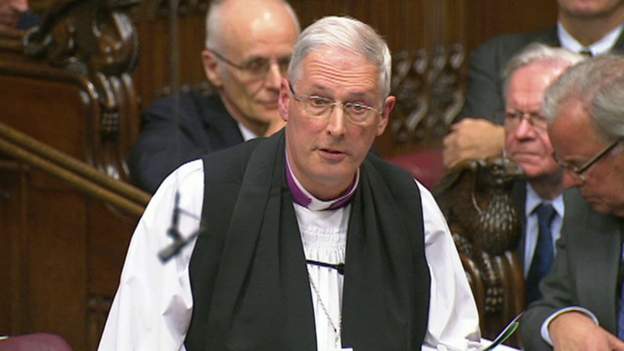 On 5th September 2017, Baroness Walmsley asked the Government “how they intend to implement the NICE guideline End of life care for infants, children and young people with life-limiting conditions: planning and management.” The Bishop of Southwark, Rt Revd Christopher Chessun, asked a follow up question:
 The Church of England in Parliament
You must be logged in to post a comment.