Bishop of Lichfield calls for greater support of vulnerable young people in preventing suicide

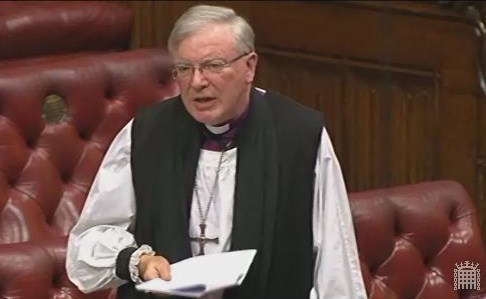
The Bishop of Lichfield spoke during Lord Eames’ debate on reducing the levels of suicide among young people in the United Kingdom. He focused his remarks on the relationship between low levels of self-worth amongst young people as a factor that contributes to suicidal thoughts. He also raised particular concerns about the risks of bullying or coercion that young people with disabilities face, specifically as debates about assisted suicide become more widespread, and the need to support children who are refugees or asylum seekers and particularly vulnerable due to a lack of adequate mental health care.

The Lord Bishop of Lichfield: My Lords, I, too, thank the noble and right reverend Lord, Lord Eames, for initiating this debate.

The Association for Young People’s Health recently published its key data on adolescence. At present, the statistics show that the levels of self-harm are relatively stable, although for such a sensitive topic there is likely to be low reporting. It is clear that girls are at least three times more likely to self-harm than boys; on the other hand, suicide is much more prevalent among young males, particularly those aged between 20 and 24. This coincides with the evidence from ChildLine. Numbers have fallen fractionally in more recent years but the report questions whether this will continue.

How this correlates with child well-being needs careful consideration. We all remember the United Nations report about the unhappiness of children in this country. ChildLine reports that the number of children contacting it about suicidal feelings has risen for the third year running, including a rise of 33% in the last year. Overall, child well-being in the UK, according to the United Nations, has improved from 21st out of 21 to 16th out of 29 countries. Economic reasons have been stated and there is much correlation with the commentary from the Association for Young People’s Health. Continue reading “Bishop of Lichfield calls for greater support of vulnerable young people in preventing suicide”

The Bishop of Leicester raises concerns about Immigration Bill during Second Reading deabte

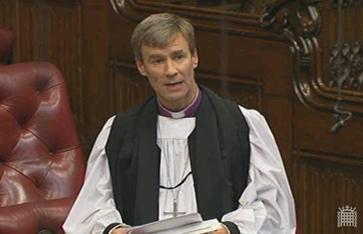
My Lords, I am happy to declare an interest in this debate as the Bishop of Leicester, a city whose character, economy, culture and vibrancy have all been immensely enhanced by waves of immigration over the last 40 years. At last year’s 40th anniversary of the arrival of the Ugandan Asians expelled from east Africa by Idi Amin, we were reminded of an advertisement placed by Leicester City Council in 1973. It read:

“In your own interests and those of your family you should accept the advice of the Uganda Resettlement Board and not come to Leicester”.

It led to a headline in the Leicester Mercury: “No room here”. It is a reminder that general anxiety about immigration and the fears of politicians about public opinion on this matter are not new. Continue reading “The Bishop of Leicester raises concerns about Immigration Bill during Second Reading deabte”

Bishop of Truro calls for improvement in mechanisms to allow overseas clergy to visit UK

On 9th December 2013, the Earl of Clancarty asked Her Majesty’s Government whether they have plans to improve the official information available, including on the United Kingdom Border Agency website, for long- and short-term visitors to the United Kingdom, and in particular artists and entertainers.

The Bishop of Truro asked a supplementary question:

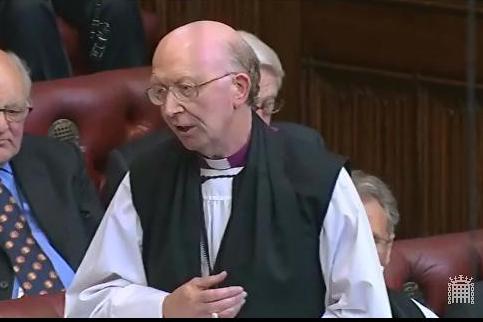
Bishop of Truro 20.6.13The Lord Bishop of Truro: My Lords, I do not wish to argue that all clergy are entertainers as that would not be true in my experience. But can the Minister comment on the frustration felt again and again by Christian people—clergy and others, especially from Africa—who are invited by dioceses in this country with expenses guaranteed? They have to travel long distances and are not always able to access websites to apply for a visa and are then faced with delay or refusal based on the assumption that they will not return home to their families and responsibilities.

Lord Taylor of Holbeach: I am sure the right reverend Prelate will be aware of the responsibility on all Border Agency staff to deal judiciously with these matters. However, they can act only on the information that they have when people present themselves for entry. I hope that the new website will make it much easier for everybody to come here. If anybody is organising an event which involves people coming from overseas, they have an opportunity, in a spirit of partnership, to make sure that everybody is aware of the documentation they require. There is no difficulty getting that documentation provided the application is made.

(via Parliament.uk)

Bishop of Oxford supports amendments to Children and Families Bill

On 11th November 2013, the Bishop of Oxford, the Rt Revd John Pritchard, took part in the Committee Stage of the Government’s Children and Families Bill. He spoke in favour of two amendments – one of the duty of schools to promote the academic, spiritual, cultural, mental and physical development of children and the second on the welfare of children who are asylum seekers. Neither amendment was put to a division of the House.  

Bishop of OxfordThe Lord Bishop of Oxford: My Lords, I also would like to speak briefly in support of Amendment 233, which was so ably and vividly introduced by the noble Baroness, Lady Jones. I have a particular responsibility in the Church of England for education, so I am pleased to be able to bring that authority and support, as it were, on behalf of all the schools that I represent. This is a small but important and crucial piece of work. Continue reading “Bishop of Oxford supports amendments to Children and Families Bill”

Bishop of Lichfield responds to the Queens Speech addressing Immigration, Asylum & Home Affairs

14.03.27 Bishop of LichfieldOn the 9th May 2013 the Bishop of Lichfield, the Rt Revd Jonathan Gledhill spoke in the debate responding to the Queen’s Speech. Bishop Jonathan addressed the areas of immigration and asylum reform along with a range of other areas relating to his interests in Home Affairs. Concluding his remarks the bishop reminded the House of the importance of ensuring a unified society, adopting polices which do not disproportionately impact those least able to make choices for themselves.

Continue reading “Bishop of Lichfield responds to the Queens Speech addressing Immigration, Asylum & Home Affairs”