
On 13th February 2020 Lord Sheikh asked the Government “what progress they have made towards the adoption of a formal definition of Islamophobia.” The Bishop of St Albans, Rt Revd Alan Smith, asked a follow-up question:
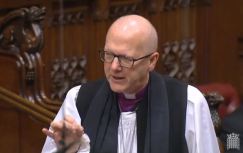
The Lord Bishop of St Albans: My Lords, we on these Benches deplore all attacks on any religious groups and we note particularly the huge rise in the deeply concerning issue of attacks on Muslims. The Minister will be aware of the media reports on Imam Asim of Makkah mosque in Leeds and his comments on free speech. Does the Minister agree with me and the most reverend Primate the Archbishop of Canterbury that Muslims and all religious groups deserve better media? Does he further agree that, alongside law, we need to seriously address this through education?
Continue reading “Bishop of St Albans deplores attacks on Muslims, calls for better education”
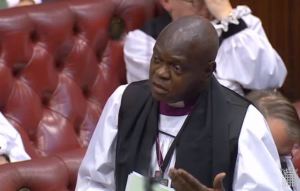 On 14th January 2019 Baroness Finn tabled an Oral Question ‘To ask Her Majesty’s Government what assessment they have made of the potential consequences of adopting an official definition of Islamophobia.’ The Archbishop of York, the Most Revd and Rt Hon Dr John Sentamu, asked a follow up question:
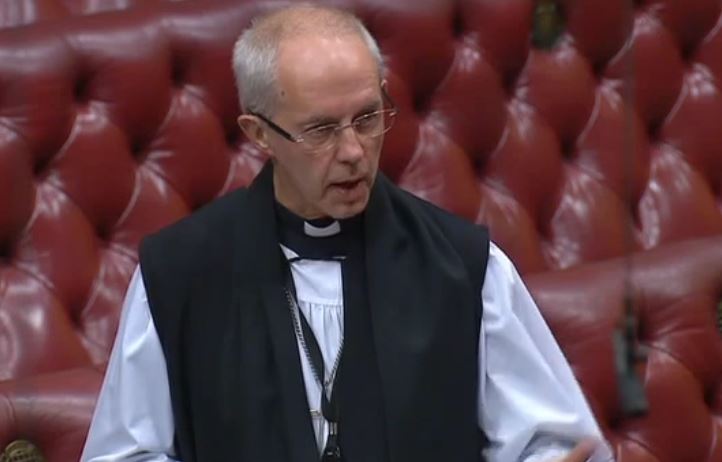 The Archbishop of Canterbury: My Lords, I am grateful to the noble Lord, Lord Bourne, and others who have made this useful and important debate possible. Like the noble Lord, Lord Hain, I agree with much of what the noble Lord, Lord Bourne, said. I agree also with the passionate and clear setting out by the noble Lord, Lord Hain, of the threats and incidents that have occurred in recent years. However, I want to focus more on religious intolerance and prejudice. If I have one concern, it is how we bring together religious tolerance, and stand against the kind of things the noble Lord, Lord Hain, spoke about, while maintaining freedom of speech.
 On 27th June 2018 Lord Pearson of Rannoch asked an Oral Question in the House of Lords: ‘To ask Her Majesty’s Government whether, in pursuit of their anti-terrorism strategy, they will require preaching in mosques and teaching in madrassas in England and Wales to be monitored for hate speech against non-Muslims.’ The Archbishop of York, the Most Revd and Rt Hon Dr John Sentamu, followed up with a point about collective responsibility for resisting terrorism:
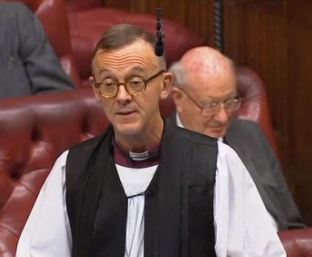 On 21st May 2018, Lord Ahmed tabled an Oral Question ‘To ask Her Majesty’s Government what steps they are taking to encourage Iran and Saudi Arabia to work together to bring peaceful solutions to the conflicts in Syria and Yemen.’ The Bishop of Worcester, the Rt Revd Dr John Inge, asked a follow up question:
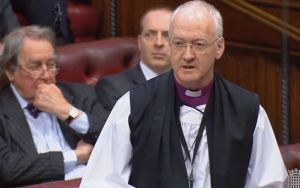 On 30th April Lord Pearson of Rannoch asked Her Majesty’s Government “what assessment they have made of figures from the Office for National Statistics showing that the Muslim population of England grew 10 times faster than the general population between 2001 and 2016; what is their estimate of future growth; and what is their assessment of the impact of that trend on the relationship between Sharia and domestic law.” The Bishop of Leeds, the Rt Revd Nick Baines, asked a follow-up question:
 On 13th March 2018, Lord Young of Cookham repeated an answer given to an urgent question about inflammatory letters inciting a ‘Punish a Muslim’ day. The Bishop of Newcastle, Rt Revd Christine Hardman, denounced these letters, expressed her solidarity with the Muslim community, and asked the Government what action it is taking to support grass-roots relationships.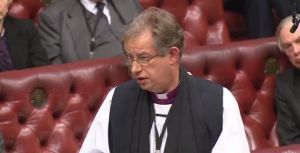
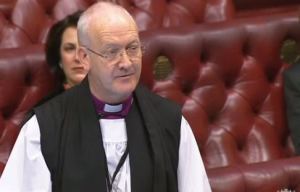 On 20th December 2017 Baroness Cox asked the Government “what is their assessment of the current situation in Syria”. The Bishop of Leeds, Rt Revd Nick Baines, asked a follow-up question:.
 The Church of England in Parliament
You must be logged in to post a comment.