Bishop of St Albans asks about alleviating rural poverty

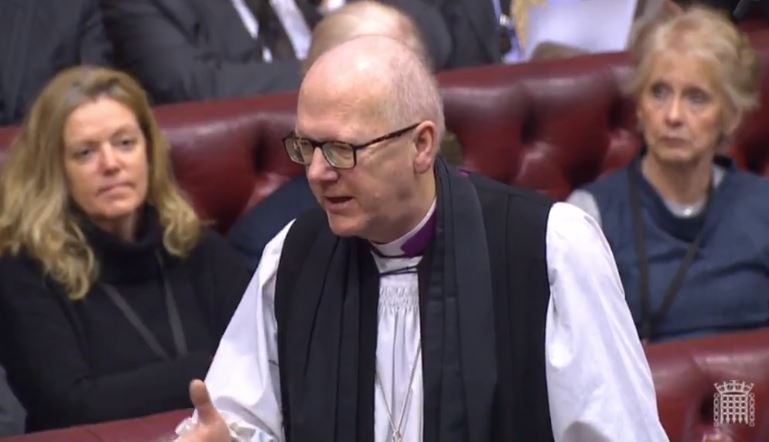
The Bishop of St Albans tabled a question on efforts to alleviate in-work poverty in rural areas on 25th October 2021:

The Lord Bishop of St Albans: To ask Her Majesty’s Government, further to the report by the Rural Services Network Towards the UK Shared Prosperity Fund, published in June, what plans they have accurately to reflect in-work rural poverty in future funding allocation mechanisms.

Continue reading “Bishop of St Albans asks about alleviating rural poverty”

Bishop of Durham speaks about tackling child poverty and health inequality

The Bishop of Durham spoke in a debate on regional inequalities on 14th October 2021, discussing issues relating to child poverty and health inequality:

The Lord Bishop of Durham: My Lords, I thank the noble Lord, Lord Liddle, for securing this debate, and am pleased to follow on from the noble Lord, Lord Young of Cookham. I, too, look forward to the maiden speech of the noble Viscount, Lord Stansgate.

Jubilee is a strong theme of our Judaeo-Christian tradition. Jubilee includes setting people free from the impacts of inequality. If levelling up is going to mean anything significant, it must tackle the inequalities that exist in our nation. It needs to be a kind of jubilee.

This week is Challenge Poverty Week. Child poverty is a very good measure of regional inequalities within England, as it is both an indicator of poverty and a perpetuator of it. Child poverty highlights the complexity of issues that cause it, including education and employment. It has lifelong impacts on children as they grow into adults and shape their communities. The recent report by Donald Hirsch for Loughborough University estimates that the cost of child poverty is £38 billion a year, a significant increase in the past five years.

We see far higher levels of child poverty in some places than others. It is not a simple divide of a wealthy London and an impoverished north. The Institute for Fiscal Studies reported in its Green Budget for 2020 that

“inequalities within regions are larger than the inequalities between regions.”

Continue reading “Bishop of Durham speaks about tackling child poverty and health inequality”

Bishop of Blackburn stresses importance of accessibility when encouraging behaviour change on the path to net-zero

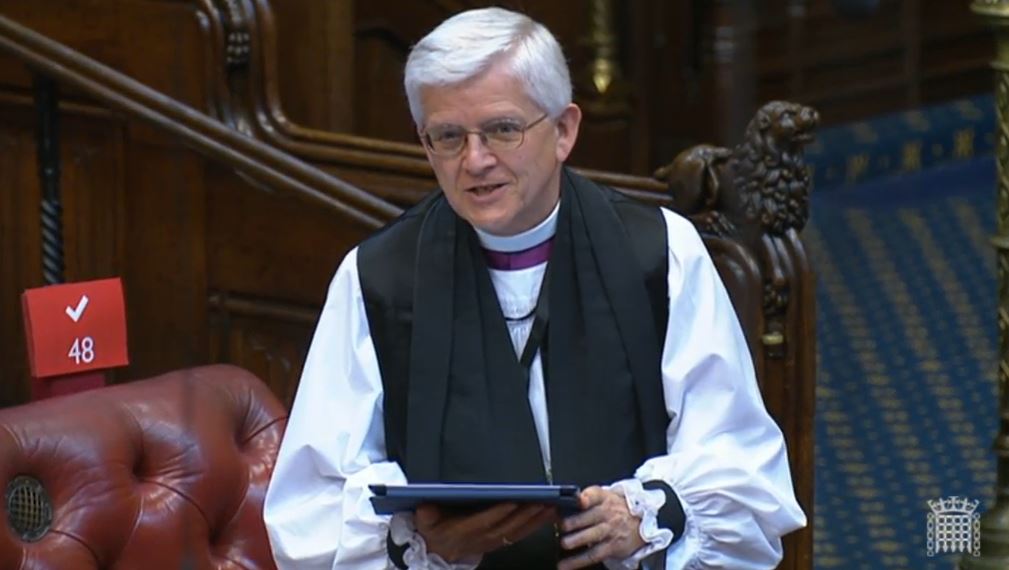
The Bishop of Blackburn spoke in a debate on behaviour change and the transition to net-zero carbon emissions on 16th September 2021, urging that the government consider the issues faced by the poorest in society so that they are not left behind:

The Lord Bishop of Blackburn: My Lords, I too am grateful to the noble Baroness, Lady Blackstone, for the opportunity of this debate. I have just finished reading a book about wilding in the UK, and it is a classic story of how difficult it is to change a culture, attitudes and expectations from deeply embedded practices and convictions, in this case about how we manage our land—which was appropriate, with the Environment Bill this week. The same difficulty applies in this debate, which is less about government policy and more about how we, as citizens, choose to live.

My main point, in discussing the role behaviour change can play in helping us towards net-zero carbon emissions, is this: it is essential that our expectations are aspirational, but also realistic. They need to apply to all people. It is my fear that the poorest 10% will be left not just behind, but feeling that they are part of the problem, when they would rather be part of the solution.

Continue reading “Bishop of Blackburn stresses importance of accessibility when encouraging behaviour change on the path to net-zero”

Bishop of St Albans asks about addressing inequalities in the council tax system

The Bishop of St Albans asked a question on how the government planned to address inequalities in the council tax system on 22nd July 2021:

The Lord Bishop of St Albans: According to the citizens advice bureau, council tax is the most common debt problem faced by families in Britain, with 86,000 people in England struggling to keep up with payments. The current system heavily favours the south-east and disproportionately disadvantages the poor. As part of the levelling up agenda, what consideration have Her Majesty’s Government given to a land value tax to address these inequalities?

Continue reading “Bishop of St Albans asks about addressing inequalities in the council tax system”

Bishop of Gloucester asks about effects of COVID-19 on the levelling-up agenda

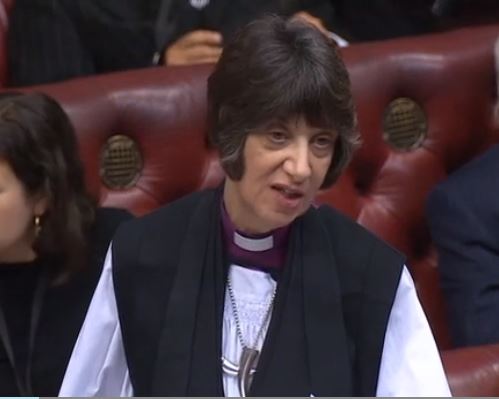
The Bishop of Gloucester asked a question on whether the government would provide an opportunity for the House of Lords to hold a debate on the effects of COVID-19 on the government’s levelling-up agenda on 1st July 2021, during a debate on addressing discrepancies in life expectancy and public health in deprived areas:

The Lord Bishop of Gloucester: In the light of Sir Michael Marmot’s report, will the Minister commit to providing an early opportunity for this House to debate the impact of Covid-19 on Her Majesty’s Government’s much-advertised agenda for levelling up, particularly relating to children and young people in those regions with the greatest level of deprivation?

Continue reading “Bishop of Gloucester asks about effects of COVID-19 on the levelling-up agenda”

Response to the Budget from the Bishop of Birmingham


03/03/2021

Following the Budget speech, the Bishop of Birmingham, David Urquhart, Convenor of the Bishops in the House of Lords, said:

“This is a time of great uncertainty, and while the Chancellor has rightly focussed on steps to get the economy moving, I’m concerned he has missed the chance to give certainty to those people and families who rely on Universal Credit, by not making the £20 uplift permanent.

“I’ll look at the details of the Budget closely for measures that will help the poorest and most vulnerable, especially access to sustainable jobs. The £19m for Domestic Abuse programmes is welcome as is support for schools to help get children back on the road of educational discovery. The lack of detail on social care is, however, a worry.

“The £300m additional funding for the Culture Recovery Fund is very welcome and will support the many small businesses and independent contractors our churches employ and support. I also note that the Levelling Up Fund prospectus specifically mentions cultural and heritage assets, including churches, and we look forward to churches and cathedrals particularly in areas of high deprivation taking part in this programme.”

Source: CofE website