Safety of Rwanda (Asylum & Immigration) Bill: Bishop of London points out inconsistency with international law and human rights regulations

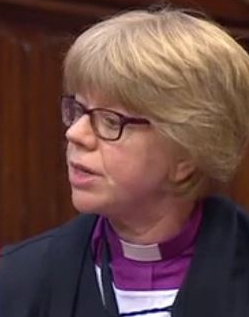
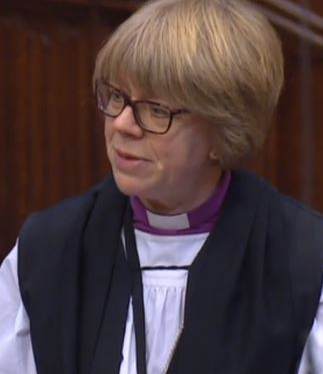
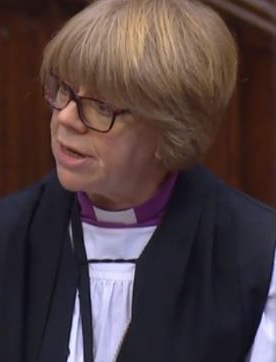
On 29th January 2024, the Bishop of London spoke in a debate on the Safety of Rwanda (Asylum & Immigration) Bill, pointing out the inconsistency of the bill’s approach to international law, and the potential harm of disapplying parts of the human rights act to refugees and asylum seekers:

The Lord Bishop of London: My Lords, I share many concerns about the Bill that have been expressed by many other noble Lords, but I will focus on human rights. What underpins my contribution to the House is a fundamental belief that all people are made in the image of God. It is a belief that is the foundation not just of the Christian faith but of many other faiths and religions. People have an inherent immeasurable value and deserve dignity and respect. In the Bill, unfortunately, the value of people is consistently maligned. For example, the Bill decides who is and is not entitled to human rights. Has history not taught us the risk of that?

It is an odd situation that we find ourselves in when it feels necessary to state in your Lordships’ House that the Government should obey the law, yet the Minister has stated on the face of the Bill that he is unable to say that the measures within it are compatible with the European Convention on Human Rights. Clause 3 disapplies sections of our Human Rights Act and Clause 1(6) lists great swathes of international law that will be contravened to pass the Bill. As many noble Lords have said, it is illogical that the Government are disregarding international law while relying on Rwanda’s compliance with it to assure us it is safe. That is not a mark of global leadership.

Continue reading “Safety of Rwanda (Asylum & Immigration) Bill: Bishop of London points out inconsistency with international law and human rights regulations”

Bishop of London asks about possibility of collaboration with EU on cancer research

The Bishop of London asked a question on UK efforts to collaborate with the EU in cancer research on 29th January 2024, during a discussion on a projected £1 billion gap in cancer research funding:

The Lord Bishop of London: My Lords, as the noble Lord, Lord Stevens, will know, Cancer Research reported in its 2023 researcher survey that while 98% of respondents said that collaboration with EU-based scientists is important, 79% said that since Brexit it had been harder to begin new collaborations with EU-based researchers and scientists. What steps are the Government taking to prioritise collaboration between the EU and the UK in this area, especially with compatibility with the EU clinical trials regulatory framework?

Continue reading “Bishop of London asks about possibility of collaboration with EU on cancer research”

Bishop of London asks about notice periods for refugees leaving Home Office Accommodation

On 18th December 2023, the Bishop of London asked a question on government plans to ensure a 28 day notice period for refugees granted asylum or leave to remain before they are required to leave Home Office accommodation:

The Lord Bishop of London: To ask His Majesty’s Government whether they plan to ensure that refugees are given 28 days’ notice before they are required to leave their Home Office accommodation, having received documentation after being granted asylum or being given leave to enter or remain.

Continue reading “Bishop of London asks about notice periods for refugees leaving Home Office Accommodation”

Bishop of London asks about risks to the social care sector under new immigration rules

The Bishop of London asked a question on the impact of losing overseas health & care workers under the government’s new immigration restrictions on 12th December 2023:

The Lord Bishop of London: My Lords, we are very familiar with the pressure on the social care workforce. As the Minister pointed out, we have seen vacancies fall within the social care sector, which is very welcome, but that is supported by the recruitment of 70,000 staff from overseas. I am glad that the health and care sector is exempt from the new visa charges, because we are clearly reliant on assistance from overseas. However, given that they are no longer able to bring dependents on their visa, have the Government considered the impact that this will have on recruiting workers from overseas into the social care sector?

Continue reading “Bishop of London asks about risks to the social care sector under new immigration rules”

Bishop of London leads debate on impact of the removal of free prescriptions for benefits claimants

The Bishop of London tabled a question for short debate on the impact of the proposed removal of free prescriptions for benefit claimants who fail to look for work on 30th November 2023:

The Lord Bishop of London: To ask His Majesty’s Government what impact the removal of free prescriptions for benefit claimants who fail to look for work will have on their health, and the health of the workforce.

My Lords, I start by thanking your Lordships’ House for giving time for this important debate. I also thank the House of Lords Library for its very helpful briefing and the Minister for his engagement with me and for our helpful meeting earlier this week about this debate.

The measures we are discussing today relate to the announcement that the Government made in the Back to Work Plan and the Autumn Statement that people on universal credit who do not engage in activities designed to increase their skills and improve their employability after 18 months of support will have their claim terminated. With that termination, their accompanying passported benefits, including free prescriptions, will also be stopped.

Benefit claimants may disengage from Jobcentre Plus for many reasons, some of which I suspect we do not completely understand, and not solely because they have failed to look for work. I have brought this debate forward from a health perspective, and the central frame of my remarks today is around health inequalities, because the Back to Work Plan as it stands could serve to exacerbate these inequalities. There are many complexities within universal credit, and many exemptions and allowances that are made for vulnerabilities and medical conditions that are to be commended. I was grateful to hear about some of them at the meeting I had earlier in the week with the Minister and officials from DWP and DHSC. I understand that the number of people who will be affected by this is small: they are those without a vulnerability that would exempt them from having their claim ended, and who do not have an additional factor attached to their claim.

Continue reading “Bishop of London leads debate on impact of the removal of free prescriptions for benefits claimants”

Bishop of London speaks in debate marking 75 year anniversary of the NHS

On 30th November 2023, the Bishop of London took part in a debate marking the 75th Anniversary of the NHS, paying tribute to the NHS workforce and urging greater support for healthcare workers and community care:

The Lord Bishop of London: My Lords, I declare my interests in the register. It is a privilege to participate in this debate about one of our most valued institutions and to follow some excellent contributions. One of the focuses of my work in this House has been reducing health inequalities. The NHS was founded in the face of extreme inequality, in the hope that financial means would not be the sole determinant of health. The universal service that is free at the point of use is something we can be extremely proud of.

The 75th anniversary of the NHS is very close to the 75th anniversary of the Windrush generation, which I will celebrate today. As we know, many of the passengers on HMT “Empire Windrush” took up roles in the NHS, which launched just two weeks later. When experiencing workforce shortages from 1948 onwards, British politicians visited the Caribbean as part of a recruitment programme that had 16 agencies in the British colonies by 1955. By 1977, 66% of overseas student nurses and midwives originated from the Caribbean. In the face of overt racism and unequal opportunities for professional development, their contribution has been truly extraordinary. Without it, the health service would not be what it is today.

Continue reading “Bishop of London speaks in debate marking 75 year anniversary of the NHS”

Bishop of London speaks on health inequalities and community engagement in a post-COVID world

The Bishop of London took part in a debate on health and wellbeing in a post-COVID-19 world on 29th November 2023, raising the issue of health inequalities and opportunities for faith groups to aid in promoting local community health and resilience:

The Lord Bishop of London: My Lords, I declare my interests as set out in the register. First, it is a pleasure to be participating in an important debate on this report. I thank all those involved in the committee, particularly the chair, for all the work they have done. This report rightly encourages us to increase our understanding of the lessons we can learn from the pandemic and to act on them in having a long-term view of the future.

This is a crucial topic. I support the noble Baroness, Lady Lane-Fox, in her view that our electoral system does not naturally lend itself to having a long-term view of the future. I shall focus today on recommendations 1 and 2. They are, in fact, interconnected. Those topics are first, inequalities, following the noble Lord, Lord Patel, particularly in health, and, secondly, community engagement.

Continue reading “Bishop of London speaks on health inequalities and community engagement in a post-COVID world”

Bishop of London asks about implementation of the Windrush Lessons Learned Review

The Bishop of London asked a question on implementation of the Windrush Lessons Learned Review on 28th November 2023, with regards to the establishment of a strategic race advisory board with a diverse and inclusive senior leadership team:

The Lord Bishop of London: My Lords, I thank the Minister for updating us on some of the recommendations from the Windrush Lessons Learned Review. I am particularly encouraged to hear that recommendation 27 in terms of the overarching strategic race advisory board has been implemented. Could the Minister update us on recommendation 26, around how they can demonstrate a diverse and inclusive senior leadership team?

Continue reading “Bishop of London asks about implementation of the Windrush Lessons Learned Review”

Votes: Motions to Regret – Age Assessments

On 27th November 2023, the House of Lords debated new regulations regarding Age Assessment as part of immigration control. Votes were held on two Motions to Regret regarding the regulations, in which a Bishop took part:

Continue reading “Votes: Motions to Regret – Age Assessments”

Bishop of London speaks in debate on age-determination regulations in immigration enforcement

The Bishop of London spoke in a debate on a motion to approve the use of X-rays as age determining tools for individuals subject to immigration control on 27th November 2023, raising the issue of informed consent, and of potential lack of capacity to perform the required X-rays:

The Lord Bishop of London: My Lords, I promise that I will be brief. I thank the noble Baroness, Lady Brinton, for moving this regret amendment and thank all those who have spoken so far and so well. I thank the noble Lord, Lord Winston, for pointing out that this is not science; it is the use of scientific instruments. My two concerns relate to consent, as many have spoken about, and to the workforce.

Continue reading “Bishop of London speaks in debate on age-determination regulations in immigration enforcement”