Genocide Determination Bill: Bishop of Newcastle speaks in support of legislation

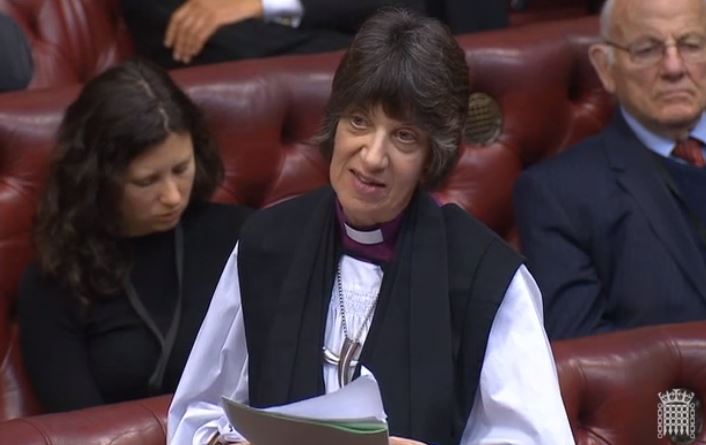
On 17th July 2026, the Bishop of Newcastle spoke at the second reading of the Genocide Determination Bill, expressing her support for the bill and the principle of the equal worth of human lives:

The Lord Bishop of Newcastle: My Lords, I thank the noble Lord, Lord Alton of Liverpool, for introducing this Bill, which I support, and for his unwavering commitment over many years to the prevention of genocide, the protection of persecuted communities and the advancement of human rights.

At the heart of the Bill lies a simple yet profound principle that every human life possesses equal and inherent worth. There is a clear inconsistency in our present arrangements. Successive Governments have rightly maintained that genocide is a matter for a competent court. However, in practice, the international courts capable of making such determinations are not always able to do so because of jurisdictional limitations or political deadlock. The result is that credible allegations of the gravest crime recognised in international law may never receive judicial determination. The noble Lord, Lord Wills, made this point compellingly in his speech.

Continue reading “Genocide Determination Bill: Bishop of Newcastle speaks in support of legislation”
Bishop of Manchester asks about implementation of international marine protected area

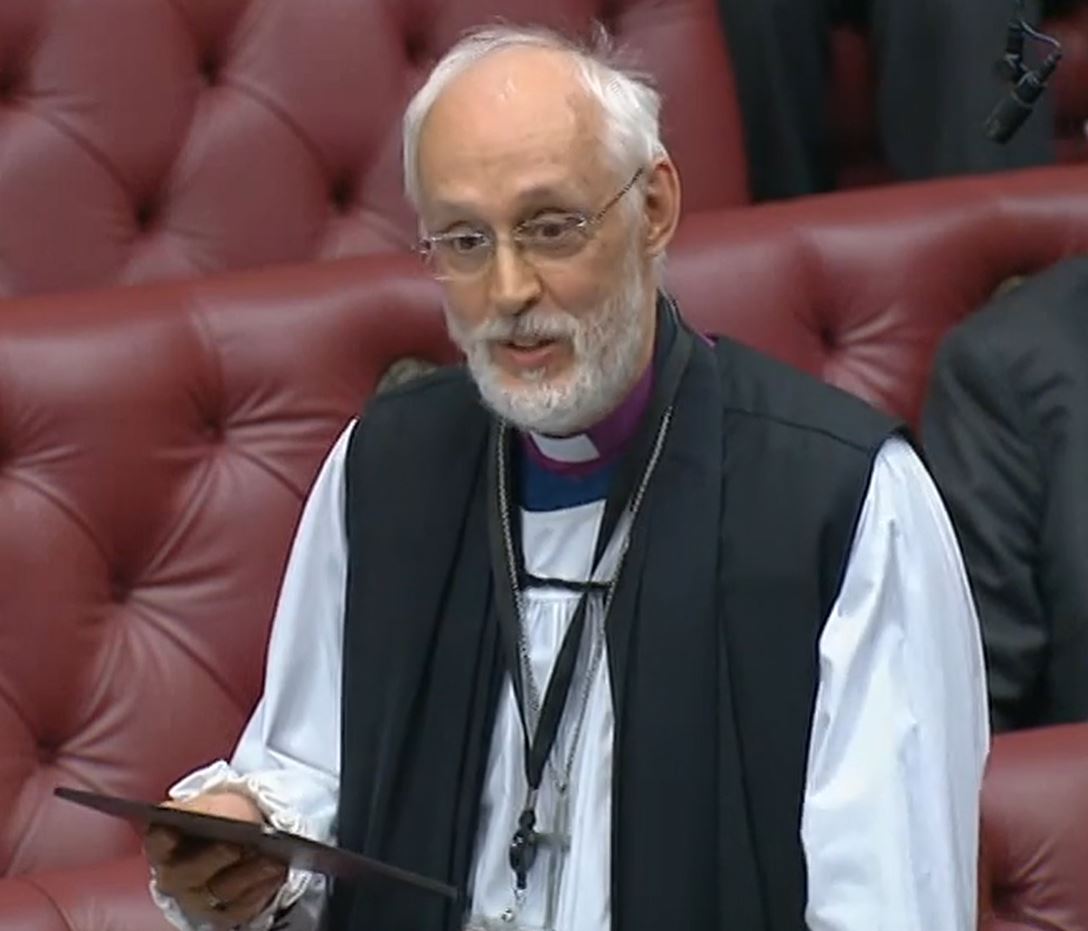
The Bishop of Manchester tabled a question on the establishment of an international marine protected area in the Sargasso Sea under the Global Ocean Treaty on 6ht July 2026:

The Lord Bishop of Manchester: To ask His Majesty’s Government whether they intend to support the establishment of an international marine protected area in the Sargasso Sea under the Global Ocean Treaty.

Continue reading “Bishop of Manchester asks about implementation of international marine protected area”

Bishop of Southwark asks about UK response to Israeli settlements in the Occupied Palestinian Territories

The Bishop of Southwark received the following written answer on 6th March 2026:

The Lord Bishop of Southwark asked His Majesty’s Government

  • what assessment they have made of the impact that the construction of the E1 settlement to the east of Jerusalem will have on the on the prospect of an independent, viable and contiguous Palestinian State
  • what assessment have they made of the merits of imposing travel or economic sanctions on individuals or bodies involved in the planning and construction of the E1 settlement to the east of Jerusalem.
  • what assessment they have made of the merits of (1) reviewing existing trade ties with Israel, or (2) suspending the 2030 Roadmap for UK-Israel bilateral relations and imposing targeted sanctions upon Israel, because of the planned construction of the E1 settlement.
  • what representations they have made to the government of Israel over the seizure of the UNESCO archaeological site at Sebastia on the West Bank, including the traditional burial place of St John the Baptist, for the new Shomron National Park.
Continue reading “Bishop of Southwark asks about UK response to Israeli settlements in the Occupied Palestinian Territories”

Bishop of Gloucester asks about government response to legal opinion on Israel’s activities in the Occupied Palestinian Territories

The Bishop of Gloucester received the following written answer on 23rd February 2026:

The Lord Bishop of Gloucester asked His Majesty’s Government when they plan to publish their formal response to the International Court of Justice’s Advisory Opinion on Legal Consequences arising from the Policies and Practices of Israel in the Occupied Palestinian Territory, including East Jerusalem, published on 19 July 2024.

Baroness Chapman of Darlington (Lab, FCDO): I refer the Lord Bishop to the answer provided on 1 August 2025 to Question HL9653.

Hansard

Bishop of Gloucester asks about approaches to trade with Israeli settlements

The Bishop of Gloucester received the following written answers on 14th July 2025:

The Lord Bishop of Gloucester asked His Majesty’s Government what percentage of imports of goods and services into the UK from the Occupied Palestinian Territories originate from, or are linked to, activities related to settlements in (1) 2021, (2) 2022, (3) 2023, (4) 2024, and (5) 2025.

Continue reading “Bishop of Gloucester asks about approaches to trade with Israeli settlements”

Bishop of Gloucester asks about actions of the Israeli military and international humanitarian law

The Bishop of Gloucester received the following written answer on 17th June 2025:

The Lord Bishop of Gloucester asked His Majesty’s Government what assessment they have made of the Israeli Defence Force’s reported use of the ‘Dahiya Doctrine’, the targeting of civilians and civilian infrastructure; and of whether it is compatible with international humanitarian law.

Continue reading “Bishop of Gloucester asks about actions of the Israeli military and international humanitarian law”

Bishop of Gloucester asks about steps taken to ensure Israel acts in accordance with humanitarian law

The Bishop of Gloucester asked a question on steps being taken to call on Israel to act in accordance with the UN Charter and international humanitarian law on 26th November 2024, during a discussion on restrictions on international aid workers in Israel and the Occupied Palestinian Territories:

The Lord Bishop of Gloucester: My Lords, what specific steps are being taken to call on Israel to act consistently with its obligations under the Charter of the United Nations and its other obligations under international humanitarian law?

Continue reading “Bishop of Gloucester asks about steps taken to ensure Israel acts in accordance with humanitarian law”

Votes: Safety of Rwanda (Asylum and Immigration) Bill

On 16th April 2024, the House of Lords debated Commons reasons and amendments to the Safety of Rwanda (Asylum and Immigration) Bill. Votes were held on further amendments to the bill, in which Bishops took part:

Continue reading “Votes: Safety of Rwanda (Asylum and Immigration) Bill”

Safety of Rwanda (Asylum and Immigration) Bill: Bishop of Bristol supports amendment on due regard for international and domestic law

On 16th April 2024, during a debate on the Safety of Rwanda (Asylum and Immigration) Bill, the Bishop of Bristol spoke in support of an amendment tabled by Lord Coaker, which would stipulate that the bill should have due regard for international law, the Children Act 1989, the Human Rights Act 1998, and the Modern Slavery Act 2015:

The Lord Bishop of Bristol: My Lords, I welcome the amendment from the noble Lord, Lord Coaker, particularly the detail of the inclusion in it of the Modern Slavery Act 2015; it is a detail except for those who have been, or may well have been, trafficked. There are as many as 4,000 people in the national referral mechanism whose cases are currently to be determined. That is absolutely right and proper under current legislation, and that legislation should be taken into account as part of the implementation of this Bill.

Continue reading “Safety of Rwanda (Asylum and Immigration) Bill: Bishop of Bristol supports amendment on due regard for international and domestic law”

Votes: Safety of Rwanda (Asylum and Immigration) Bill

On 20th March 2024, the House of Lords debated Commons Reasons and Amendments to the Safety of Rwanda Bill. Votes were held on motions to the bill, in which Bishops took part:

Continue reading “Votes: Safety of Rwanda (Asylum and Immigration) Bill”